India and Azerbaijan Edge Toward a Reset After Years of Strain
India and Azerbaijan are quietly rebuilding ties, from a Modi-Aliyev meeting at the SCO summit to renewed Foreign Office Consultations in Baku.
India and Azerbaijan appear to be edging toward a cautious reset of relations that had been dormant for years and then sharply deteriorated after Operation Sindoor.
At the recent Shanghai Cooperation Organization summit of heads of state in Bishkek, Kyrgyzstan, Prime Minister Narendra Modi held a series of bilateral meetings. Most drew wide attention, but one went largely unnoticed: his meeting with Azerbaijani President Ilham Aliyev. The encounter was notable given that, at a similar SCO gathering in Tianjin, China, a year earlier, Baku had alleged that India and some other member states had blocked its bid to join the organisation. This time, Modi and Aliyev met at an event also attended by Pakistani Prime Minister Shehbaz Sharif and Turkish President Recep Tayyip Erdogan. Azerbaijani media, previously hostile toward India, gave the meeting prominent coverage.
Ties had nosedived after Operation Sindoor, when Baku strongly backed Islamabad and condemned India's actions.
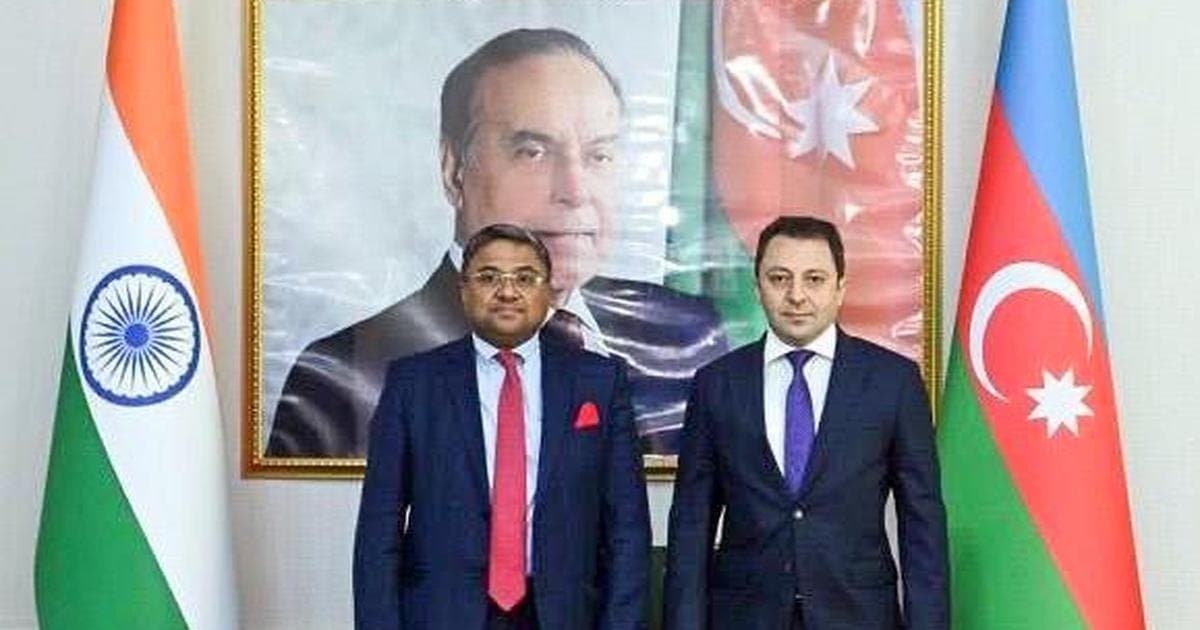
The first sign of a thaw came earlier this year, when the two countries held the sixth round of Foreign Office Consultations in Baku — the first such talks since 2022. India's Secretary (West), Sibi George, met Azerbaijan's Deputy Foreign Minister, Elnur Mammadov. A statement said the two sides reviewed the state of bilateral relations and discussed trade, technology, tourism, pharmaceuticals, energy, culture, people-to-people exchanges and the fight against cross-border terrorism. Secretary (West) also met Hikmet Hajiyev, the Foreign Policy Advisor to the President of Azerbaijan. The reference to cross-border terrorism is significant: for India it points to Pakistan, while for Baku it could allude to Armenia or Iran.
The relationship has long lagged. India recognised Azerbaijan as a sovereign state in 1992 after the collapse of the Soviet Union, but opened its diplomatic mission in Baku only in March 1999; Azerbaijan opened its mission in Delhi in 2004, and an ambassador followed even later. Two decades on, there have been no major bilateral visits at the level of heads of state or government.
Trade, however, has grown substantially. Bilateral trade rose from around USD 50 million in 2005 to USD 1.435 billion in 2023, making India Azerbaijan's seventh-largest trading partner. The balance is tilted heavily in Azerbaijan's favour, driven by crude exports: Indian imports stood at USD 1.23 billion against exports of about USD 201 million. Indian tourist footfall that year was around 1.17 lakh.
Yet Azerbaijan deepened defence ties with Pakistan and objected to Indian defence exports to Armenia, even though there is no record of Armenia deploying Indian weapons in its wars with Azerbaijan. Baku also echoed Pakistan's position on Jammu and Kashmir, allowed Kashmir Day events by the Pakistan Embassy on its territory, condemned India's reorganisation of Jammu and Kashmir and, earlier this year, permitted a conference organised by Khalistani supporters.
Several factors may now be pushing Baku to reconsider. Indian tourist numbers, a mainstay of its economy, fell by almost 30% after Operation Sindoor. With energy export disruptions in the Middle East, the Indian energy market could assume greater salience; in 2023 India was the third-largest destination for Azerbaijani crude. ONGC Videsh Ltd holds active stakes in Azerbaijani oil and pipeline assets, including the Azeri-Chirag-Gunashli oil field and the Baku-Tbilisi-Ceyhan pipeline.
The peace process with Armenia is another consideration. Baku has been alarmed by Indian exports of sophisticated weapons systems to Armenia, particularly Pinaka multi-barrel rocket launchers and Akash air defence systems, as well as suggestions of BrahMos cruise missile supplies. Resetting ties with India could pre-empt a military threat from that direction.
Normalisation may, however, strain Azerbaijan's ties with Turkey. As Baku and Yerevan negotiate a peace deal, Armenia is also moving to normalise relations with Turkey after a hiatus of nearly a century, with direct border crossings and the passage of cargo and freight. Azerbaijan wanted such normalisation contingent on finalising its own peace agreement with Armenia; Turkey has deferred full diplomatic ties with Armenia but sees no reason to postpone the broader normalisation process.
Another fault line could be Turkey's inclusion in the Mecca Pact and its escalating tensions with Israel, one of Azerbaijan's closest energy and defence partners. The pact's overt religiosity and Turkey's current sensitivities may cause discomfort in strongly secular Azerbaijan. Israeli-Turkish tensions have already become an irritant: last May, it was reported that Israeli Prime Minister Benjamin Netanyahu cancelled a planned visit to Baku after Turkey refused overflight rights for his plane.