Indian Railways' new under-coach waste collector to tackle overflowing bins
Indian Railways has developed a prototype under-coach garbage collector with 367-litre capacity to replace 18-litre bins, reducing overflow and track littering.
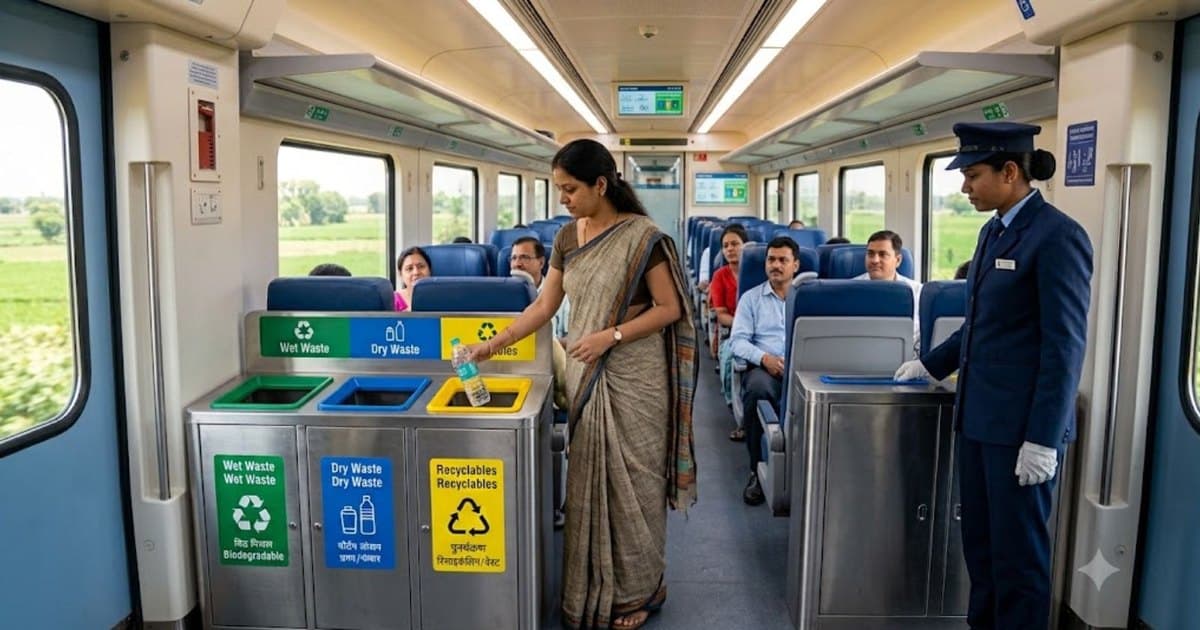
Indian Railways is testing a new waste management system designed to address the persistent problem of overflowing dustbins and litter inside train coaches, particularly on long-distance routes.
The prototype, developed at the Wagon Repair Workshop in Jhansi, replaces the current arrangement in LHB coaches — two standard bins of roughly 15-20 litres each — with a much larger collection mechanism. The existing bins often prove inadequate on longer journeys, leading to waste spilling into passenger areas and sometimes being thrown onto railway tracks.
The proposed system works through a gravity-fed mechanism. A garbage drop box installed on the coach floor will channel waste through a connector into a high-capacity collector mounted beneath the coach. This design eliminates the need for frequent manual handling of waste during the journey; the collector can be emptied during scheduled maintenance.
A key feature is the substantial increase in storage capacity. The modified collector holds approximately 367.4 litres, compared with around 18 litres in the current system. This larger volume is intended to accommodate continuous waste generation over extended trips.
The system is built from stainless steel, offering corrosion resistance and structural strength. The undergear collector includes a specialised 3:10 taper to ease removal and emptying. Both the drop box and collector can be cleaned independently from either side, simplifying sanitation and odour management.
By providing a larger and more accessible collection point, the design aims to reduce the likelihood of passengers discarding waste onto the tracks when onboard bins fill up. The Jhansi workshop has described the initiative as a practical and economical step toward cleaner coaches and a healthier railway environment.