India's Overlooked Contribution to the Second World War
India raised the largest volunteer army in WWII history, yet its crucial role in halting Axis powers and shaping the war's outcome is often forgotten.
The Second World War, spanning from Germany's invasion of Poland in September 1939 to Japan's surrender in September 1945, remains one of history's deadliest conflicts. With an estimated 85 million fatalities, the war saw the Allied powers—including Britain, the Soviet Union, the United States, and China—battle against the Axis alliance of Nazi Germany, Italy, and Imperial Japan. It also marked the only time nuclear weapons have been used in warfare.
While the global narrative of the war is well-documented, India's substantial contribution has largely faded from public memory. The period is often remembered in India primarily as the final chapter of the Independence struggle, creating an uneasy relationship with the country's wartime role. This perception is rooted in the dashed hopes for autonomy following World War I, which were compounded by the Jallianwala Bagh massacre in 1919 and Britain's unilateral decision to declare war on India's behalf in 1939 without consulting Indian leaders.
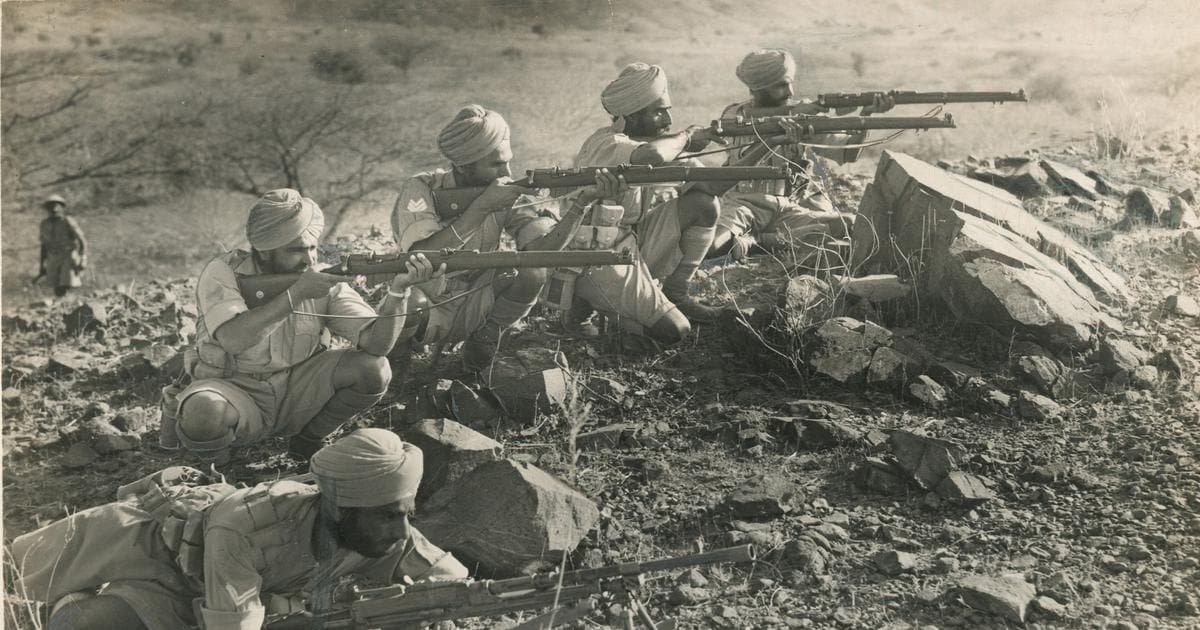
Despite these tensions, India's military contribution was immense. The Indian Army fielded the largest volunteer force in history, with 2.5 million men serving across battlefields in Africa, Europe, and Asia. More than 87,000 soldiers are buried or commemorated in war cemeteries worldwide, and troops from undivided India received 31 Victoria Crosses—approximately 15% of all such honours awarded during the conflict.
Field Marshal Claude Auchinleck, Britain's last Commander-in-Chief of the Indian Army, later acknowledged that without Indian soldiers, labourers, and resources, the course of both World Wars could have been drastically different. India also served as a crucial geographical barrier, preventing Imperial Japan and Nazi Germany from linking up through West Asia—a separation vital to the Allied victory.
The war's direct threat to India became evident in 1944 when Japanese forces advanced through Burma and were halted at the battles of Imphal and Kohima. Earlier, in April 1942, the eastern coastline came under attack. Kakinada (then Cocanada) became the first Indian town to be bombed from the air, while Visakhapatnam was struck three times on the same day, suffering significant damage.
Despite over 1,61,000 personnel from India losing their lives in the two World Wars, the nation's pivotal role remains marginalised in historical narratives. The absence of a comprehensive archive documenting these experiences stands in stark contrast to the preservation efforts seen in Britain, the United States, and France, leaving a significant chapter of India's history largely untold.