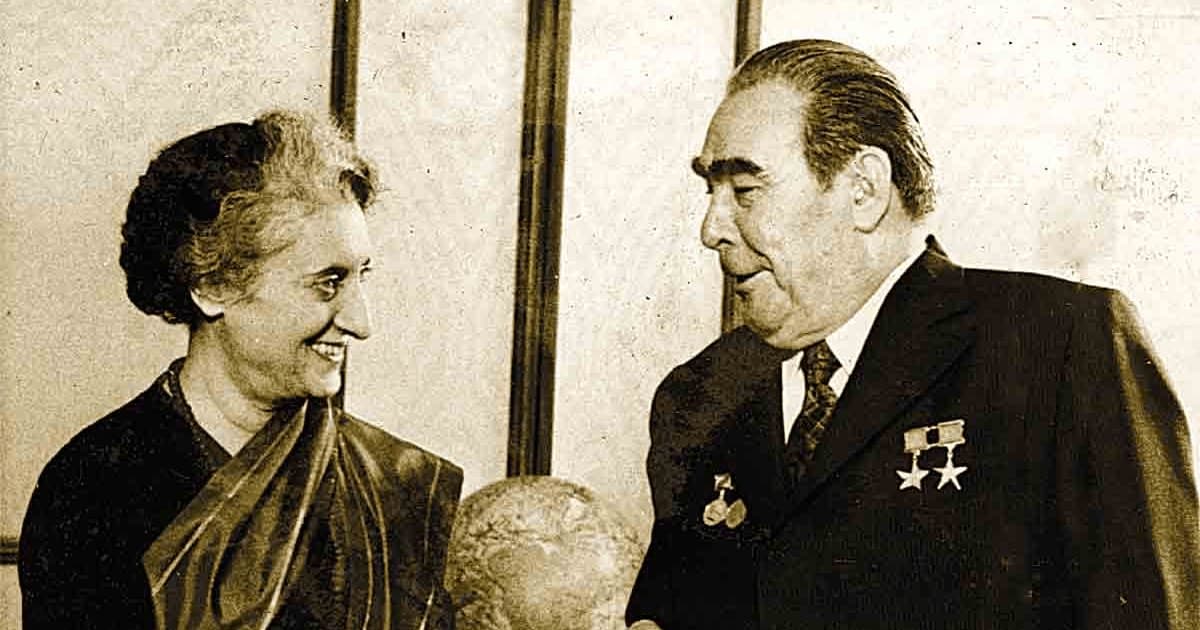
55 Years On: How the Indo-Soviet Treaty of 1971 Shaped India's Strategic Path
A look at the 1971 Indo-Soviet Treaty's role in the Bangladesh Liberation War and its enduring legacy in India-Russia ties.
When Prime Minister Narendra Modi meets Russian President Vladimir Putin on the sidelines of the Shanghai Cooperation Organisation summit in Bishkek, the conversation will likely touch upon a pact signed 55 years ago that fundamentally altered the trajectory of bilateral relations.
August 1971 was a pivotal month in South Asian history. Amidst the ongoing Bangladesh Liberation War, India and the Soviet Union signed the Treaty of Peace, Friendship, and Cooperation on August 5. The agreement provided a crucial institutional framework, going beyond a standard defence pact. A key clause stipulated that in the event of an attack on either party, the signatories would consult to remove the threat and take appropriate measures to ensure peace and security.
This provision served as a powerful deterrent, discouraging the United States and China from intervening directly in support of Pakistan. While Pakistan received arms from the US, Jordan, Turkey, and Iran, Soviet military support was instrumental in enabling India's military campaign. Soviet diplomats also blocked UN attempts to send observers to the region, which could have exposed the Mukti Bahini's operations.
The treaty's significance became starkly apparent in December 1971 when the US dispatched its 7th Fleet, led by the USS Enterprise, into the Bay of Bengal. The Soviet Union responded by sending its own nuclear-armed naval group from Vladivostok. Furthermore, Soviet vetoes in the UN Security Council provided India with the time needed to secure victory in Dhaka, leading to Pakistan's surrender and the creation of Bangladesh.
The pact's impact was profound, helping to stem the genocide of Bengali people and shaping the geopolitical landscape. It also became the template for a similar friendship treaty between India and Bangladesh in 1972.
Beyond the immediate conflict, the 1971 treaty anchored a relationship that has proven remarkably durable. It laid the groundwork for the current Special and Privileged Strategic Partnership, encompassing defence, energy, space, and culture. Notably, Russia has consistently supported India's position on Kashmir, viewing it as a bilateral issue in line with the Shimla Agreement. As the two leaders meet, the treaty's legacy remains a testament to a partnership that has weathered decades of global change.