US Naval Blockade Halts Iran's Crude Exports for Record Seven Weeks
A US naval blockade has halted Iran's crude exports for a record seven weeks, cutting off China and straining Tehran's economy.
Iran has gone nearly seven weeks without shipping significant crude exports through the Strait of Hormuz, marking the longest such halt on record. The US naval blockade, in place since July 14, has succeeded where years of sanctions failed by cutting off Tehran's main source of foreign-currency earnings.
Unlike previous sanctions campaigns, when Iranian crude continued reaching buyers, the current blockade has stopped fresh cargoes from reaching China, Iran's only major remaining oil customer. According to shipping data from Kpler, Vortexa, and TankerTrackers.com, no Iranian crude has transited the strait to China since the blockade was reinstated.
Iran can now only sell crude to China from floating storage in Asia, which it cannot replenish as crude accumulates aboard tankers inside the strait. Vortexa analyst Claire Jungman noted that even at the height of maximum-pressure sanctions in 2019-20, some Iranian crude cleared Hormuz every month, but outbound flows have now fallen to near-zero for a sustained stretch.
Iran loaded about 220,000 to 255,000 barrels per day of crude and condensate in August, down from roughly 740,000 bpd in July and about 2 million bpd in March. The collapse in exports is draining Iran's foreign-currency reserves and could force Tehran to print money, risking even higher inflation, according to Kpler analyst Homayoun Falakshahi. The IMF estimates Iran's inflation rate at nearly 70% this year, the world's third-highest.
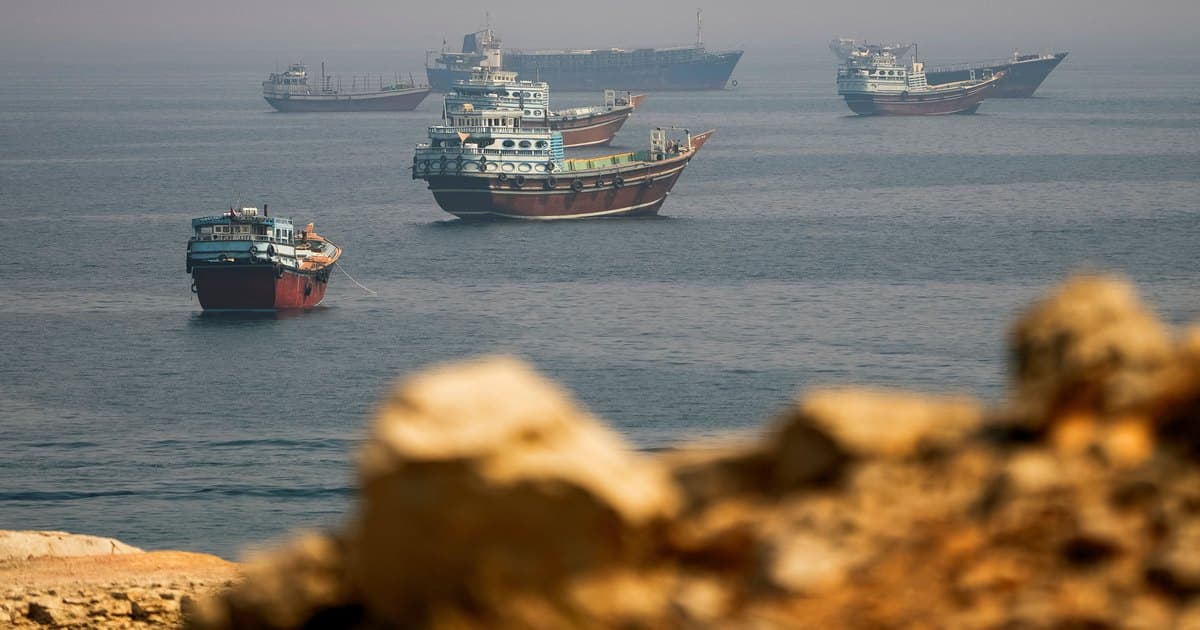
Iran currently has 29 tankers inside the strait carrying 36.11 million barrels of crude, said Samir Madani of TankerTrackers.com. The blockade sits between the Gulf of Oman and the Arabian Sea, where US Navy vessels vet ships departing from and approaching Iranian ports. Beyond the blockade zone, dozens of Iran-linked shadow-fleet tankers remain active, with 51 vessels in the Gulf of Oman and another 81 in Asia or off Malaysia.
Iranian crude remains openly available, with cargoes for September and October delivery to China being offered, though volumes are lower as floating storage outside the Gulf shrinks. Iranian crude in floating storage west of the blockade line rose to 41.7 million barrels by August 26, while total Iranian crude afloat fell to 107 million barrels. Once sold, empty tankers cannot return to Iranian ports, leaving 27 sanctioned tankers waiting off Sri Lanka in ballast.