Iran calls new US sanctions 'crime against humanity', mediators push to reopen Hormuz
Iran condemns new US sanctions as unlawful, while mediators work to restore shipping through the Strait of Hormuz.
Iran has condemned the latest round of US economic sanctions as a "crime against humanity" and is urging other nations to refuse to implement them. In a statement on Friday, Tehran's foreign ministry said that participating in the sanctions would amount to complicity in imposing one state's unlawful will on independent states, and called on UN bodies to uphold the rule of law.
The statement comes as diplomatic efforts intensify to reopen the Strait of Hormuz, a vital waterway that carried 20% of the world's oil supply before the war began six months ago. The strait's status remains the biggest obstacle to any peace deal.
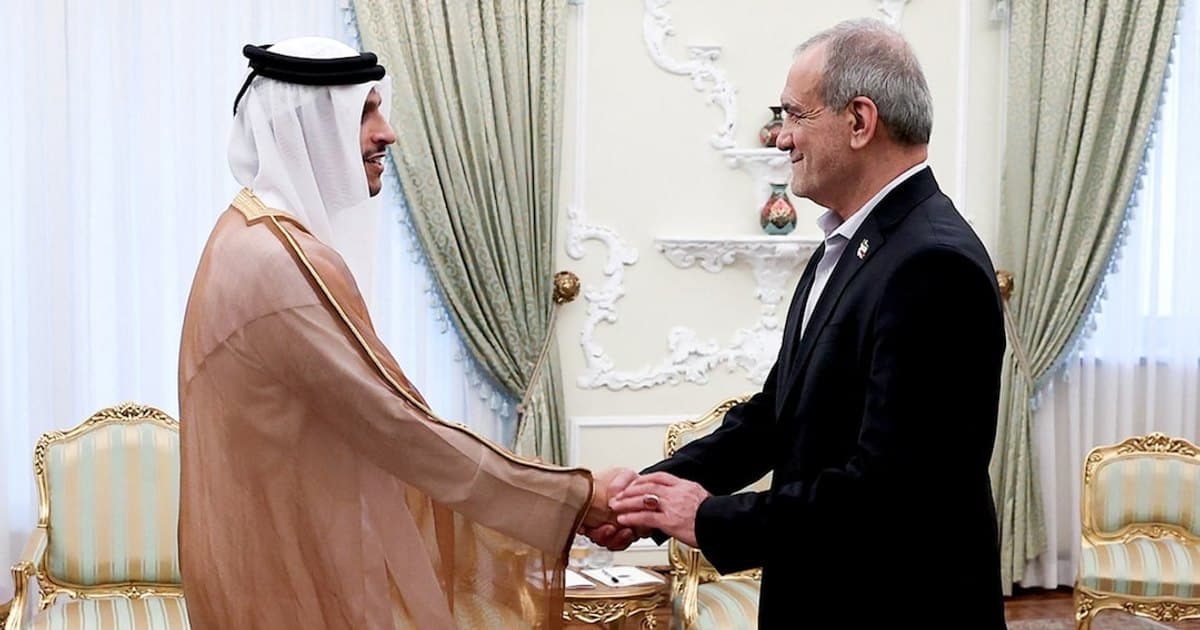
Qatari Prime Minister Sheikh Mohammed bin Abdulrahman Al Thani visited Tehran on Thursday, stressing the importance of returning to the pre-war status of open shipping through the strait. Iranian Foreign Minister Abbas Araqchi described the talks as "creative" and renewed his appeal for the US to halt military and economic pressure and resume negotiations. "Putting diplomacy back on track isn't impossible. It hinges on U.S. understanding of one simple fact: pressure doesn't work," Araqchi said on X.
Meanwhile, Mohsen Rezaei, secretary of Iran's Supreme National Security Council, said Tehran is preparing a list of conditions for reopening the strait. He indicated that Iran has agreed with Oman on a shipping corridor, with parts of the route in Omani waters and parts in Iranian waters. Ships would use a designated central channel if the US meets Iran's conditions, which have previously included an end to the blockade on Iranian ports, compensation, and removal of sanctions.
The US military says it has cleared sea mines from the strait that were laid months ago by Iran's Islamic Revolutionary Guard Corps. Admiral Brad Cooper, commander of US Central Command, said international shipping lanes are open and that US forces have helped 1,500 commercial vessels carrying nearly 750 million barrels of crude oil transit the strait.
Despite these assurances, shipping data shows activity remains far below normal levels. Only seven commodity vessels transited the strait on Thursday, down from 17 a day earlier and below the 10-day average of 15. Many vessels continue to avoid the route due to Iranian threats, with ship tracking services estimating activity at roughly 5% to 15% of normal volumes.
Gulf energy exporters are also adapting by investing billions in new infrastructure, including pipelines and ports, to reduce their reliance on the strait. Trade is being redirected to Saudi ports on the Red Sea and ports on the UAE's eastern coast, though capacity remains limited.