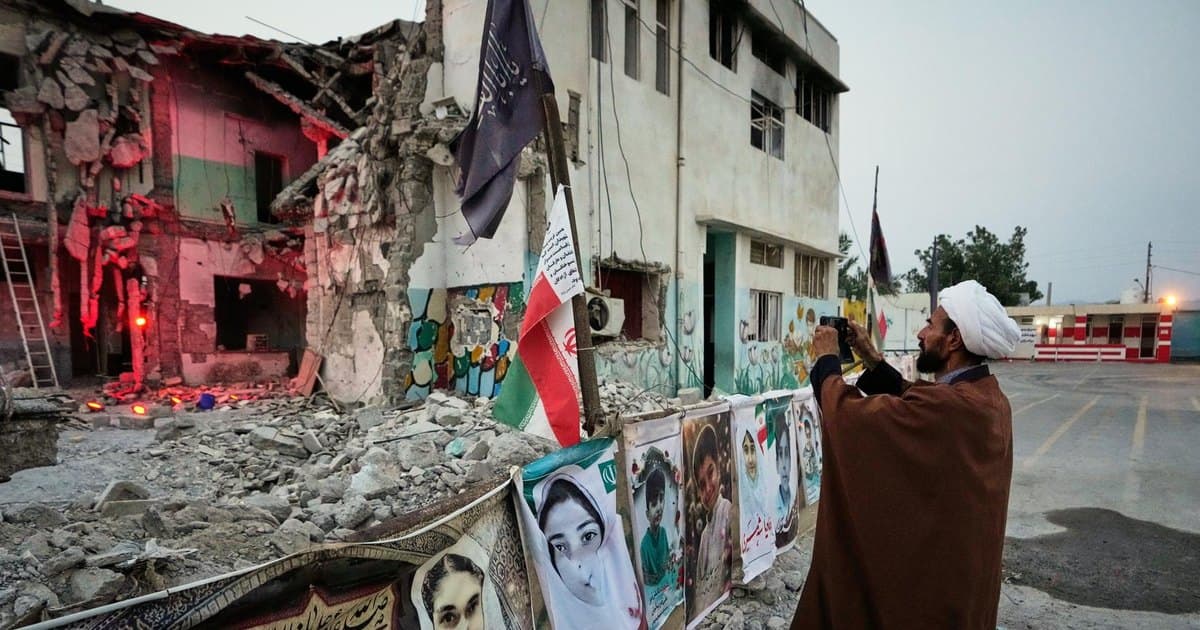
In Ruined Iranian School, Families Mourn Children Killed in US Strike
Grieving relatives gather daily at a bombed Iranian school, remembering the dozens of children and teachers killed in a US airstrike.
In the southern Iranian city of Minab, the shattered remains of the Shajareh Tayyebeh school have become a nightly gathering place for grief. Among the mourners is Heydar Sadeghi, who sits on a bench near the rubble, tears streaming down his face. His 11-year-old grandson, Hami, and the boy's mother, a teacher at the school, were killed when an American missile struck the building on February 28, the first day of the war.
Sadeghi described rushing to the scene after the explosion, searching desperately for his family. He called out their names, hoping they would come to him, but they were not there. Hami, a fifth-grader who loved soccer and cycling, was identified only by his clothing. His 9-year-old sister, Nila, was pulled from the wreckage alive. While physically unharmed, she is deeply traumatized, starting at sudden noises and struggling to sleep. Sadeghi says he comes to the school to cry so he can go home and try to make Nila smile.
The strike killed a large number of students and staff. A banner at the site lists 120 students and 26 teachers and staff among the dead, with three more children presumed dead but never found. The school housed separate girls' and boys' sections and a preschool. Many of the students were children of officers at a nearby Revolutionary Guard base, while others were local children from the predominantly Baluch city.
One mother, Fatemeh Barani, visits the grave of her daughter, Nasim Neyestani, a second-grade teacher. According to accounts from other staff, Neyestani had urged the principal to cancel classes after hearing of early morning strikes on Tehran. When that was deemed unnecessary, she began calling parents herself. Fourteen of her 22 students were picked up before the attack. She moved the remaining eight children into the schoolyard, but was directed by the principal to take them to the prayer room, which was thought to be safer. The room was hit directly, killing Neyestani and all eight children with her. Barani notes her daughter's own classroom was largely untouched.
The local governor has said the damaged building will be preserved as a memorial and war museum. In the evenings, government-sponsored mourning ceremonies are held, where relatives share wrenching stories of the dead. A separate section of Minab's cemetery has been set aside for the victims, with photographs adorning each grave and space for families to sit and remember their loved ones. The US administration has not yet released findings of a Pentagon investigation into the bombing.