Why Isro's EOS-05 will settle in a geosynchronous orbit, not a circular one
Isro is placing EOS-05 in a geosynchronous orbit rather than a perfectly circular geostationary one, a deliberate choice for its imaging mission.
The Indian Space Research Organisation (Isro) is preparing to settle its newest Earth observation satellite, EOS-05, into a geosynchronous orbit (GSO) rather than a perfectly circular geostationary orbit (GEO). Scientists involved with the mission say the choice of orbit is deliberate and tailored to the satellite's objectives.
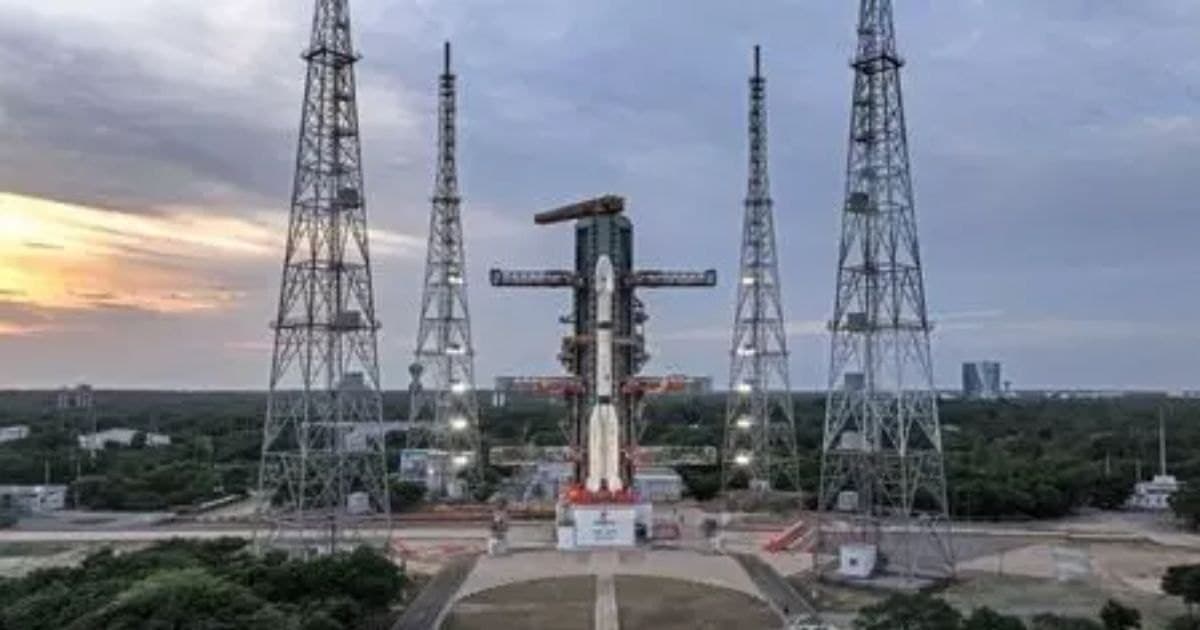
Launched on Friday aboard the GSLV-F17 rocket, EOS-05 was initially placed in a sub-geostationary transfer orbit with a perigee of 171 km and an apogee of 31,000 km. Over the weekend, Isro conducted two orbit-raising manoeuvres using the satellite's liquid apogee motor (LAM). The first burn, lasting 5,406.4 seconds, raised the orbit to roughly 20,000 km by 31,129 km. A second firing of 338.9 seconds on Sunday lifted the apogee to 35,786 km.
The satellite is now in an orbit with a 20,000 km perigee and a 35,786 km apogee. While a circular GEO—at 35,786 km by 35,786 km—is often considered ideal for Earth observation because it keeps a satellite fixed over one point on the equator, Isro has chosen a slightly elliptical GSO for EOS-05. A geostationary orbit is a special case of a geosynchronous orbit, one with zero eccentricity and zero inclination relative to the equator.
"Each orbit is selected for different purposes. Here we have chosen GSO," said an Isro scientist associated with the programme. The satellite is expected to be operational in the coming days at an orbital slot of 85.5° East.
EOS-05 is India's first dedicated imaging satellite intended for a geosynchronous orbit. It is designed to provide strategic data, with the Indian Navy expected to be one of its key users. Isro Chairman V Narayanan described the satellite as unique, with multi-band operating capabilities and a complex configuration.
The mission has been notable for the performance of the GSLV-F17, which delivered the satellite into a higher orbit than planned. "The vehicle was supposed to give a 170 km by 29,000 km orbit, and we have got a 171 km by 31,000 km orbit," Narayanan said. Spacecraft director Imteyaz Ahmed called it a precise injection of the heaviest Earth observation satellite of its class.
The success also marks a recovery for Isro's geostationary launch ambitions. The previous attempt to place an imaging satellite in a geostationary orbit, EOS-03 in August 2021, failed due to a subpar performance by the GSLV's cryogenic stage. More recently, the NVS-02 navigation satellite launched last year failed after its onboard engines did not fire for orbit-raising. The successful engine burns on EOS-05 have therefore been a key milestone for the mission.