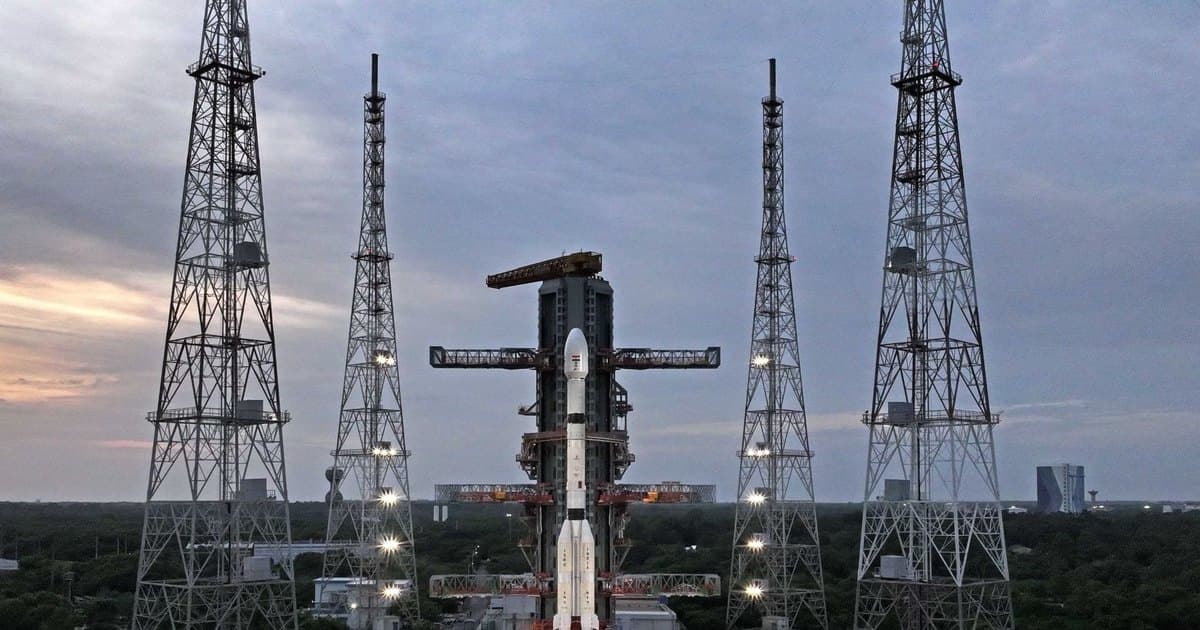
ISRO launches EOS-05, India's first imaging satellite for geosynchronous orbit
ISRO successfully launched EOS-05, India's first Earth imaging satellite for geosynchronous orbit, aboard a GSLV-F17 rocket from Sriharikota.
The Indian Space Research Organisation (ISRO) successfully launched its GSLV-F17 rocket carrying the EOS-05 Earth observation satellite from the Satish Dhawan Space Centre in Sriharikota on Friday. The pre-dawn liftoff occurred at 2:55 AM from the second launch pad, marking a significant step for the country's space program.
EOS-05 is notable as India's first imaging satellite intended for a geosynchronous orbit. Unlike many Earth observation satellites that operate from low Earth orbit, EOS-05 will be positioned at an altitude of roughly 36,000 km. At this height, the satellite will match Earth's rotational speed, allowing it to maintain a constant view of the region beneath it. This capability is expected to provide real-time imagery to support applications in agriculture and disaster management.
The GSLF-F17 is the 19th flight of India's Geosynchronous Satellite Launch Vehicle. The three-stage rocket, which stands 51.7 meters tall and has a lift-off mass of 420.5 tonnes, uses a cryogenic third stage. The 2,367 kg satellite was housed within the rocket's nose cone.
This mission serves as a replacement for the unsuccessful GSLV-F10/EOS-03 mission of 2021. That earlier attempt was aborted by an onboard computer 307 seconds into the flight due to an anomaly in the Cryogenic Upper Stage. The latest launch also follows a period of setbacks for ISRO, including a failed PSLV-C62 mission in January and a similar issue with the PSLV-C61 mission in May 2025.
The launch proceeded after a smooth 27-hour countdown that began on Wednesday night. Despite the early hour and rainy conditions, members of the public turned out to witness the event. ISRO Chairman V Narayanan had visited the Tirumala Tirupati temple days before the launch to pray for the mission's success.