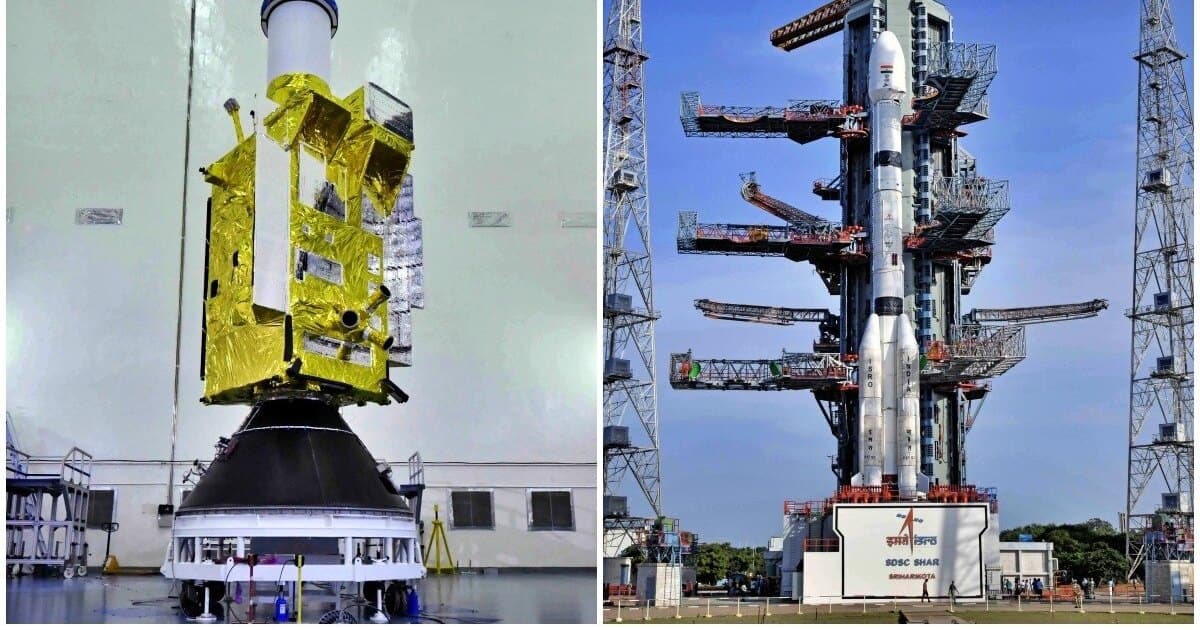
ISRO's GSLV-F17 Successfully Places EOS-05 in Orbit, Marking a Comeback
ISRO's GSLV-F17 successfully launched EOS-05, India's first geosynchronous imaging satellite, restoring confidence after recent PSLV failures.
In the early hours of September 4, ISRO achieved a significant milestone with the successful launch of the GSLV-F17 rocket carrying the EOS-05 satellite from Sriharikota. The mission, which lifted off at 2:55 AM and confirmed success by 3:14 AM, places India's first geosynchronous imaging satellite in orbit for continuous Earth observation.
The launch comes at a critical juncture for the space agency, which has faced questions about its capabilities following consecutive failures of its Polar Satellite Launch Vehicle (PSLV) fleet in 2025 and January 2026. The PSLV remains grounded pending investigations, shifting the spotlight onto the GSLV Mk II, a rocket affectionately nicknamed "naughty boy" due to its history of six failures in 19 launches.
Despite its turbulent past, the GSLV Mk II represents a triumph of indigenous engineering. Its development was born from technology denial in the 1990s, when India was unable to acquire full cryogenic engine technology from Russia. ISRO scientists spent two decades mastering this complex propulsion system, turning the rocket into a symbol of self-reliance.
The EOS-05 mission also fulfills a long-delayed ambition. A similar attempt in August 2021 with GISAT-1 failed when the cryogenic upper stage malfunctioned. This time, the rocket performed flawlessly, placing the 2,376 kg satellite into a better-than-expected orbit. EOS-05 will eventually settle into a geostationary position approximately 36,000 kilometers above Earth.
From this vantage point, EOS-05 will provide continuous surveillance of the Indian subcontinent and surrounding oceans, offering real-time monitoring of cyclones, floods, forest fires, and agricultural patterns. Unlike conventional low-Earth orbit satellites that provide periodic snapshots, EOS-05 will deliver a continuous view, making it a valuable asset for both civilian applications and national security. Senior representatives from the Indian Navy and Air Force attended the launch, underscoring its strategic importance.
ISRO Chairman Dr. V Narayanan praised the team's efforts, noting that "the reward for hard work is more work." With six more launches planned this financial year, the agency is moving forward with renewed confidence, having proven its resilience in the face of setbacks.