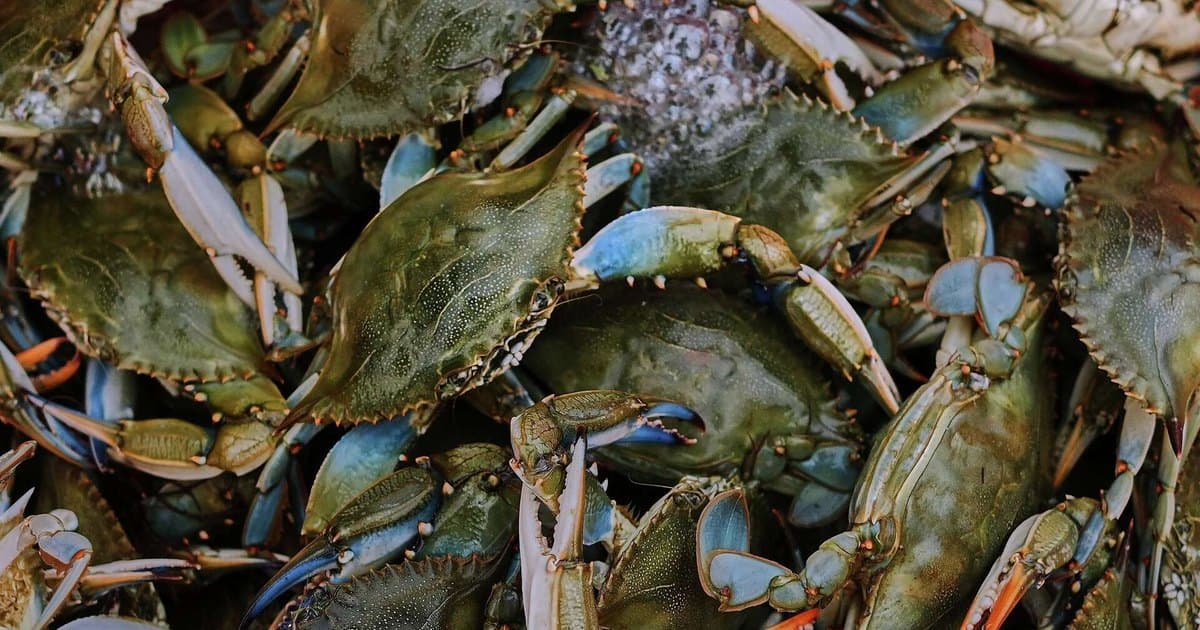
Italy's uneasy truce with invasive blue crabs: export over incineration
Italian fishermen in the Po River Delta are exporting invasive Atlantic blue crabs after a culling program failed, finding economic opportunity in an ecological crisis.
Italian fishermen in the Po River Delta, south of Venice, have shifted strategy in their battle against an invasive species. After two years of incinerating most of the Atlantic blue crabs they caught, the industry is now exporting the crustaceans, turning a disaster into a potential economic lifeline.
The Polesine Fishermen's Cooperative Consortium saw its revenues plummet by 75% to 15 million euros in 2024 and 2025, with active members dropping from 1,500 to 850. The crab invasion devastated their prized Manila clams, which once generated 90% of their income but now account for just 10%.
"We needed to change strategy, and create an opportunity from this disaster," said Paolo Mancin, the cooperative's president. The pivot to exporting crabs has been remarkably successful, with the consortium selling every crab caught this year and forecasting 20 million euros in revenue.
The Atlantic blue crab has been present in the Adriatic since the 1940s, arriving via ballast water from commercial vessels. Their numbers remained contained until 2023, when an explosion in population devastated local mollusk farms. Climate change played a key role, with higher water temperatures and drought-driven drops in the Po River's levels creating ideal breeding conditions.
A government eradication program that paid fishermen to catch and incinerate nearly 2.3 million kilograms of crabs was shelved after barely denting their numbers. Female crabs can produce up to 8 million eggs per season, making culling ineffective.
Scientists have experimented with releasing 150,000 baby octopuses into the Adriatic as natural predators, but experts remain skeptical. "If an animal with such high reproductive potential finds suitable environmental conditions, predators may not be able to keep it under control," said Piero Genovesi, an invasive species expert.
Fishermen now catch 100-150 kilograms of crabs daily, selling them for just 1.30 euros per kilogram compared to 10 euros for clams. The crabs are steamed, frozen, and shipped to Sri Lanka, where workers remove the meat by hand. A joint venture between Sri Lankan company Taprobane Seafoods and the Scardovari consortium produces a range of crab products, most exported to other markets.
While blue crab remains absent from most top restaurants around Venice, some establishments have embraced it. The Yogi restaurant in Porto Tolle offers an all-crab menu, featuring fried crab balls, creamed crab on polenta, and soft-shell crab. "At first, the customer is very skeptical. But then the reaction is completely positive," said owner and chef Stefania Marchesini, who recently showcased her menu at Barcelona's Alimentaria trade fair.
"We are all angry because it invaded our seas," Marchesini said. "But we also have to eat. Once people understand how it should be prepared, they will realize it is an excellent product."