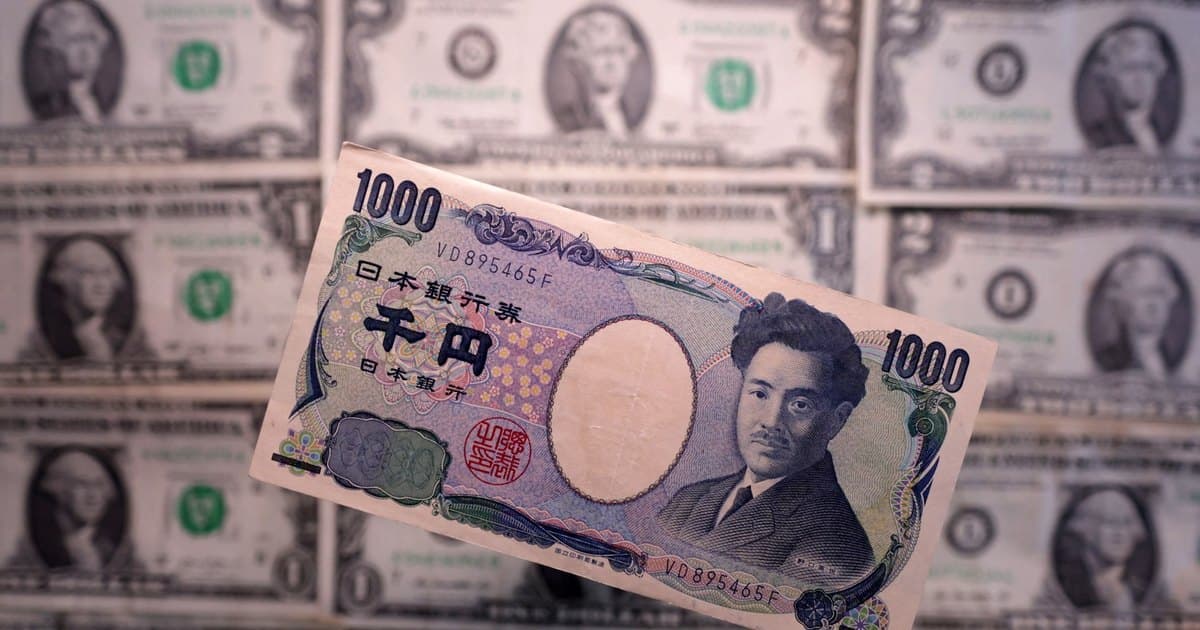
Japan's Top Currency Diplomat Reaffirms Yen Intervention Warning
Japan's top currency diplomat Atsushi Mimura reiterated Tokyo's readiness to intervene against excessive yen declines, even after the currency's recent rebound.
Japan's top currency diplomat, Atsushi Mimura, said on Friday that Tokyo remains on high alert regarding exchange-rate movements, reiterating its readiness to intervene in the market to counter excessive yen weakness. The statement came despite the yen surging 2% against the dollar the previous day, driven by growing market expectations of further interest rate hikes by the Bank of Japan (BOJ).
Speaking to reporters, Mimura confirmed that Japanese authorities are in constant communication with their U.S. counterparts following the conclusion of the G20 finance leaders' meeting in Asheville, North Carolina. His comments briefly pushed the dollar down to 155.305 yen, as traders weighed the possibility of another yen-buying intervention. However, the yen soon gave up those gains, falling to 156.43 per dollar later in the Asian session, highlighting the currency's persistent downward trend fueled by the still-wide U.S.-Japan interest rate differential.
Market participants have almost fully priced in a BOJ rate hike this month, following a series of hawkish signals from the central bank and comments from U.S. Treasury Secretary Scott Bessent, who reportedly urged the BOJ to raise rates. Bessent said he told BOJ Governor Kazuo Ueda during talks on the sidelines of the G20 gathering that he strongly supported "decisive" monetary steps to address the yen's undervaluation, remarks some analysts viewed as encroaching on the central bank's independence.
In a separate news conference on Friday, Finance Minister Satsuki Katayama denied receiving any demands from Bessent regarding Japan's monetary policy. She noted that Bessent has long held the view that the yen is undervalued due to interest-rate divergence, but clarified that their bilateral meeting did not include any discussion on Japan's monetary policy, brushing aside suggestions of specific external demands.
A weak yen has pushed up import prices and broader inflation, creating headaches for Japanese policymakers. Japan and the U.S. conducted a rare joint yen-buying intervention on July 31, signaling their determination to prevent a selloff in the yen and Japanese government bonds from destabilizing global markets. While that action did not provide a sustained floor under the yen, Bessent has indicated he does not view recent yen moves as disorderly, suggesting Washington may not be prepared to join Tokyo in another market foray to support the currency.