Jeju's soft corals slump as warming seas test UNESCO reserve
Rising sea temperatures are causing soft corals off South Korea's Jeju island to slump and die, alarming divers and researchers who warn the entire local marine ecosystem could be at risk.
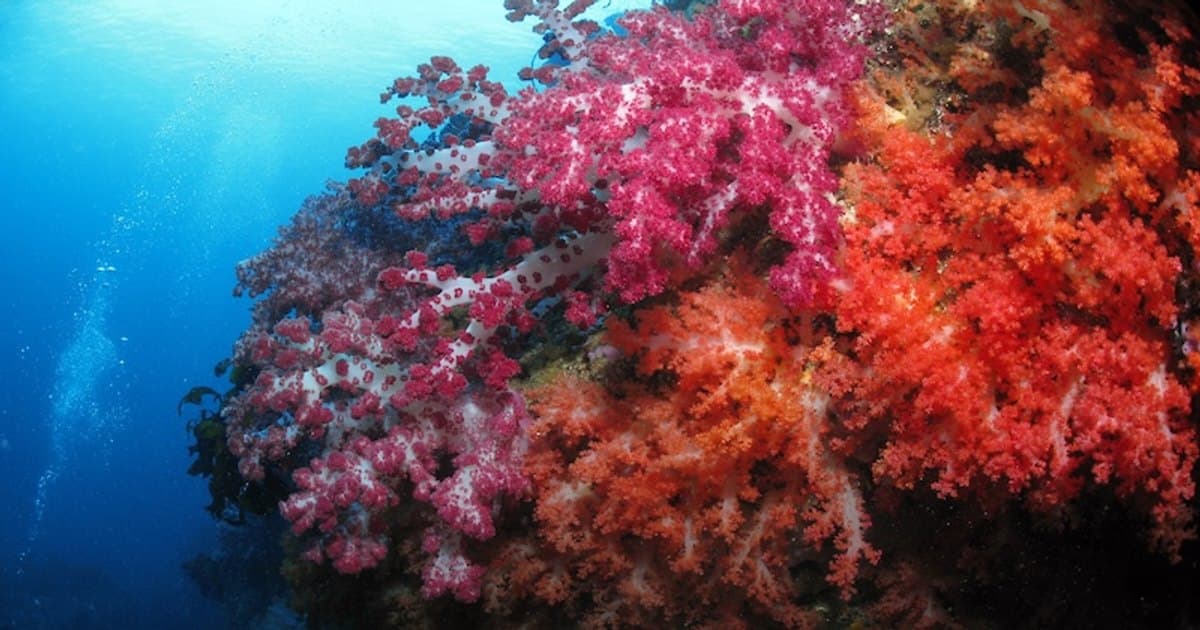
Off the southern coast of South Korea's Jeju island, the vibrant soft coral gardens that once drew divers are showing fresh signs of distress. A phenomenon known locally as "slumping" — where corals lose their upright structure and collapse — is appearing again this year, according to the Paran Ocean Citizen Science Center, a volunteer diving group that monitors the UNESCO-listed coral communities around the island's uninhabited islets.
Ko Myeong-hyo, a third-generation Jeju "haenyeo" or sea woman who has harvested seafood in these waters for six years, described the change as deeply unsettling. "Watching the coral garden collapse and turn white, it was so disorienting," she said. "I was afraid the whole sea might be collapsing."
Unlike hard corals that rely on rigid skeletons, soft corals stay upright through internal fluid pressure. When environmental conditions shift, that pressure can fail, causing the organisms to sag and deteriorate. Researchers say roughly half of one cluster near the islet of Beomseom has been struggling in recent months.
Kim Taihun, a researcher at the Korea Institute of Ocean Science and Technology (KIOST), said this year's event resembles the one documented in 2024, which he and colleague Anna Beate Jöst described in a May article in the journal Scientific Reports. He warned that repeated slumping events could exhaust the corals' ability to recover. "If another large-scale slumping happens, corals partially recover and then a lot break off and deteriorate again, and that keeps repeating, their capacity to recover just keeps declining," he said.
Kim also noted that the situation could worsen if high water temperatures persist through September. The El Nino weather pattern may bring typhoons and heavy rains, adding further stress. Researchers point to a record heatwave on the Korean peninsula and freshwater flowing down from China's Yangtze River — which alters local salinity — as potential triggers.
Jeju's waters sit at the northernmost limit of coral distribution in the East China Sea, making the communities here particularly sensitive. Yoon Sanghoon, an environmental expert at Paran, warned that the stakes extend beyond the corals themselves. "The seaweed sea, the coral sea, is the foundational ecosystem underlying Jeju's marine ecology," he said. "So if this base ecosystem collapses, there's a real possibility the entire marine ecosystem could collapse."
Weather authorities say marine heatwaves around Korea have stretched nearly four times longer over the past decade, now averaging 83.3 days. The warming has also thinned the catch for traditional fishers. Son Choon-sook, Ko's 70-year-old mother who began diving 45 years ago, recalled when turban shells, abalone, and sea cucumber were abundant. "I've worked at the sea for about 45 years, earned money, and sent my children to school on it," she said. "Now the catch has run dry, and it makes me very sad."
Paran, formed in 2023 by concerned Jeju residents, conducts monthly dives to photograph and document the coral beds, sharing their observations with scientists. Ko, who can free-dive to 8 meters but uses an oxygen tank for deeper coral surveys, said her recent summer dives have offered little comfort. "Rather than the beautiful coral shapes, I feel like I'm seeing more sick coral now," she said.
South Korea's Heritage Service, which manages the coral colonies as a national monument, said it has monitored the situation this year and will continue long-term research. The Oceans Ministry, which oversees marine protected species, has announced plans for a detailed investigation to assess the scale of the damage.