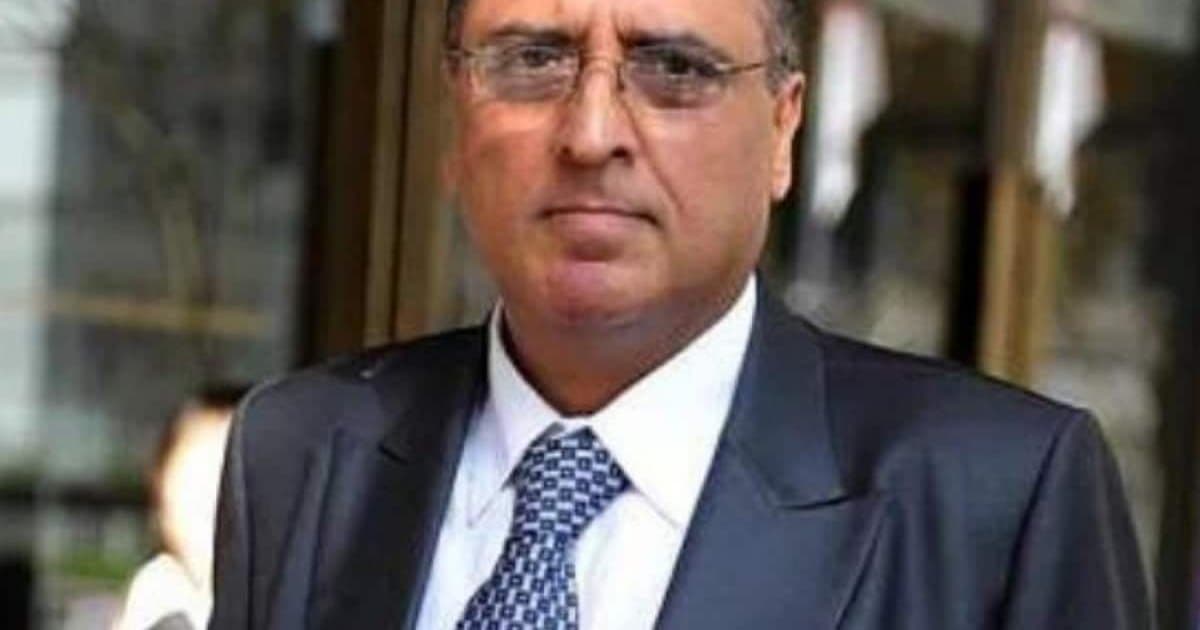
Madras HC Clears Return of Idol Smuggler Kapoor to Germany After 14 Years
The Madurai Bench of the Madras High Court has directed the Centre to return convicted idol smuggler Subash Chandra Kapoor to Germany, citing the limits of the extradition treaty.
The Madurai Bench of the Madras High Court has directed the Union government to take custody of Subash Chandra Kapoor from Tiruchi Central Prison and proceed, in accordance with law, to send him back to Germany — the country from which India brought him fourteen years ago.
The ruling rests on an unusual legal twist. The extradition treaty that once allowed India to secure Kapoor's custody now restricts how long the country can hold him.
Kapoor, a US citizen and once a prominent Manhattan antiquities dealer, was convicted in 2022 and sentenced to ten years' imprisonment for the burglary and illegal export of 19 antique idols from the Varadaraja Perumal temple at Suthamalli in Ariyalur district, Tamil Nadu. The idols were valued at more than Rs 94 crore. Time already spent in custody meant his sentence stood completed in 2023.
Tamil Nadu sought to prosecute him in other idol-theft cases, but Germany — whose consent was required under the rule of speciality governing the extradition — declined permission in four matters. Requests concerning other cases remained unresolved. The court has now held that the gravity of an allegation does not by itself create legal authority to keep a person imprisoned.
For decades, objects appeared to move around Kapoor with remarkable ease. An ancient bronze could leave a village temple, acquire paperwork, cross oceans, gain a provenance and end up under museum lighting, far from the place where a lamp was once lit before it.
His Art of the Past gallery in Manhattan belonged to a different world from the Tamil Nadu temples under investigation. There, he was a respected dealer and donor whose wares were bought by museums and collectors. Investigators would later argue that provenance itself could be manufactured.
His arrest produced one of the stranger episodes in that history. Three days after he was detained in Germany on October 30, 2011, Kapoor sent a handwritten instruction to his gallery: "Give back four items to Selina (Mohammad), Bronze Dancers, which are in the 4 closets." A second note followed days later referring to four dancer bronzes in four closets, forming two pairs of nataraj and consorts. Investigators believed the note concerned four highly valuable Chola bronzes. Kapoor's aide, Aaron Freeman, allegedly moved them to the apartment of Kapoor's girlfriend and art dealer Selina Mohammad before American investigators raided the gallery and associated storage facilities in January 2012. The four sculptures disappeared.
Kapoor's father, Parshotam Ram, was an art dealer who ran Kangra Arts and Crafts in New Delhi before the family moved abroad in the 1970s. Kapoor later established Nimbus Import and Export and became a significant figure in the international antiquities market.
American investigators took an interest in him by 2007, when a container arriving from India at New York held more than 140 antiquities. Kapoor, meant to receive it, abandoned the plan after apparently learning that authorities were watching. When the FBI examined why anyone would leave behind such a shipment, the trail led to him. Investigators began surveillance, planted a mole in his office and recorded conversations, emails and photographs.
His former partner, Singapore-based art collector Paramaspry Punusamy, had quarrelled with him over five sculptures. After losing a court dispute over them, she began supplying authorities with information about his operations, investigators said at the time, and provided a recent photograph of Kapoor that helped identify him before his 2011 journey to Germany.
An international antiquities empire was thus being squeezed by the FBI, Tamil Nadu police, an employee-turned-approver and an estranged former girlfriend.
Beneath the caper-like details lay a darker system, as reconstructed by Tamil Nadu investigators: thieves targeted inadequately protected temples, middlemen acquired idols, exporters allegedly mixed ancient bronzes with newly manufactured objects, certificates described consignments as handicrafts, and sculptures travelled through intermediary countries before surfacing in respectable collections.
Investigators then tried to reverse the journey. The Metropolitan Museum of Art agreed to return 15 sculptures once sold by Kapoor after concluding they had been illegally removed from India. Other works linked to him came back from Australia, Singapore, Germany and elsewhere. Yet many objects connected to Kapoor remain abroad or untraced, Tamil Nadu investigators say.
India had been able to bring Kapoor over on a promise: he could be prosecuted for the offence for which Germany surrendered him, while prosecution for other pre-extradition offences required the European nation's consent. Fourteen years later, that promise has proved decisive.
Kapoor, now 77, is expected to leave Tiruchi prison and return to the country where this Indian chapter began. The idols are a more complicated matter. Some have returned. Some await repatriation abroad. Others remain missing.