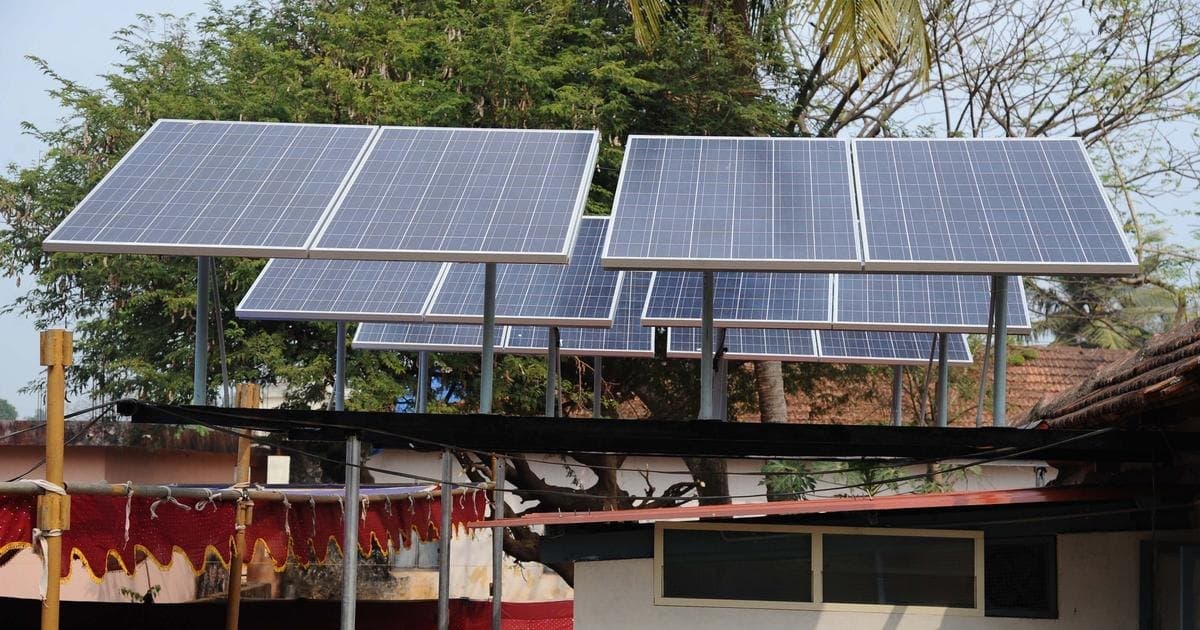
Karnataka to solar-power 1,900 anganwadi centres under SELCO tie-up
Karnataka's WCD department and the SELCO Foundation will solar-power 1,900 anganwadi centres at an estimated ₹16 crore, with staff training and digital fault tracking.
Karnataka's Department of Women and Child Development will provide solar power to 1,900 anganwadi centres across the State under a partnership with the SELCO Foundation, with priority given to centres in remote and underserved locations.
A Memorandum of Understanding for the programme was signed by WCD Director Mahesh Babu and SELCO Foundation Director Huda Jaffer. The initiative is estimated to cost about ₹16 crore.
The work is aimed at upgrading basic facilities at anganwadi centres and improving the conditions for early childhood care, preschool education, nutrition and health services.
Two system configurations
Of the 1,900 centres, 1,500 will receive 250 Wp direct-current solar systems, while the remaining 400 will be equipped with 630 Wp alternating-current systems.
The centres were chosen using their 'Saksham' and 'Non-Saksham' classification, with particular attention to those that have no electricity connection or lie in interior, remote and infrastructure-deficient areas.
Training and digital support
Anganwadi staff will be trained in the safe use, basic operation and maintenance of the solar systems, and in identifying common problems so they can seek technical help when needed.
They will also be trained to use the Soura e-Mitra application to report and track faults and to access technical support. The department and the foundation expect the combination of local training and digital tools to keep the systems running and cut downtime.
The partnership will additionally support the creation of model anganwadi centres, intended to demonstrate how clean energy and better infrastructure can aid early childhood development, nutrition, learning and community services.
Built on a health-sector programme
The anganwadi collaboration extends the foundation's existing work with the State's Health Department under the Soura Swasthya initiative.
Launched in November 2024 with the National Health Mission, that programme aims to solar-power 5,000 public health facilities by 2026. The target set covers 2,877 sub-centres, 1,971 primary health centres, 28 urban primary health centres, 12 community health centres and 112 taluk hospitals.
Estimated at ₹120 crore, the health project is meant to make electricity supply more reliable at public health facilities, especially where power availability is limited. Health Department officials said more than 3,700 facilities have already been equipped with solar power.
The lessons from the health-sector rollout are now being applied to anganwadi centres, extending the focus on dependable clean energy to another set of essential public services.