Private satellite nears NASA's Swift telescope but can't save it
Katalyst's Link spacecraft got close to NASA's Swift telescope but lacked fuel to boost its orbit, ending the rescue attempt.
A private spacecraft that set out to rescue NASA's aging Swift Observatory managed to fly within 15 kilometers of the telescope and capture images, but it could not complete its mission due to a fuel shortage.
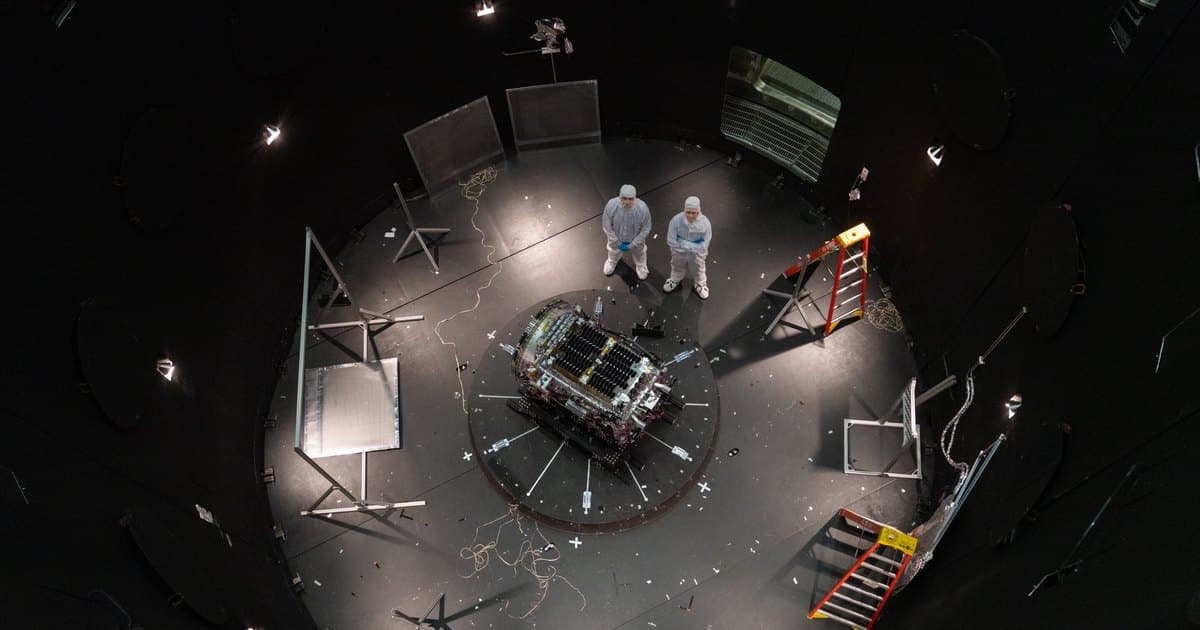
Katalyst Space Technologies, which built and operated the three-armed robotic vehicle named Link, said the spacecraft had to back off after its close approach last weekend. The company had already abandoned the rescue effort in August after Link suffered an uncontrollable spin shortly after launch in July.
Flight controllers were able to stabilize the spacecraft, but the effort consumed too much fuel to allow Link to raise Swift into a higher, longer-lasting orbit. "We got so close, but so far," Katalyst CEO Ghonhee Lee said.
Lee attributed the spacecraft's problems to the rushed nine-month development timeline, during which engineers often used available parts instead of waiting for preferred components.
NASA had paid $30 million for the attempt, which was considered an experiment with little downside. NASA Administrator Jared Isaacman said the mission, though unsuccessful, provided valuable lessons. "That's exactly the type of missions that we should be flying at NASA," he said.
Swift, launched in 2004, has been dragged down faster than expected by intense solar activity. NASA expects it to re-enter the atmosphere between October and the end of the year. Observations resumed last week after a pause to conserve power.
Katalyst is already developing a next-generation spacecraft to potentially boost the Hubble Space Telescope, whose orbit has also been shortened by solar storms. Lee noted that Hubble still has a few years of life, so the need is not immediate.
Lee believes servicing old satellites will become more common, moving from a niche concept to a routine practice. Link may still exercise its robotic arms and gather data before it burns up in the atmosphere within the next month.