Kosovo Parliament Unanimously Rejects Hague War Crimes Verdicts
Kosovo's assembly voted 99-0 to condemn this month's war crimes verdicts against four former KLA leaders and urged a joint legal and diplomatic strategy.
Kosovo's parliament voted unanimously on Monday to condemn war crimes verdicts handed down by a European Union-backed court against four former commanders of the Kosovo Liberation Army, in a rare show of cross-party agreement as the country works through a prolonged political crisis.
All 99 lawmakers present backed the declaration, which voiced concern over the convictions and pressed state institutions to act in defence of what it described as Kosovo's legacy from the 1998-99 war for independence from Serbia.
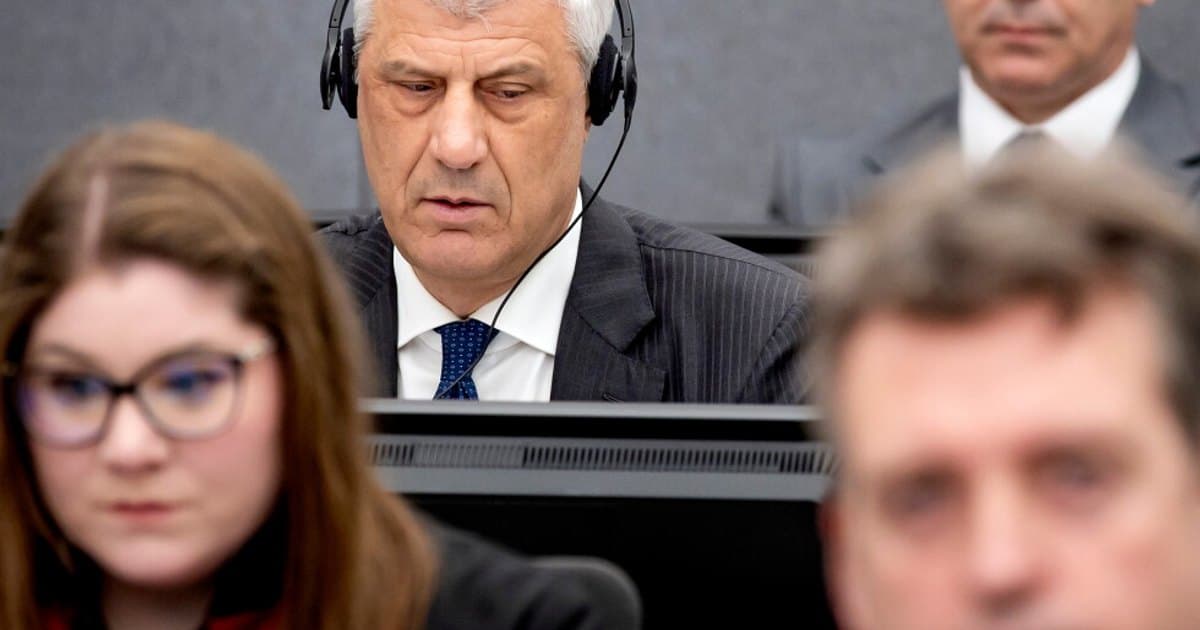
Earlier this month, a court in The Hague found former Kosovo President Hashim Thaci and three other ex-KLA commanders — Kadri Veseli, Rexhep Selimi and Jakup Krasniqi — guilty of war crimes and sentenced them to prison terms ranging from 13 to 25 years.
The declaration was read to the chamber by Albulena Haxhiu, Kosovo's acting president and parliament speaker. She said the assembly considered the finding of a joint criminal enterprise unacceptable and called for a "joint state strategy" to coordinate legal, institutional and diplomatic efforts to affirm the full historical truth about Kosovo's struggle for freedom.
The text also urged the Specialist Chambers to respect its mandate and rejected any attempt to overturn Kosovo's historical record, to cast doubt on its liberation struggle, or to equate those who fought for freedom and survival with the regime that oppressed them.
Kosovo has criticised the verdicts as unjust, arguing that the KLA, which Thaci led before entering politics, fought against Serbian oppression. Both residents and politicians have said they fear the rulings will tarnish that struggle.
More than 13,000 people died in the conflict, which ended after a NATO bombing campaign forced Serbia to withdraw from Kosovo, then a Serbian province. Kosovo declared independence in 2008, a move Serbia still does not recognise.
Since the verdicts were issued, thousands have rallied across Kosovo, increasing pressure on Prime Minister Albin Kurti's government, which has been mired in a political crisis since parties failed to elect a president.
Kurti now faces an Oct. 6 deadline for the parties to agree on the next president; otherwise early elections would have to be held — the third in a year. Some opposition parties have tied their agreement on the presidency to a new law that would seek to limit the scope of the Specialist Chambers. Kurti has not yet responded to that demand, though his government has promised support for the four men in their appeals.
The Netherlands-based court was set up by Kosovo in 2015 with EU backing. Kosovo has been told it must mend ties with Serbia if it wants to join the EU, but an EU-mediated dialogue has stalled as tensions between the former wartime foes persist.