Liberia Chimps Get Health Checks After Decades of Vaccine Research
Chimpanzees used in hepatitis B experiments receive health checks at a Liberian sanctuary, aiming to give them a dignified life.
A group of chimpanzees that once endured hepatitis B vaccine experiments in Liberian laboratories has received comprehensive health checks at their new sanctuary home, marking a step toward a more normal life.
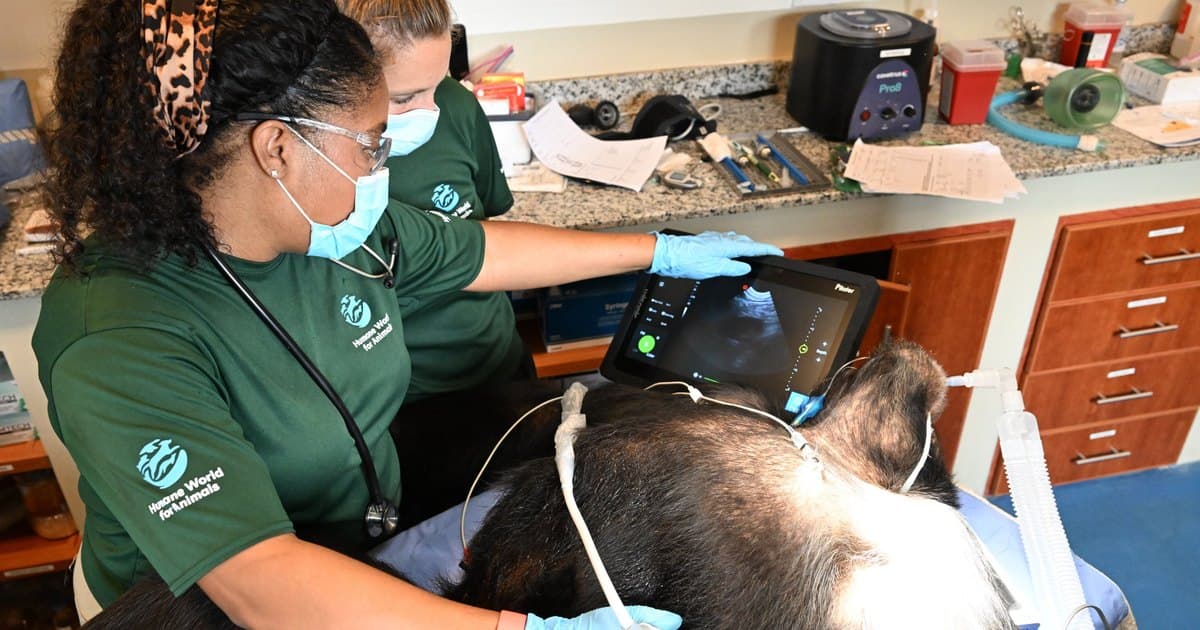
The medical examinations, conducted at the Humane World for Animals' Second Chance Chimpanzee Refuge in central Liberia, included dental cleanings, X-rays, and even pedicures. The sanctuary's director, Liliana Pacheco Ricote, said the procedures were part of ongoing care for the animals.
More than 400 chimpanzees were used by American researchers in Liberia for hepatitis B vaccine trials from the 1970s until the early 2000s, many captured from the wild as infants. The West African chimpanzee, classified as critically endangered, faces rapidly declining numbers, with Liberia hosting the second-largest population in the region after Guinea.
"They were used in very invasive research … (and) went through a lot of experiments and pain," Ricote said.
In 2015, Humane World for Animals took permanent responsibility for the 60 chimpanzees remaining when the research program ended. The animals now live mostly on mangrove-forested islands within the sanctuary.
The health checks, performed under anesthesia, provided head-to-toe assessments to evaluate long-term health, detect early signs of disease, and tailor care plans as the animals age. Tests covered dental health, heart, lungs, nervous system, and blood, along with booster vaccinations and nail trims. The sanctuary plans to examine the remaining chimpanzees as well.
"The health checks are a vital part of caring for these chimpanzees who have been through so much," said Belen Perez Hernando, the sanctuary's veterinarian.
The full impact of the experiments on the chimps, whose average age is 30 to 35, remains unclear as assessment findings are still being analyzed. Yet, Ricote noted, "for those who were under experiments, you could still feel the hurt and the pain that they went through."
She added, "Seeing how much they hurt about what we've done, it gives me a lot of pleasure … to give them this second chance to live with dignity the life that they deserve."