Mexico's Cartels Shift to Car Bombs and Drones as Violence Escalates
Mexican cartels are increasingly using car bombs and drones, raising fears of more violence and complicating relations with the US.
Mexican drug cartels are escalating their tactics, moving beyond traditional gun battles to deploy car bombs, explosives-laden drones, and improvised explosive devices. This shift is raising fresh concerns about the trajectory of violence in the country and its tense relationship with the United States, which has threatened military action against these groups.
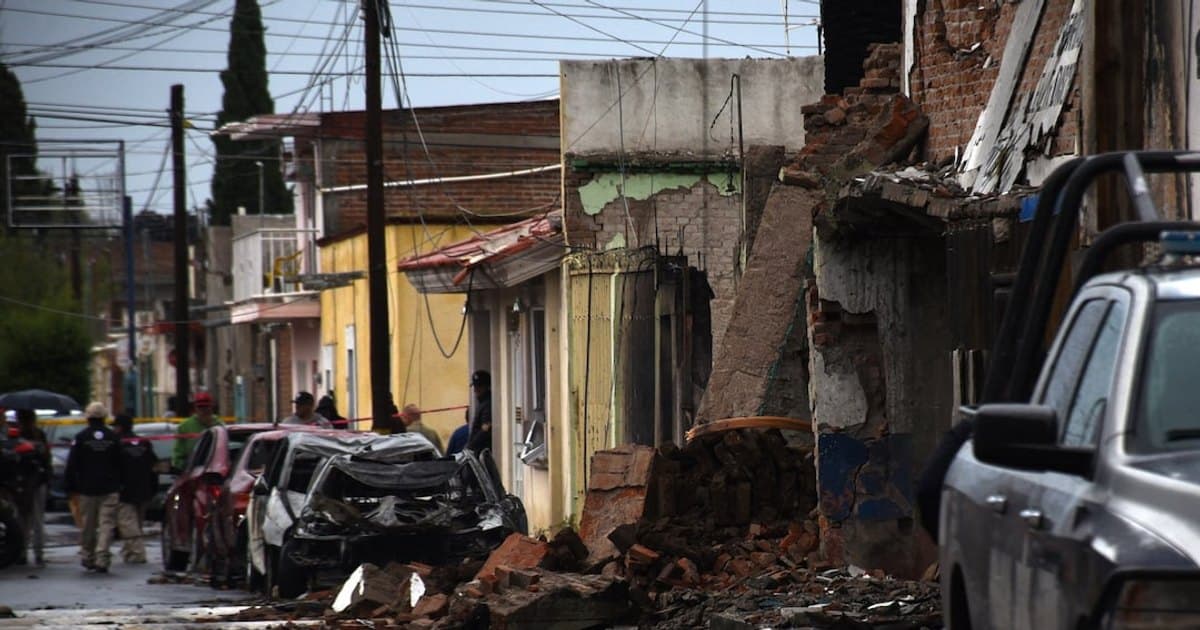
The most recent incident occurred on a Sunday night in Ojocaliente, a small city in the state of Zacatecas. A car packed with 200 kilograms of explosives detonated outside a police station, injuring 11 people and damaging over 60 homes. No fatalities were reported. Mexico's security chief, Omar García Harfuch, confirmed the details during a visit to the region with President Claudia Sheinbaum.
Zacatecas has been a particular hotspot, recording 23 attacks involving explosives this year alone, including six using vehicles. While the scale of violence remains below that seen in countries like Colombia, experts say the trend is deeply worrying.
Victor Manuel Sánchez, a professor at the University of Coahuila, notes that car bombs are not new to Mexico. He points to a 1994 attack in Guadalajara as an early example. However, the recent surge is largely attributed to the Jalisco New Generation Cartel (CJNG), which is expanding its territorial control. The group has been blamed for two recent bombings in town centers, including a December attack in Michoacán that killed five people and the recent blast in Zacatecas. The CJNG is one of the cartels designated as a foreign terrorist organization by the Trump administration.
The use of explosives has grown significantly over the last five years. Cartels now routinely drop bombs from drones to target security forces or rivals and bury devices in the ground to defend territory. In 2023, roadway bombs in Jalisco killed six people. The military later reported seizing about 2,800 explosive devices nationwide over the preceding four and a half years. The following year, authorities deactivated nearly 3,200 devices in Michoacán alone, where a separate explosion in 2025 killed eight soldiers.
Analysts see this as a dangerous escalation. Vanda Felbab-Brown of the Brookings Institution describes it as a steady intensification of violence that heightens fear and retaliation. Carlos Pérez Ricart of Mexico's CIDE university suggests car bombs are used to intimidate, pressure the government, and force negotiations, especially when criminal groups feel cornered.
President Sheinbaum has pointed to a nationwide decline in killings as evidence that her security strategy is working. However, the government has long avoided labeling cartel violence as terrorism, partly due to fears of inviting foreign intervention and harming investment. While cartels are primarily profit-driven, civilians have been deliberately targeted in the past, including a 2008 grenade attack in Morelia and a 2011 casino fire in northern Mexico.
The U.S. designation of cartels as terrorist organizations makes this terminology more consequential. Pérez Ricart cautions against applying counterterrorism strategies to organized crime, arguing that the drug trade is an illegal market, not just an armed enemy to be eliminated.