Modi Urges BRICS to Move From Rule-Takers to Rule-Shapers
PM Modi opened the 18th BRICS Summit with a call for global governance reform, proposing 10 reform proposals, a continuity mechanism and a seafarers' support network.
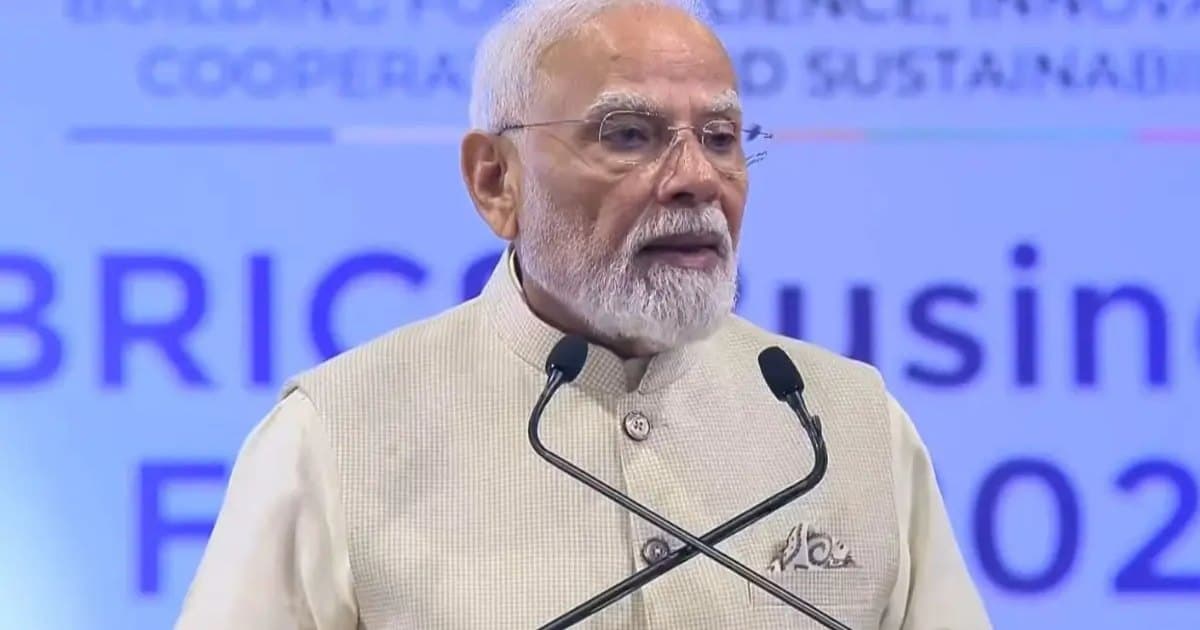
Prime Minister Narendra Modi opened the 18th BRICS Summit in New Delhi on Saturday with a call for the grouping to move from being rule-takers to rule-shapers, arguing that global governance must be reshaped so that the countries affected by decisions also help make them.
Noting that BRICS has completed 20 years, Modi said the grouping had built a distinct identity by respecting differing perspectives and working through consensus. He described the occasion as the start of a more mature and responsible phase, and said the unity the bloc has shown internally must now be converted into concrete outcomes on the world stage.
To that end, he proposed that the leaders gathered in the capital draw up 10 proposals for global governance reform, which could be developed into a BRICS Reform Roadmap by the next summit.
Continuity and follow-through
The Prime Minister said the grouping's next two decades require a fresh and ambitious agenda, beginning with its own working methods. Because the BRICS presidency rotates annually, he said institutional momentum should not stall with each change of chair.
He proposed a BRICS Continuity and Implementation Mechanism, to be used by the BRICS Troika, to track initiatives and outcomes. A secure digital repository, he suggested, could record each decision along with its nodal point, deadline and implementation status.
A pyramid of privilege
Describing the present architecture of global governance as a pyramid, Modi said power and decision-making are concentrated at the top while countries at the bottom bear the effects of decisions they cannot shape. The Global South, he said, stands on the front line of global crises but in the back row when it comes to decision-making.
He called for this pyramid of privilege to be turned into a platform of partnership, in which every country has a voice, every member has a stake, and human development remains central.
Three priorities
Modi outlined representation, responsiveness and rule-making as the focus areas for the proposed roadmap. On representation, he said reform of the UN Security Council cannot be delayed further and that text-based negotiations must be tied to a definite timeline and clear outcomes. Voting power, leadership positions and policy priorities in financial institutions, he added, should reflect current economic realities, with countries driving global growth given an appropriate role in shaping economic governance.
On responsiveness, he said trust in global institutions depends on their ability to deliver effective solutions, and stressed the speed, scale and last-mile impact of collective responses. Citing the example of seafarers, who contribute significantly to global trade but often lack support in difficult times, he proposed a Seafarers' Emergency Support Network linking the maritime authorities and missions of concerned countries to assist with distress alerts, medical help, informing families and evacuation.
Shaping future rules
Turning to rule-making, Modi said artificial intelligence, cyberspace, outer space, biotechnology and critical technologies are not only creating future opportunities but also shaping the rules of the future. The Global South, he said, must be transformed from rule-takers into rule-shapers.
He said the message from the summit should be clear: if the future is shared, the right to shape it must be shared as well, with the journey from voice to impact and from privilege to partnership serving as BRICS's guiding resolve.