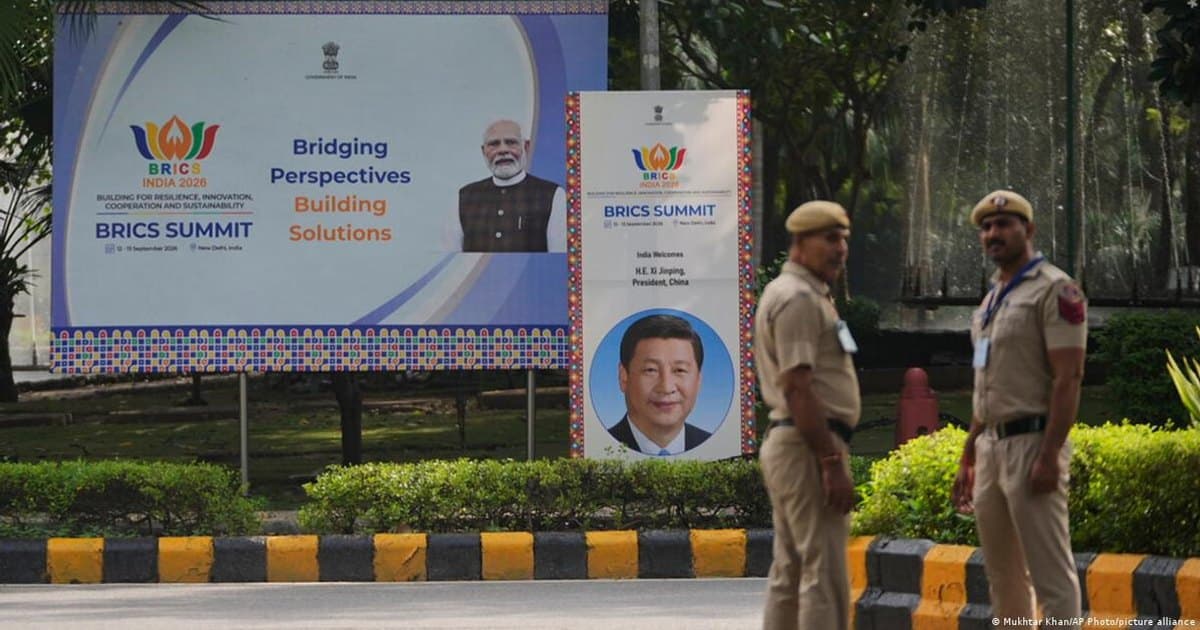
Modi and Xi to Meet at BRICS as Border, Trade and Visas Top Agenda
Prime Minister Modi and President Xi will hold bilateral talks during the BRICS summit, covering border issues, trade, investment and visas.
Prime Minister Narendra Modi and Chinese President Xi Jinping are set to hold bilateral talks on Saturday evening on the sidelines of the BRICS summit. The meeting is expected to cover a wide canvas, ranging from the situation along the Line of Actual Control (LAC) to trade, investment and broader economic engagement.
While the discussions are expected to focus on consolidating the recent stabilisation in India-China ties, the border question is likely to remain central.
Border and the LAC
Managing the border and preserving peace and tranquillity along the LAC are expected to be key themes. India has consistently held that the state of bilateral relations cannot be divorced from developments along the border, while China has traditionally argued that the boundary question should be handled separately from the wider relationship.
Recent tensions reported in the Taksing area of Upper Subansiri district in Arunachal Pradesh in July, followed by corps commander-level talks, could also figure in the discussions. Both sides have continued to use diplomatic and military channels to prevent misunderstandings and maintain stability along the LAC. A sustained period of peace and tranquillity is seen as essential for the normalisation and further development of ties.
Arunachal Pradesh
Differences over Arunachal Pradesh are another likely point of discussion. India maintains that the state is an inalienable and integral part of the country. China has repeatedly objected to India's moves to standardise the names of locations in the state, including the latest exercise involving 27 places. The two sides also continue to have differences over the eastern sector of the LAC.
China's mega dam on the Brahmaputra
China's planned mega hydropower project on the upper reaches of the Brahmaputra, known in Tibet as the Yarlung Tsangpo, is another issue India is expected to raise. The proposed project, reportedly estimated at around $137 billion, has triggered concerns in India over its potential downstream impact. New Delhi has called for greater transparency and information-sharing on projects along the transboundary river. Concerns over the Brahmaputra have gained significance amid recent extreme weather and glacier-related developments in the region.
Trade imbalance and market access
The large trade imbalance in China's favour is expected to be another major economic concern. India is likely to seek greater market access for its goods and raise concerns over supply-chain reliability. Restrictions affecting the export of key technologies and equipment from China could also come up. Indian industries have faced challenges in accessing Chinese machinery, equipment and components, making supply-chain resilience an important part of the economic conversation.
Visas, investment and economic engagement
Visa restrictions affecting Indian businesspeople and the broader environment for economic engagement could also feature in the talks. The status of Chinese investments in India is another potential issue. While some restrictions have been eased in sectors such as electronics, capital goods and solar cells, several areas continue to face approval-related hurdles. Recent approvals, including the reported partnership between Dixon Technologies and Vivo, could be seen as signs of a gradual easing of restrictions, even as wider concerns over Chinese investments and industrial equipment remain.
A broader framework
Beyond individual disputes, the Modi-Xi meeting could focus on building a more durable framework for managing differences between the two countries. The broader objective is expected to be to strengthen communication and cooperation while ensuring that differences are handled through established mechanisms. The talks could therefore mark an effort to move India-China ties beyond mere stabilisation towards a more predictable and stable long-term relationship.