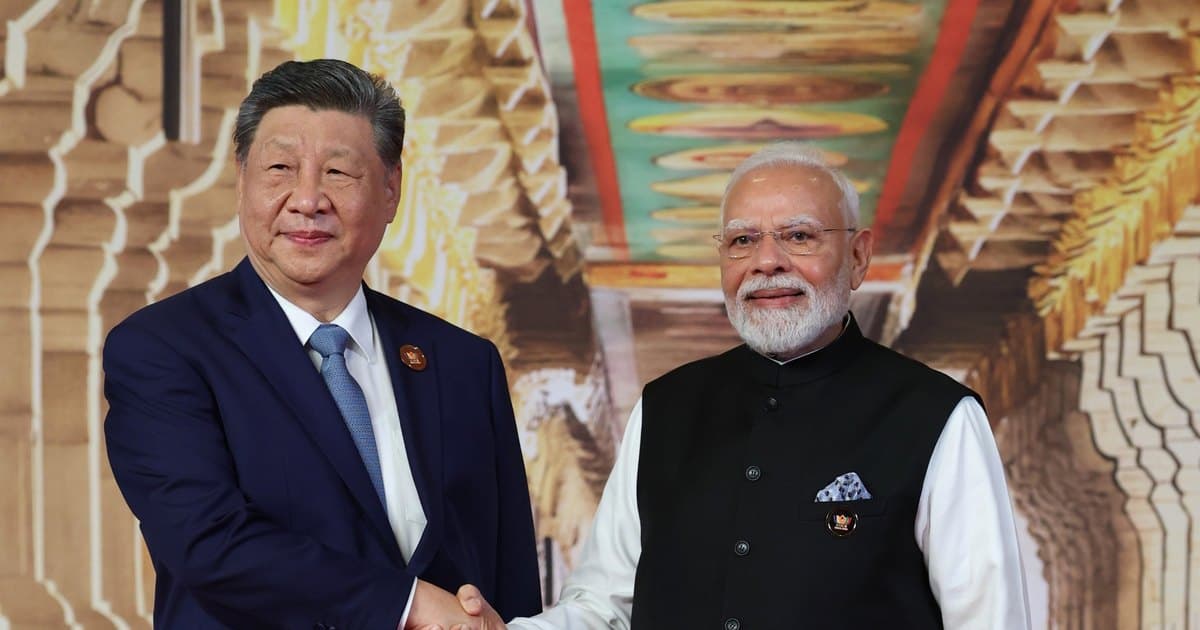
Modi and Xi Meet at BRICS Summit in New Delhi, Seek to Stabilise Ties
Modi and Xi met on the sidelines of the BRICS summit in New Delhi, with Xi calling for strategic, long-term cooperation between the two neighbours.
Indian Prime Minister Narendra Modi and Chinese President Xi Jinping met on the sidelines of the BRICS summit in New Delhi on Saturday, in the latest attempt by the two neighbours to steady a relationship strained by a deadly border clash six years ago.
Xi said China had approached ties with India from a "strategic and long-term perspective" and called on the two countries to draw on each other's strengths, support one another and pursue common development. He also urged "high-quality cooperation," arguing that as major members of the Global South, China and India should work towards a more multipolar world and contribute to global peace and stability.
Modi thanked Xi for China's cooperation in hosting the summit. China is due to host the grouping next year.
The two leaders had held talks in China last year, when Modi travelled to attend the Shanghai Cooperation Organization, a regional political, economic and security grouping founded by China. Xi's current trip is his first visit to India since 2019.
The meeting comes six years after a military clash in the cold desert region of Ladakh killed at least 20 Indian soldiers and four Chinese troops. The confrontation developed into a prolonged standoff in the rugged mountainous terrain, where both sides have stationed tens of thousands of personnel backed by artillery, tanks and fighter jets.
Although the two sides have since taken steps to ease tensions, deep mistrust persists. The nuclear-armed powers still dispute parts of their shared border, while India's large trade deficit with China, restrictions on Chinese investment and technology, and their competing strategic interests in Asia continue to weigh on the relationship. India has significantly expanded military infrastructure along the disputed frontier, and Beijing has built roads and defensive positions on its side of the contested line.
Xi's visit is expected to test whether the recent thaw can translate into a broader stabilisation of ties.
Since their 1962 war, both economies have grown substantially, but China has far outpaced India and runs a large trade surplus with its neighbour. That growing economic rivalry has compounded longstanding territorial and strategic differences.
India has sought to capitalise on rising labour costs in China and Beijing's strained ties with the United States and Europe to position itself as an alternative base for foreign manufacturers. New Delhi has also viewed China's multibillion-dollar Belt and Road Initiative with concern and has strongly opposed it. At the same time, India's expanding strategic partnership with the United States has raised concerns in Beijing, which sees it as part of efforts to counter China's rise.