Nanoplastics and Heart Health: A Growing Concern for Science and Policy
Nanoplastics pose an emerging threat to cardiovascular health, warranting urgent scientific investigation and policy intervention.
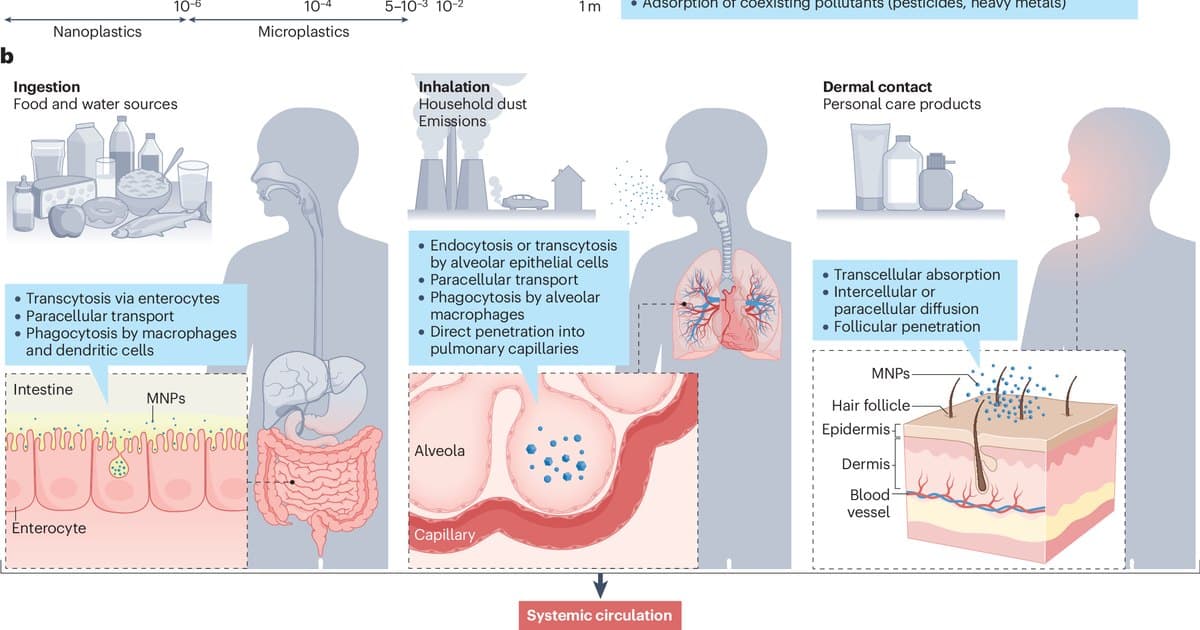
Nanoplastics, particles smaller than a micrometer, are emerging as a significant environmental and public health concern. Their minute size allows them to penetrate biological barriers, raising alarms about their impact on human health, particularly the cardiovascular system.
The primary danger lies in their ability to migrate through the intestinal wall and enter the bloodstream, where they can travel to lymph nodes and other tissues. This systemic distribution means nanoplastics are not merely an environmental pollutant but a potential direct threat to internal organs. Studies indicate these particles may be carcinogenic, adding to the gravity of the risk.
Furthermore, nanoplastics exhibit a potential for both bioaccumulation and biomagnification. They can build up in individual organisms over time and become more concentrated as they move up the food chain, ultimately reaching humans through dietary exposure. This pathway underscores the pervasive nature of the threat, affecting not only aquatic life but also terrestrial ecosystems and human consumers.
Addressing this challenge requires a multi-pronged approach. The scientific community must prioritize research to fully understand the mechanisms of nanoplastic toxicity and its long-term cardiovascular implications. Simultaneously, policymakers need to develop and enforce regulations that limit plastic production and waste, while also investing in better filtration and waste-management technologies to prevent these particles from entering the environment in the first place.