NASA and IBM unveil open-source AI model to map lunar ice and craters
NASA and IBM have released an open-source AI model trained on decades of lunar data to help map ice deposits, craters and volcanic features ahead of Artemis missions.
NASA and IBM have released an open-source artificial intelligence model built to help scientists make sense of decades of lunar observation data, as space agencies prepare for a long-term human presence on the Moon.
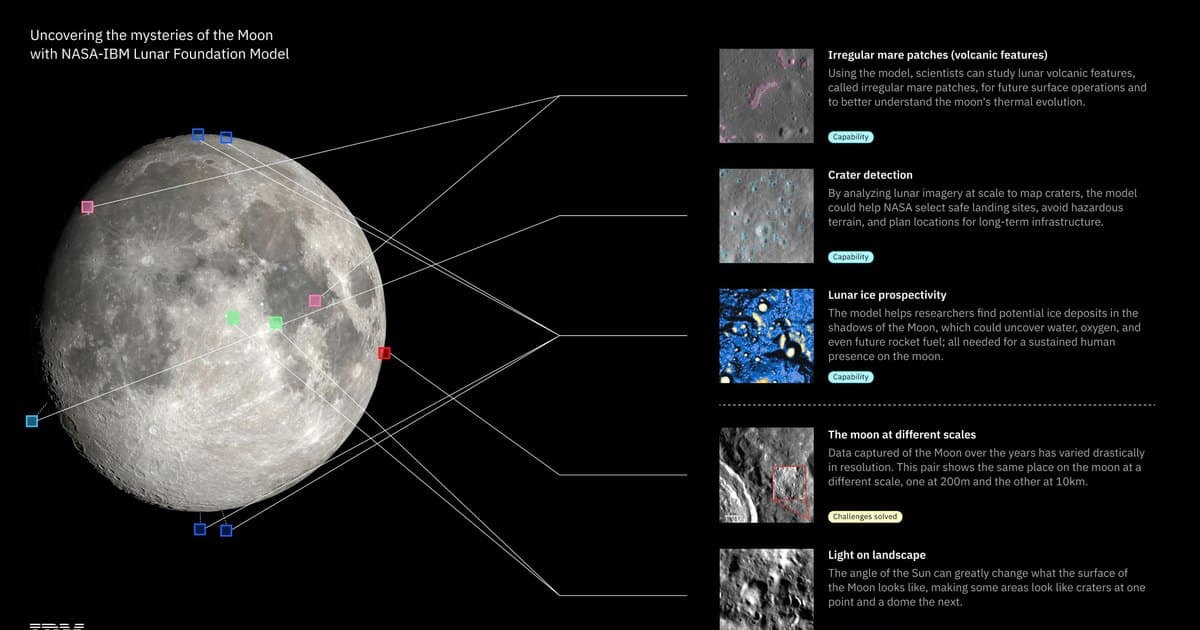
The NASA-IBM Lunar Foundation Model is publicly available and was trained on more than 30 layers of data gathered by nine instruments across four NASA missions, including the Lunar Reconnaissance Orbiter. It joins the Prithvi family of open foundation models that the two organisations have developed for geospatial, weather and other applications.
The tool is intended to take over work that has traditionally been done by hand. Researchers mapping the Moon have had to sift through maps and images manually, or rely on machine-learning tools that offer lower resolution. The new model can help identify possible ice deposits in the Moon's permanently shadowed regions, chart craters to help select safe landing sites, and study volcanic features.
In benchmark tests, NASA and IBM said the model picked out key features on the lunar surface up to 23 per cent more accurately than widely used methods.
Lunar ice attracts particular attention because it points to the presence of water and oxygen — resources seen as essential for a future Moon base and for producing rocket fuel for missions to Mars.
NASA's Artemis programme plans to send astronauts back to the Moon in 2028, testing technology intended to support a sustained lunar presence and later journeys to Mars.