Nepal sought more glacier data from China months before deadly Himalayan flood
Nepal asked China for more glacier and water-level data in May, but officials say sharing remained limited before a catastrophic flood killed hundreds.
Three months before a devastating glacial flood swept through a Himalayan valley on the Nepal-China border, experts and officials from both countries met in Kathmandu to discuss disaster risks. The May 27 meeting focused on strengthening cooperation for monitoring floods, weather, and glacier-related hazards, according to an agenda prepared by the Nepali side.
Participants called for joint risk-reduction measures, including inventories of glacial lakes and hazard mapping. However, two Nepali officials say they did not receive as much information as they wanted on glacier risks and water levels after the meeting. They fear insufficient data sharing could hamper their ability to anticipate major disasters.
"What we actually wanted from them, and still want, is if there are early movements of glaciers and early movements around that area, we would want to know a bit early," said Sauhardra Joshi, a hydrologist at Nepal's Flood Forecasting Division, who attended the meeting.
At the meeting, Chinese officials said they lacked the mandate to sign an agreement to meet Nepal's requests, asking for further discussions, said Binod Parajuli, another Nepali government hydrologist. China's embassy in Nepal said on X that Beijing and Kathmandu had kept in close contact and made "substantial progress" at the May meeting on cross-border disaster information sharing.
China's embassy rejected criticism that it had failed to provide adequate warning, saying Chinese and international experts faced significant challenges monitoring hazards in the remote Himalayan region. It added that Chinese teams had shared important information with Nepal "in a timely manner."
Parajuli said China began sharing forecasts of heavy rain in Tibet over WeChat and email only a month ago. Twelve days before the disaster, China's World Meteorological Centre warned Nepali officials of a monsoon depression forecast for August 14-19, drawing attention to potential landslides and flash floods.
The discussions highlight the complexity of monitoring and forecasting in a region where geopolitical rivals control remote mountainous areas holding vast ice and snow. Environmental anthropologist Austin Lord of the Stimson Center said the lack of bilateral cooperation was not a significant factor in Nepal's response to the latest disaster, but noted that "there isn't really a well-articulated system" for exchange between the two countries.
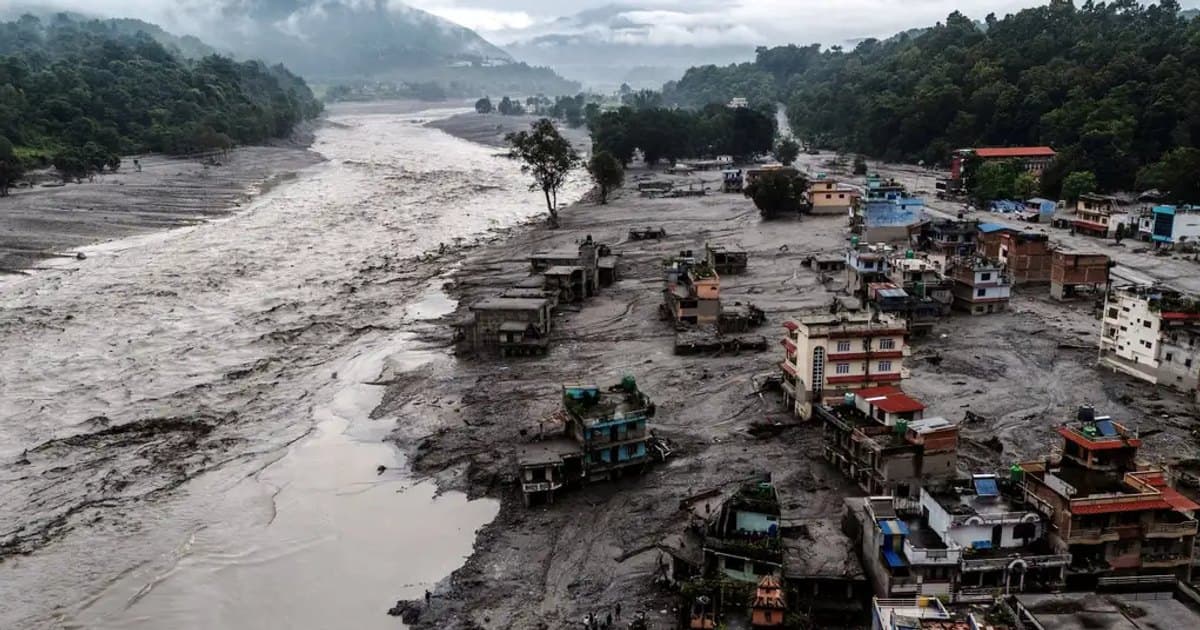
The catastrophe was sparked by a glacier collapse that unleashed flash floods, killing nearly 800 people in both countries and leaving more than 3,000 missing. At least four monitoring stations were destroyed by the flood that rampaged 168 km downstream from the border, carrying some 57.4 million cubic metres of water.
The Hindu Kush Himalayas contain the world's largest volume of ice outside the poles, with more than 63,700 glaciers. Driven by climate change, glacier melt is increasing the risk of such disasters across the region.