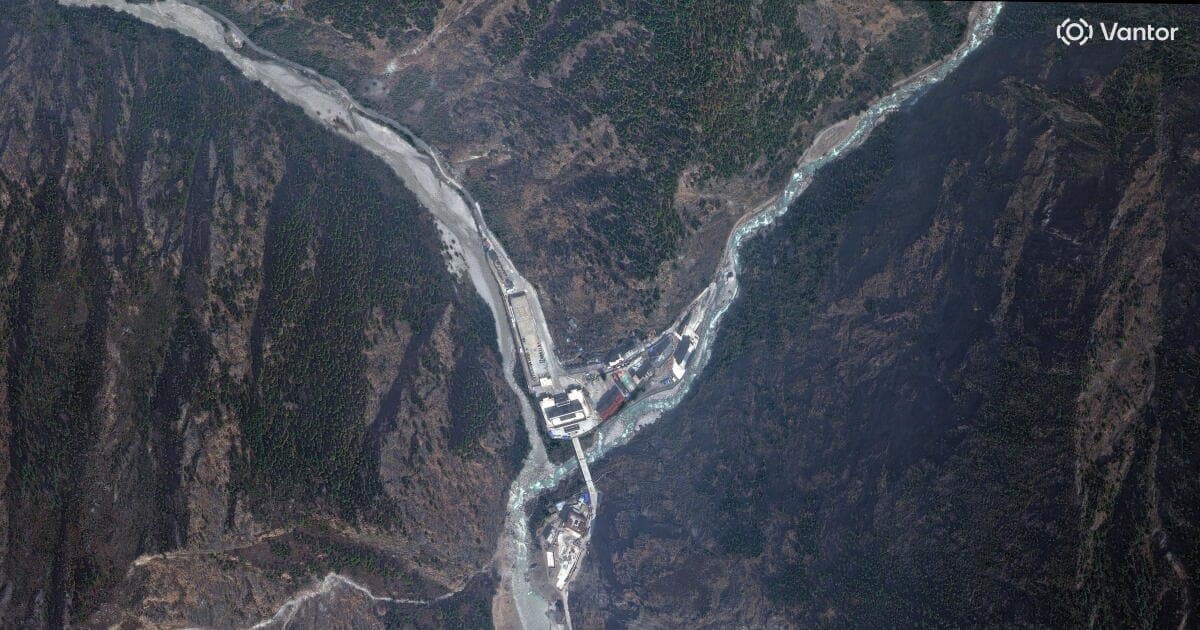
Satellite Images Reveal Scale of Devastation After Nepal Flash Floods
Satellite imagery reveals the massive destruction caused by flash floods in Nepal, with hundreds dead and thousands missing.
Fresh satellite imagery has laid bare the sheer scale of destruction wrought by catastrophic flash floods along the Nepal-China border. The before-and-after visuals, captured by Planet Labs, show entire settlements and vast stretches of terrain transformed by the deluge that struck on August 26.
Images of areas like Betrawoti-Bazaar, Syapru Besi, and Kolpurtar show the dramatic change in the landscape, with floodwaters having swallowed buildings, bridges, and roads. Detailed shots of Timure reveal the extent of the inundation in the region.
The disaster has claimed more than 390 lives across Nepal and China, according to authorities. Over 1,400 people remain missing, including hundreds of foreigners and pilgrims. Hundreds more have been displaced from their homes in the Himalayan region.
Nepalese officials report that dozens of bridges were destroyed and nearly 40 kilometers of roads were damaged, severely complicating rescue and search operations for the missing.
Earth scientists are now analyzing the imagery to understand the cause of the catastrophe. Geomorphologists Kristen Cook and Dan Shugar noted that initial images were obscured by clouds and dust, but clearer pictures from Thursday revealed that the bedrock underneath a glacier on the Langtang Lirung peak had collapsed, sending a massive chunk of ice, boulders, and debris into the valley below.
Videos from the ground showed people fleeing as the floodwaters surged, sweeping away buildings and infrastructure in their path. The steep slopes and valleys of the Himalayas are inherently vulnerable to such events, but the increasing frequency of melting glaciers, driven by human-caused climate change, is heightening the risk of similar disasters in the future.