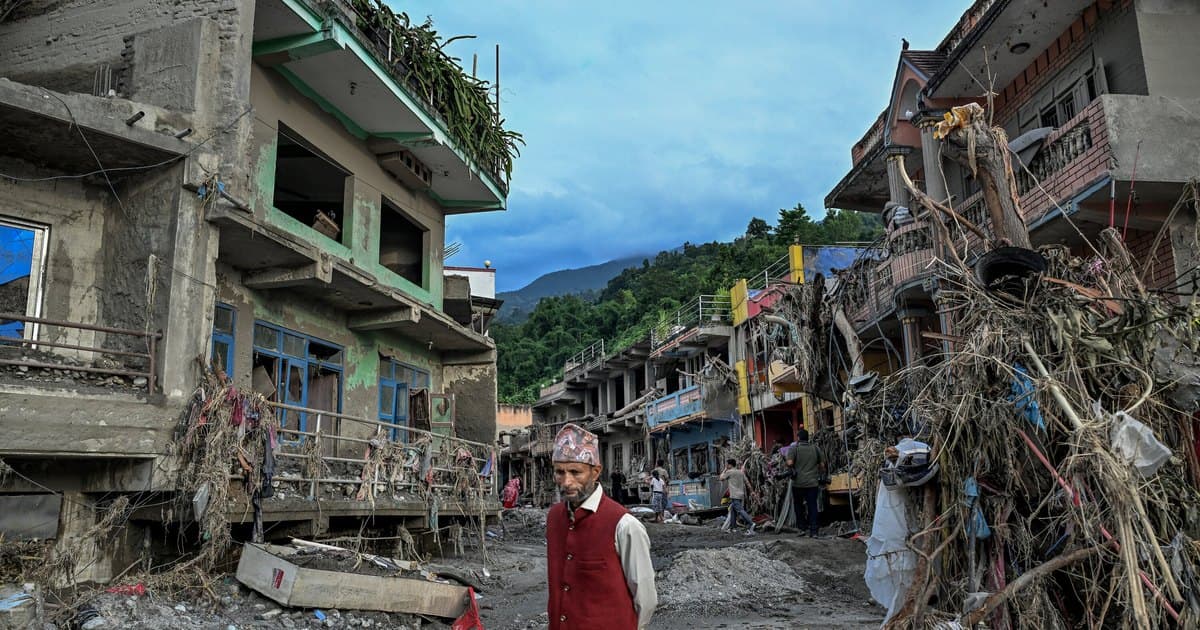
Nepal Flood Survivors Grieve Lost Homes and Fear for Their Cultural Future
Floods along Nepal's Tibet border have displaced hundreds, raising fears among survivors that their distinct Buddhist culture and traditions may be lost forever.
In the crowded hall of a Buddhist monastery in Kathmandu, Tsering Gelbu Lama feeds his four-year-old daughter, who does not yet know her mother was swept away by the floods that devastated villages along Nepal's border with Tibet. For Lama and many others now sheltering here, the disaster has taken more than homes — it threatens the very fabric of their community's identity.
Hundreds of people from remote Himalayan villages have been evacuated to the capital after flash floods destroyed their settlements. Survivors describe fleeing to hilltops as the river surged, taking refuge in monasteries that had only been rebuilt a year earlier, following their destruction in the 2015 earthquake. Many escaped with nothing but the clothes they were wearing, losing heirlooms passed down through generations.
Tsering Sherpa, 36, from the Rasuwa district, expressed a sentiment echoed by many: "We've become homeless not only because we've lost our land — we've become homeless with our culture and tradition." Rasuwa is known for its distinct Buddhist culture and indigenous communities, and the Tamang Heritage Trail there has long drawn tourists seeking Tibetan Buddhist traditions.
Survivors at the shelter shared photographs and videos of their former lives: women chopping juniper to make incense, villagers decorating a new monastery, and colorful celebrations during festivals. "Now all of it is finished," said Tenzin Dolma Ghale, 20.
The fear of cultural erosion is not new. Alina Lama, 26, a shelter volunteer from Rasuwa, noted that traditions were already declining as young people moved to cities for education and work. "There are many little details about our culture that I don't know, because I never got to spend time with my family," she said.
With local monasteries destroyed and monks with specialized knowledge gone, important Buddhist autumn festivals may no longer be celebrated. "Culture and tradition are passed generation to generation by practice," Sherpa said. "If I can't follow the tradition now, how can I pass it on to the next generation?"
Particular concern surrounds children orphaned by the floods. Aid organizations estimate thousands of children need humanitarian assistance, though no official count of orphans is available. "We don't know who will teach them," Alina Lama said, reflecting the deep uncertainty facing these communities as they confront both immediate loss and the long-term survival of their heritage.