Nepal Flood Survivors Face Medicine Shortages as Relief Camps Struggle
Nepal flood survivors in relief camps face medicine and cash shortages, even as food aid reaches thousands of displaced people.
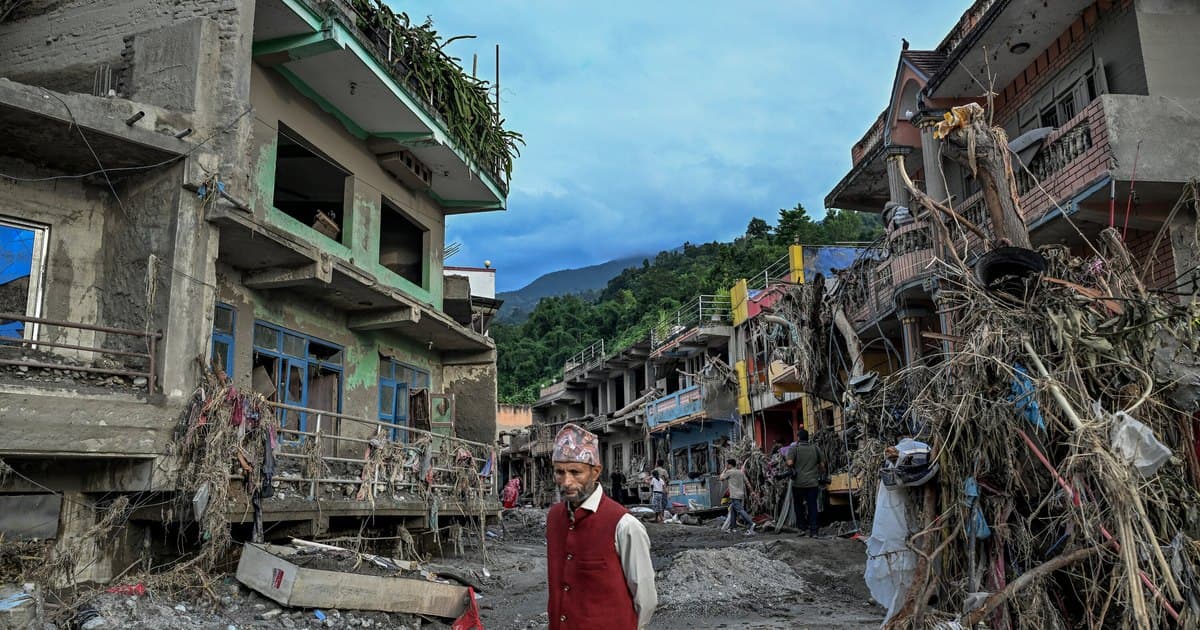
Survivors of last week's devastating floods in Nepal are facing fresh hardships in relief camps, with many reporting shortages of essential medicines and cash even as authorities distribute food and basic supplies.
At a relief center in Devighat, in Nuwakot district, Suresh Kumar Karanjit, who lost his younger brother in the floods, said the medicine available at the camp did not match his prescriptions for a heart condition. With no cash to buy his regular medication, he sold a carton of relief noodles for 400 rupees (about $2.60) to afford it. "We have been living here since a week. The relief materials are being provided, which is good. But there is a lack of medicine," he said.
Nepal's disaster chief, Dharam Raj Uprety, said health camps staffed by doctors and stocked with medicine have been set up at each relief center. He added that authorities are also focusing on hygiene and sanitation to reduce the risk of disease.
The floods, triggered by a glacier collapse on August 26, have killed at least 1,252 people in Nepal, with more than 4,200 missing. On the Tibet side of the border, China reported 21 deaths and 541 missing. Nearly 4,000 displaced people in Nepal are staying in 34 relief centers.
In some of the worst-hit areas, communities remain cut off from regular routes. In Bidur town, along the Trishuli River, residents are using a temporary zip line to cross between riverbanks, with army personnel assisting people on the makeshift crossing.
Rescue efforts are increasingly focused on tunnels at several hydroelectric projects where workers are believed to be trapped. About 900 workers remain missing, and specialized rescue teams from India, China, and the United States are involved in efforts to reach them. At the Trishuli-3A tunnel, workers have begun manually opening the upper section of the passage, though more rock blasting and debris clearing will be needed before heavy machinery can reach the area.