Nepal Flood: Trapped Workers Face Slim Odds as Rescue Efforts Enter Sixth Day
Rescuers in Nepal are racing to save hundreds trapped in hydropower tunnels after catastrophic flooding. Survival hinges on oxygen, water, and timely rescue.
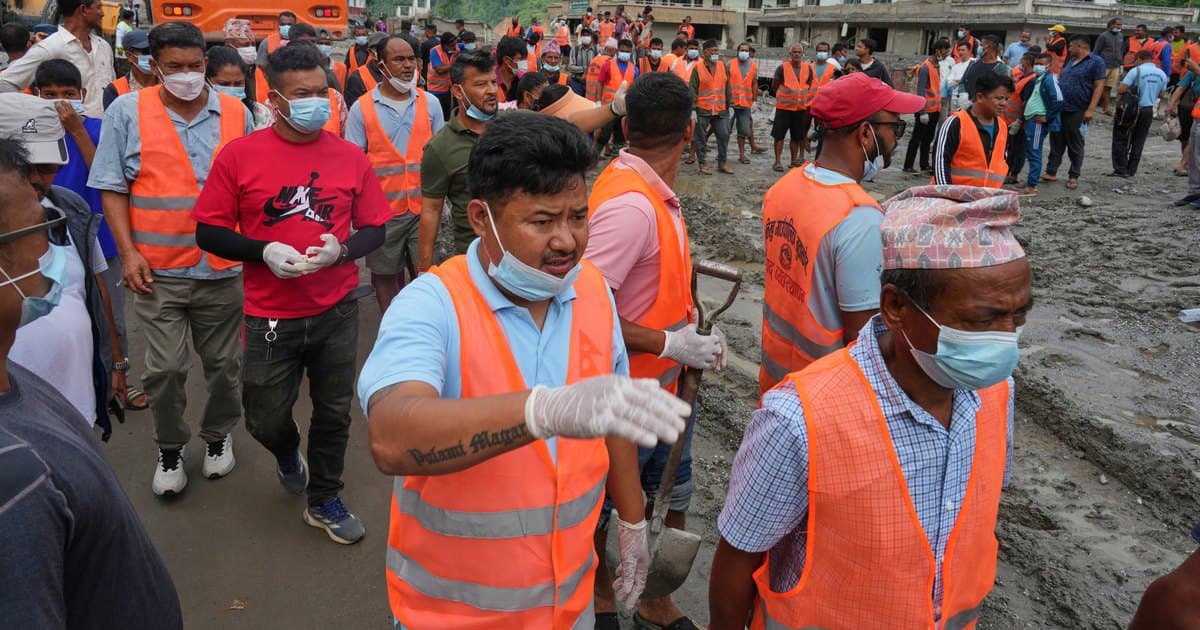
Rescuers in Nepal are in a desperate race against time to reach hundreds of workers believed to be trapped inside hydropower tunnels buried under mud following catastrophic flooding along the Nepal-China border. The disaster has already claimed hundreds of lives, with thousands more reported missing.
Survival for those entombed depends on a precarious balance of oxygen, clean water, and food. Disaster experts note that the first 72 hours are critical, as the absence of safe drinking water drastically reduces the chances of survival beyond that window.
A key question is whether the tunnels had emergency protocols in place, according to Jennifer Horney, a disaster epidemiologist at the University of Delaware. Workers may have been trained on exit locations, but the sheer force of the mudslide could have sealed those exits, complicating rescue plans. "There just really wouldn't be a way to go much further than the three days without safe, drinkable water," Horney said.
Access to breathable air is another pressing concern. Some reports indicate that rescuers have managed to supply oxygen to a few of the trapped individuals. However, Jakob Steiner, a geoscientist at the University of Graz, warns that suffocation risks grow with each passing day. "These tunnels are big enough to drive trucks through," he said, noting that the operation is a race for time as people need food and water.
The mental toll of isolation is also significant. Thomas Chandler, director of Columbia University's National Center for Disaster Preparedness, highlights the importance of assessing serious injuries and finding safe ways to deliver supplies. He points to a 2023 Himalayan tunnel collapse where 41 Indian workers survived 17 days thanks to food, water, and oxygen delivered through pipes.
Climate inside the tunnels adds another layer of complexity. Hot, humid conditions can accelerate dehydration, leaving survivors weak and in need of supportive care for both physical and psychological recovery.