Nepal Floods: Stranded Survivors Queue for Days as Army Choppers Run Non-Stop
Army helicopters are the only way out for flood survivors in Nepal's Rasuwa and Nuwakot districts, where queues stretch for up to 48 hours.
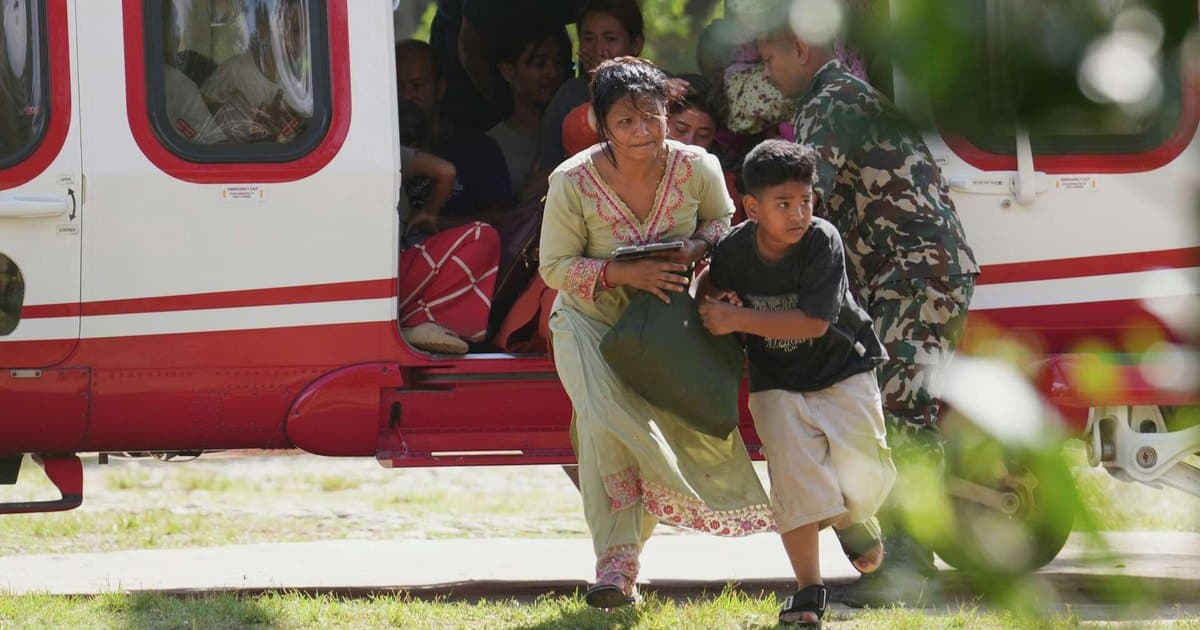
At the Dhunche Army helipad in Nepal's Rasuwa district, the wait for a flight to Kathmandu is stretching to two days. Army helicopters have been flying continuously, ferrying survivors of last week's catastrophic flash floods out of the high Himalayan valleys, but the sheer number of people needing evacuation has created long, serpentine queues that keep growing.
Many of those rescued from the flood zone are locals and stranded citizens who now want to move to the capital. With roads destroyed or submerged by the deluge, the Army choppers are the only evacuation option available. Registration is done at the Army camp, and names are called out in order for boarding.
The Army is prioritising the use of helicopters to first reach those still stranded in higher reaches. Meanwhile, the queue at Dhunche swells as people wait anywhere from 24 to 48 hours for their turn.
The floods, believed to have been triggered by a collapse or avalanche of ice and rock near the Nepal-Tibet border on August 26, devastated towns and villages across northern and central Nepal. The Bhotekoshi River, flowing south from the Himalayan border, carried the floodwaters downstream, sweeping away homes, vehicles, roads and bridges.
Search and rescue operations are also focused on 11 flood-affected hydropower projects along the Bhote Koshi and Trishuli river corridors in Rasuwa and Nuwakot. According to the Independent Power Producers' Association, Nepal (IPPAN), 897 people employed at these projects remain out of contact. At the request of the Nepali government, Indian and Chinese tunnel technicians have arrived to help evacuate people trapped inside hydropower tunnels.
Over a thousand people have been killed in the floods, with thousands more still reported missing.