Nepal Floods: Glacier Collapse Likely Trigger, Expert Says
A landslide expert says a glacier collapse likely caused Nepal's deadly floods, a disaster amplified by climate change.
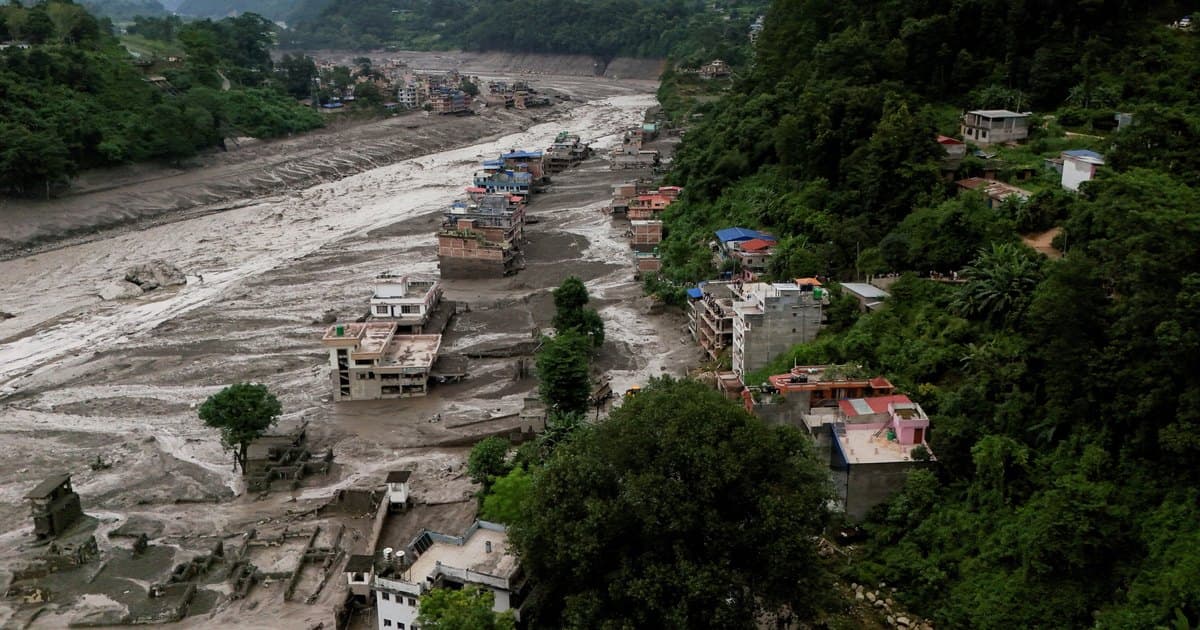
A leading expert on landslides has identified the likely cause of the catastrophic floods that have devastated parts of Nepal: the sudden collapse of a massive glacier block high in the Himalayas.
Nicola Casagli, a professor of geology at the University of Florence and founder of the UNESCO Chair on Prevention and Sustainable Mitigation of Geo-hydrological Hazards, has been analyzing high-resolution satellite imagery of the disaster zone. His findings point to a rare and powerful geological event.
According to Casagli, the images show no evidence of glacial lakes bursting. Instead, they indicate that a colossal piece of the glacier, estimated to be around 100 million cubic meters, broke off and fell from a height of up to two kilometers. The immense potential energy of this falling mass was converted into kinetic energy, creating a fast-moving debris flow.
This torrent of ice, rock, and water surged down the valley, picking up additional debris and trees, and generating a giant wave that caused widespread destruction. Casagli noted that the phenomenon likely also involved the collapse of rock from the high elevations. He added that a landslide dam may have formed, which subsequently breached after a few hours, releasing a massive surge of water and debris.
The expert warns that the danger is not over. Satellite images reveal a remaining stripe of fractured ice that could collapse in a similar manner, posing a continued threat of further floods in the same valley.
Casagli emphasized the role of climate change in such disasters. He stated that abnormal temperatures in the high mountains are a contributing factor, as they cause the melting of ice beneath the glacier's surface, weakening its structure. He drew a comparison to the 2022 Marmolada glacier collapse in Italy, though on a much smaller scale.
The floods have had a devastating human toll, with hundreds killed and thousands missing, including residents and international trekkers from at least 30 countries. The event underscores the growing risks posed by a warming climate to the fragile and densely populated mountain regions.