Homer's Odyssey Reimagined as a Ukrainian War Story in Kyiv
Kyiv's Ivan Franko Theatre stages 'Odysseus, Maeotis,' a modern retelling of Homer's epic, drawing on the experiences of Ukrainian soldiers and the wait of those at home.
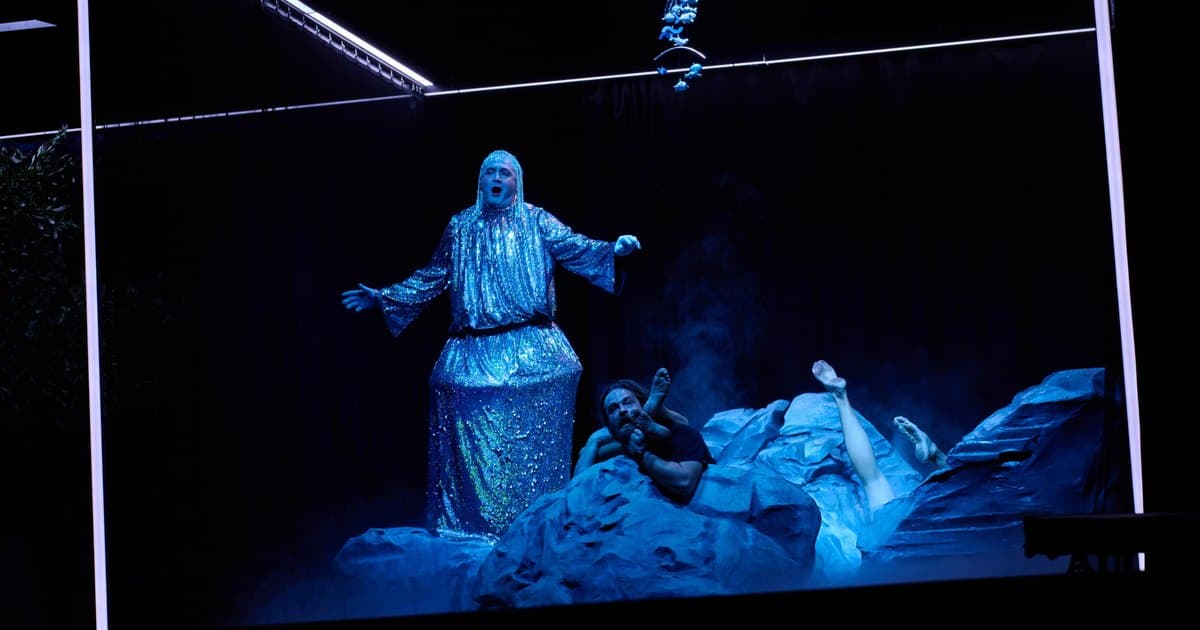
In wartime Kyiv, Homer's ancient epic has been reimagined as a contemporary Ukrainian odyssey. The play "Odysseus, Maeotis," set to open at the Ivan Franko National Academic Drama Theater, blends myth with the harsh realities of war, performed by professional actors alongside active-duty soldiers.
Daniil Mireshkin, a serviceman with the 1st Corps Azov of the National Guard of Ukraine, plays the role of Odysseus. He sees the production as a way to explore the profound theme of return. "This combination of myth and modernity allows us to draw parallels and understand just how critical the question of return is: the return of military personnel to civilian life, the return of our territories and the return of ourselves to our true identity as Ukrainians," Mireshkin said.
The production's director, Ivan Uryvskyi, notes that little of Homer's original text remains. "We simply took the core narrative arc — Odysseus' return home," he explained. The play unfolds in parallel, showing both Odysseus's arduous journey and Penelope's long wait at home. Daryna Leheida, who plays Penelope, says the character embodies the experience of Ukrainian women. "It's about the fate of Ukrainian women who wait, believe, hope, who can also be powerless, without faith, without hope," she said. "It's about the temporarily occupied land, which is waiting to return home."
The staging is deliberately austere, with neon lights and projections replacing the mythical monsters of the original with drones and robotic war machines. The title itself carries a Greek reference: "Maeotis" is the ancient name for the Sea of Azov, home to the port city of Mariupol, which was seized by Russia in 2022.
Playwright Oleksii Dorychevskyi, also a serviceman with the 1st Corps Azov, based the play on interviews and memoirs of Mariupol's defenders and former prisoners of war. He chose an artistic form rather than a documentary approach to create a necessary distance for the audience. "The things we are talking about are very painful," he said, "and in order for the audience to somehow reflect on all this, it seemed to us that it was necessary to create a certain distance."
The premiere has been repeatedly delayed due to Russian attacks, but the production's purpose remains clear. As director Uryvskyi put it, "The goal is probably simple, to remind, it's generally about memory, and art is sometimes about memory. That is, if it's not talked about, it's forgotten."