Beyond the Pookkalam: Kerala's Regional Onam Customs
A look at the lesser-known regional and community-specific traditions that make Kerala's Onam festival a richly layered celebration.
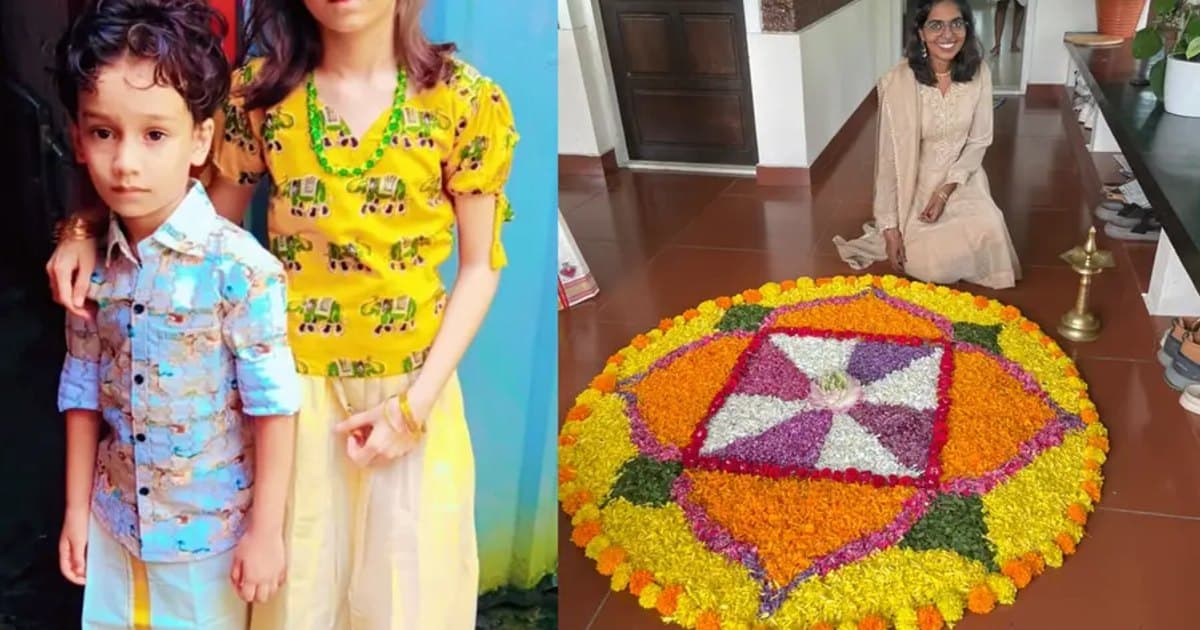
The ten-day Onam festival, which begins on Atham day in the Malayalam month of Chingam and culminates on Thiruvonam, is widely known as the homecoming of the benevolent Asura king Mahabali. Yet, across Kerala, the festival is a multi-layered construct shaped by myth, legend, and distinct local practices that go far beyond the familiar pookkalam (floral carpet) and the grand sadya feast.
In parts of Palakkad, the floral carpet tradition follows a different calendar. Retired teacher Girija Varier notes that families in her region begin laying pookkalams from Thiruvonam day in the preceding month of Karkkadakam and stop on Atham day in Chingam — the very day the rest of the state starts its floral arrangements. Instead of a pookkalam, pyramid-shaped clay or sand figures called Mathevar or Onathappan are placed on turmeric plant leaves, with flowers on top. The number of figures increases over six days, and on the seventh day, turmeric leaves are replaced with banana leaves. The count rises to 21 on Thiruvonam, when a larger figure representing Mahabali is added. These figures, symbolising Lord Vishnu, are adorned with flowers and set within a kolam (rice-paste rangoli).
After these figures are removed on a specific date, pookkalam-making resumes until the 16th day, Makam, when a mud figure of Lord Siva called Makathadiyan is placed. The floral carpets continue until Ayilyam star in the month of Kanni, considered the Onam day for the farming community, marking the end of the paddy harvest. On this day, three small figures named Ayilyam Unnikal are placed in the courtyard, concluding the festival cycle.
Central Travancore has its own set of beliefs tied to the four main days of Onam. Historian Vellanad Ramachandran explains that Uthradam is dedicated to Onathamma, representing King Mahabali's wife Vindhyavali, who is believed to visit every home to check that preparations for the next day's sadya are in order. Avittam, called Ammayi Onam, was significant under the matrilineal system, when a wife would visit her mother-in-law (ammayi) with new clothes and a bunch of tobacco. Chathayam, or Nathoon Onam, is a day for the wife to visit her husband's sisters with dishes and goodies. A traditional lamp is kept lit both inside and outside the house for five days from Uthradam.
In Thiruvananthapuram, the pookkalam is known as atham and is laid twice on Thiruvonam day — once in the morning and once in the evening. Homemaker Suchitra Nair describes a ritual where, after the evening atham is laid, mango tree branches are placed on it, followed by a yellow cloth and three steamed rice cakes (ada). A male family member, usually a child, shoots the cakes with a homemade bow and arrow. Once pierced, the cakes are taken as prasadam, and the atham is moved to the compound wall near the main gate, where it is left to disintegrate.
A practical tradition born of necessity is pazhamkoottan, a dish made from leftover curries of the Onam sadya. In the days before refrigeration, homemakers in central and southern Kerala would mix the leftovers, keep them overnight, and boil them the next morning. Variations exist: some blend all curries, while others, like retired bank official KS Kumari from Alappuzha, prefer to limit the mix to sambar, avial, moru curry, and sweet pachadi, adding a little jaggery for extra sweetness.