India Launches Indigenous Research Vessel Sagar Manthan in Kolkata
India's new ocean research vessel, ORV Sagar Manthan, was launched in Kolkata, boosting indigenous maritime research capabilities.
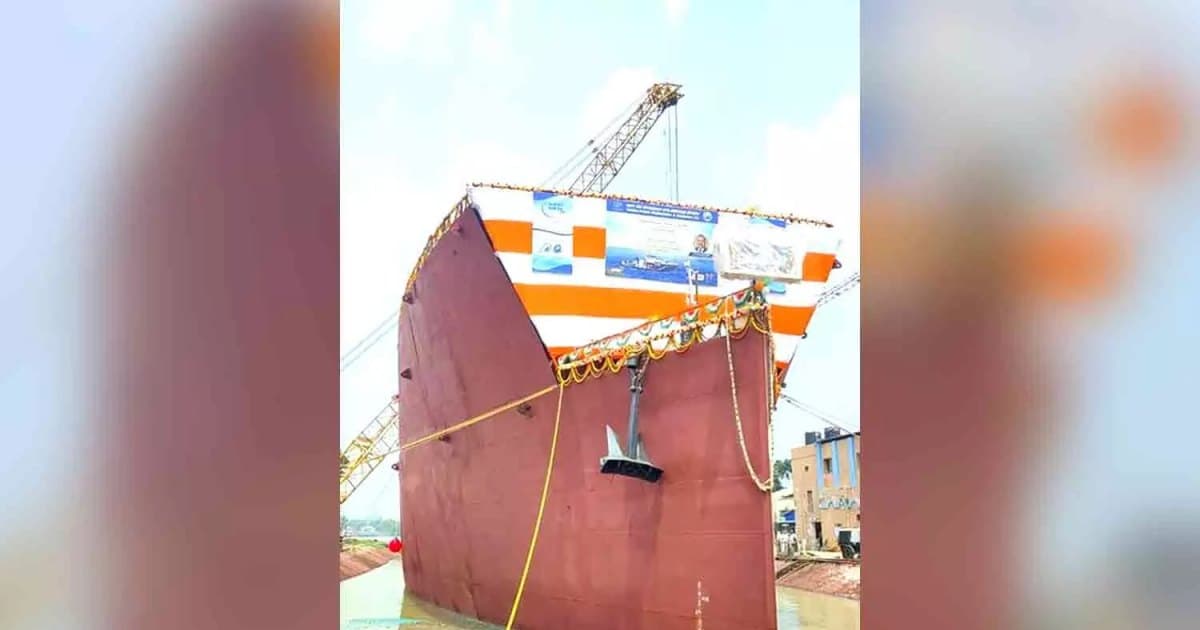
India took a significant step toward self-reliance in ocean science on September 9, 2026, with the launch of the Ocean Research Vessel (ORV) Sagar Manthan at the Rishi Bankim Shipyard in Kolkata. The vessel was formally named by Mrs. Manju Singh, spouse of Union Minister Dr. Jitendra Singh, who attended the ceremony virtually.
The ship has been designed and constructed by Garden Reach Shipbuilders & Engineers Limited (GRSE), a defense public sector undertaking, for the National Centre for Polar and Ocean Research (NCPOR), which operates under the Ministry of Earth Sciences (MoES). Dr. Jitendra Singh, the Union Minister for Earth Sciences, described the event as a "red letter day" for the ministry and the nation, noting the vessel was completed in record time—just two years after the contract was signed and five months after the keel was laid.
Dr. Singh emphasized the strategic importance of the vessel, stating that solid data collected by ships like Sagar Manthan will enable India to lead in disaster prevention and play a key role in global ocean geopolitics. He also highlighted that the new vessel will gradually replace the aging ORV Sagar Kanya, which has been in service for over four decades.
MoES Secretary Dr. T. Srinivasa Kumar, speaking at the ceremony in Kolkata, praised the shift from procuring research platforms abroad to building them domestically. He noted that the vessel will support a wide range of scientific activities, including swath multibeam surveys, geophysical profiling, atmospheric observations, and water column sampling.
Built at an approximate cost of Rs. 840 crore under the Deep Ocean Mission, the all-weather vessel is designed to operate in extreme environments, including the Southern Ocean, with a projected service life of 30 years. It is equipped with advanced systems such as dynamic positioning, multibeam bathymetry, and facilities for deploying remotely operated and autonomous underwater vehicles.
The vessel will support research along the Indian Ocean mid-oceanic ridges, focusing on identifying multi-metal hydrothermal sulphide mineralisation and establishing environmental baselines. It has been built with dual-class certification from the Indian Register of Shipping and the American Bureau of Shipping.
Following the launch, the vessel will undergo superstructure erection, system integration, and extensive sea trials before its scheduled delivery and commissioning in 2028.