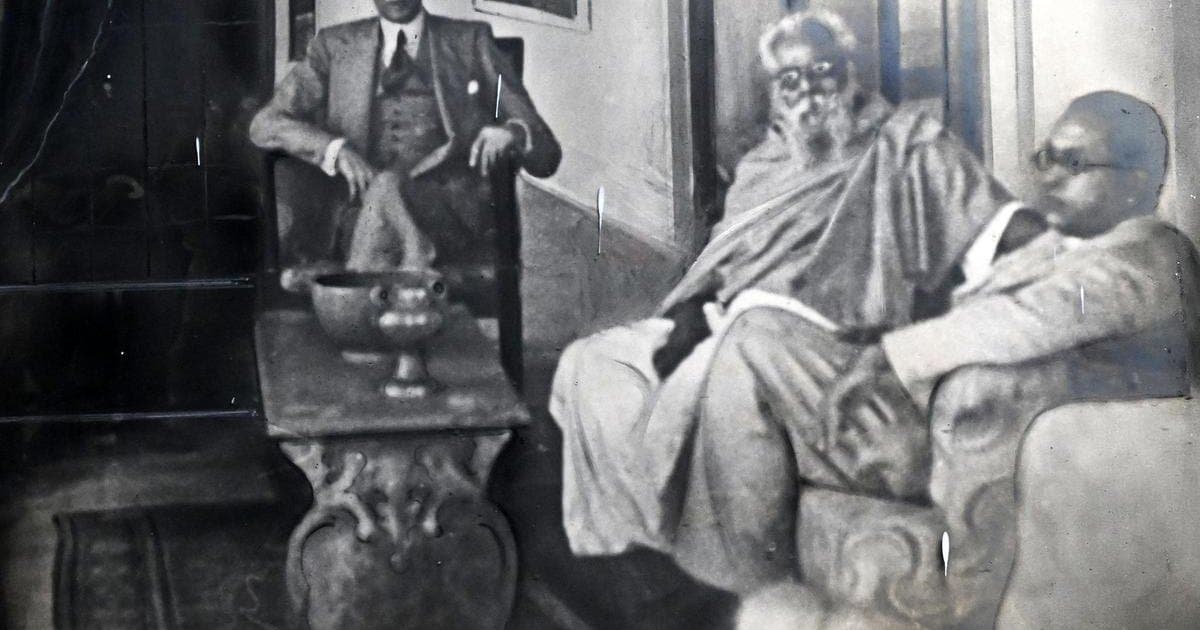
When Periyar, Ambedkar and Jinnah explored a united front in 1940
A Tamil Nadu policy note row has revived interest in the 1940 Mumbai meeting where Periyar, Ambedkar and Jinnah discussed a united front against the Congress.
A political controversy in Tamil Nadu over references to Dravida Kazhagam founder E.V. Ramasamy Naicker and B.R. Ambedkar in a government policy note has drawn fresh attention to a little-known chapter in the leaders' political careers — their brief attempt to forge a common front against the Congress.
The state's Backward Classes Welfare Minister V. Sampath Kumar has said a revised policy note will be issued after critics accused the ruling Tamilaga Vettri Kazhagam (TVK) of dropping tributes to the two icons in certain sections of the document.
Historical records show that on January 8, 1940, in Mumbai, Naicker — popularly known as Periyar — met Ambedkar and Muslim League president Mohammed Ali Jinnah. The meeting came months after Congress ministries resigned across several provinces in protest against the British decision to involve India in World War II without consultation.
All three leaders shared a common adversary in the Congress. According to a statement attributed to Periyar at the time, the trio agreed that a "united effort" was needed to counter the Congress's influence. Jinnah and Ambedkar also reportedly backed Periyar's opposition to making Hindi compulsory in schools, viewing it as a move to strengthen Brahminical culture.
Academic accounts suggest the leaders discussed the idea of separate states for Mahars, Muslims and Dravidians. Periyar had publicly stated a day before the meeting that with Jinnah's and Ambedkar's help, he would establish Tamil Nadu's freedom.
However, the bonhomie did not last. When Jinnah visited Chennai in April 1941 to address the Muslim League session, he made no mention of supporting the Dravida Nadu demand. By August 1944, Jinnah wrote to Periyar that it was for the people of the province to assert themselves if they truly desired Dravidasthan, though he offered general support to non-Brahmin causes.
Periyar and Ambedkar continued to interact after the Justice Party split in 1944, but their political paths diverged as Ambedkar chose to work with the Congress at Independence, becoming Law Minister in Jawaharlal Nehru's cabinet. The relationship cooled thereafter and ended with Ambedkar's death in December 1956.