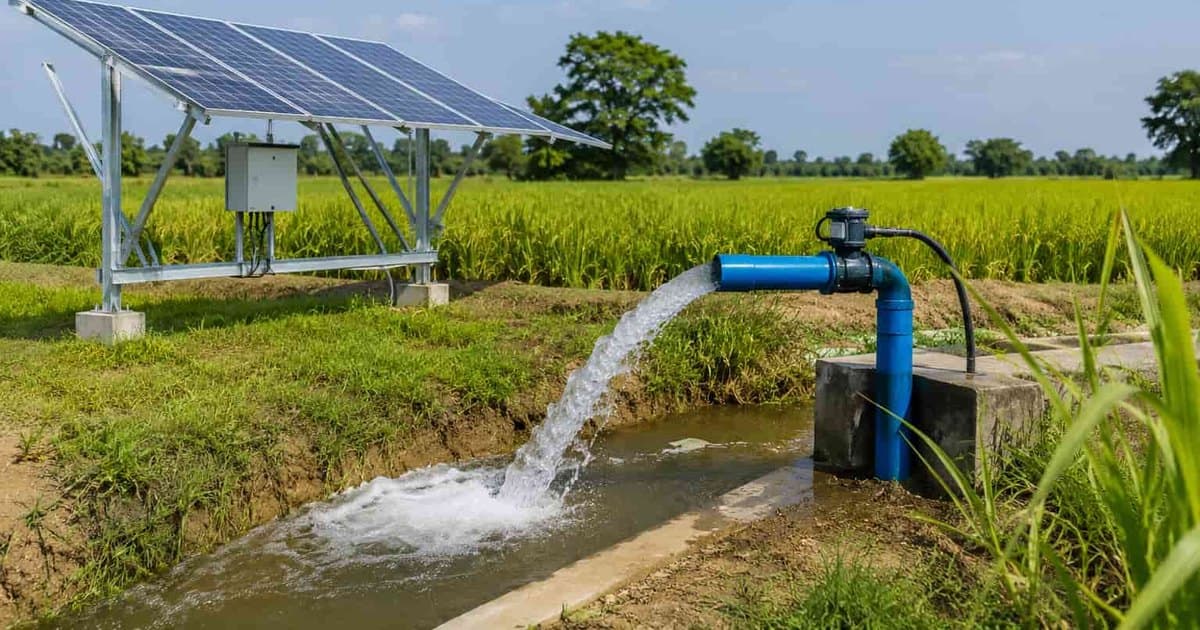
PM-KUSUM's Solar Pump Push Faces Groundwater Sustainability Test
PM-KUSUM has deployed 2.5 million solar pumps in five years. As PM-KUSUM 2.0 is readied, the key challenge is preventing groundwater over-extraction.
India's flagship agricultural solar initiative, PM-KUSUM, has crossed a significant milestone in its first five years, with over 2.5 million solar-powered irrigation pumps now installed across the country. The scheme has been instrumental in making solar technology financially viable for smallholder farmers, largely through generous subsidy support that lowers the upfront cost of equipment.
The rapid uptake reflects a broader push to decarbonise the farm sector, which has traditionally relied on grid electricity and diesel for irrigation. Solar pumps offer a cleaner, more reliable alternative, particularly in regions with erratic power supply.
However, as the government gears up to launch PM-KUSUM 2.0, policymakers are confronted with a growing dilemma: how to sustain the clean energy transition without accelerating the depletion of India's already stressed groundwater reserves.
The concern stems from the very nature of solar irrigation. Once a pump is installed, the marginal cost of pumping water drops to near zero, removing a natural check on water usage. In the absence of metering or usage limits, this can lead to over-drawing of aquifers, undermining the long-term viability of both farming and the scheme itself.
The next iteration of the programme will therefore need to embed safeguards that decouple solar power generation from unrestricted water extraction. Possible approaches include promoting drip irrigation, introducing water-use efficiency incentives, or pairing solar installations with groundwater management protocols.
Balancing these twin objectives — expanding renewable energy access while protecting water resources — will define the success of PM-KUSUM 2.0. The programme's future hinges not merely on how many pumps are deployed, but on how intelligently they are integrated into India's broader environmental and agricultural strategy.