Rafale Buy Won't Stall Tejas, Defence Secretary Says as 114-Jet Deal Advances
Defence Secretary RK Singh says the Rafale acquisition will run alongside the indigenous Tejas programme, as India negotiates for 114 more fighters.
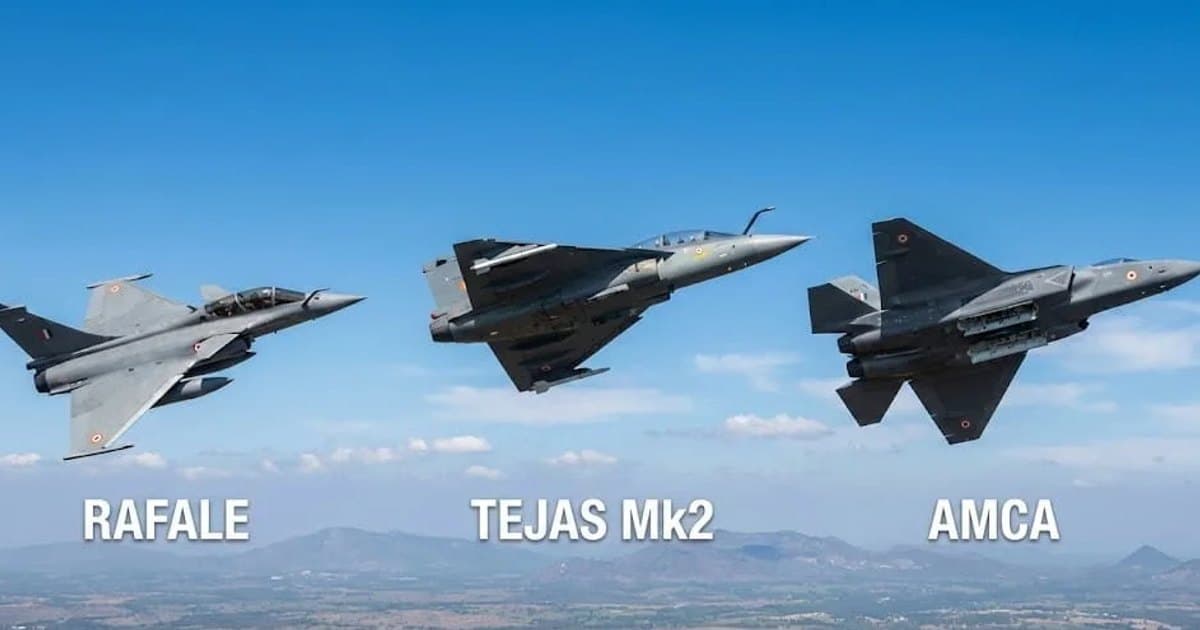
India's pursuit of additional Rafale fighters will not displace the indigenous Tejas programme, Defence Secretary RK Singh has said, describing the two efforts as complementary rather than competing.
Speaking at a defence conclave, Singh was asked why India would keep buying the French-designed jet into the mid-2030s, when the home-grown Tejas Mk-2 is expected to be available. He said the Rafale is a proven platform already in Indian inventory, performed well during Operation Sindoor, and is on order in a naval variant. He added that France has accepted India's requirement that the aircraft be built in the country with substantial indigenisation.
According to Singh, the arrangement would allow India to set up a second production line for fighter aircraft. He said the government would press ahead with the Rafale purchase while continuing the indigenous programme, which he described as following a spiral development model under which the Tejas Mk-1A would steadily gain more capable indigenous radars and weapons.
India is negotiating with the French government for 114 Rafale fighters under its Multi-Role Fighter Aircraft deal, valued at roughly Rs 3.25 lakh crore. If concluded, it would be the country's most expensive defence purchase. A formal proposal submitted on August 6, 2026 is under examination by the Defence Ministry. Under the emerging plan, 18 aircraft would arrive in fly-away condition from France and 96 would be manufactured in India, though those details are still being settled.
The Rafale push comes as the Indian Air Force confronts shrinking squadron strength, with legacy platforms such as the MiG-21 being phased out. Hindustan Aeronautics Limited, contracted to supply the Tejas Mk-1A and Mk-2, has repeatedly missed delivery timelines. The first Mk-1A was expected in February 2024 and the Mk-2 prototype was to roll out in August 2022; the Mk-1A has yet to enter squadron service and the Mk-2 prototype has not been rolled out or flight-tested.
Singh said the Mk-1A, expected to begin entering service this year, would be improved incrementally, including through the integration of the made-in-India Uttam air-search radar, which he called powerful and superior to global peers. India is developing the Uttam for the Tejas and the Virupaksha radar for an upgrade of the Sukhoi-30MKI fleet.
The negotiations also cover integrating Indian-designed weapons on the Rafale. Reports indicate France has declined to share source codes for the radar, mission computer and SPECTRA electronic-warfare suite, which would constrain India's ability to mount its own weapons such as the Astra missile. French diplomatic sources have said the current process differs from the earlier purchase and that talks are continuing.
India's earlier Rafale transactions include a 2016 intergovernmental agreement for 36 Air Force jets worth about Rs 59,000 crore, the first five of which arrived on July 29, 2020. A separate deal signed on April 28, 2025 covers 26 Rafale-Marine aircraft for the Navy, valued at about Rs 63,000 crore, with deliveries due from 2028 and completion by 2030-31. Those jets will operate from INS Vikrant, making India the first foreign operator of the naval Rafale.