RBNZ Hikes Rates Again but Signals Measured Path, Kiwi Slips
RBNZ raises rates 25 bps to 2.75%, flags gradual tightening with peak at 3.15% by 2027; kiwi falls as markets recalibrate.
The Reserve Bank of New Zealand (RBNZ) raised its official cash rate by 25 basis points to 2.75% on Wednesday, marking the second consecutive hike. While the move was widely anticipated, the central bank's accompanying statement stressed that future increases would be measured, citing mounting risks to the economic outlook.
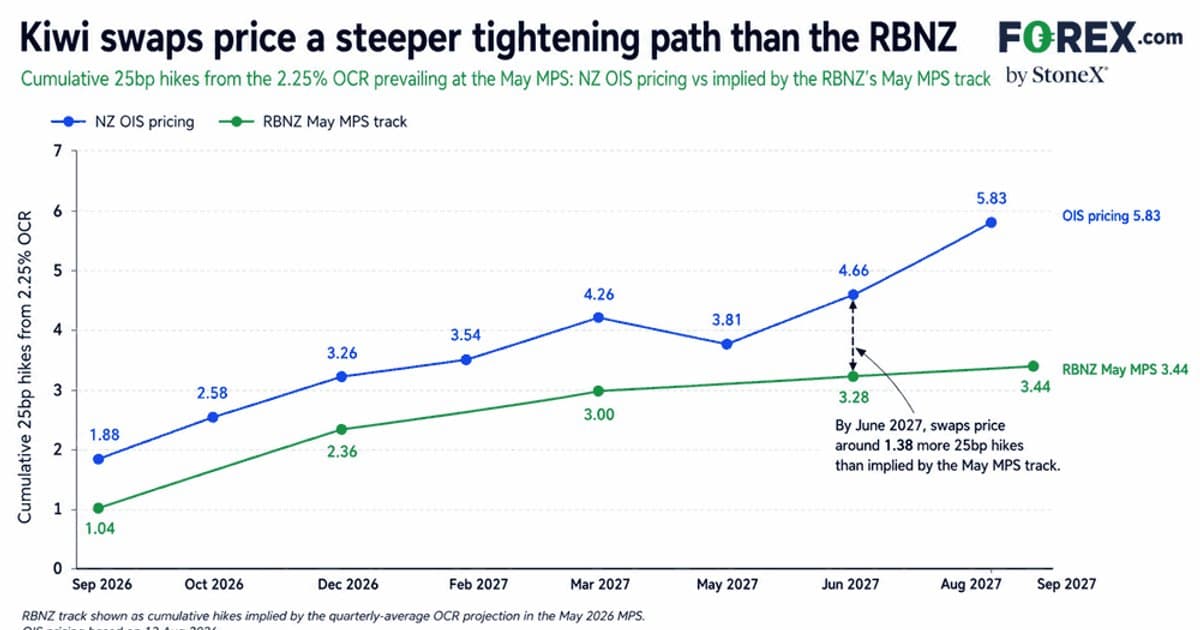
The RBNZ reiterated that a gradual withdrawal of monetary stimulus remains appropriate to bring inflation back to the 2% target midpoint while supporting growth and employment. The latest projections show the cash rate reaching 2.81% by December and 3.15% by the end of 2027 — a notably slower path than the peak of around 3.5% that markets had priced in.
This cautious stance weighed on the New Zealand dollar, which slid 0.7% to $0.5893, adding to an earlier 0.4% decline. Two-year swap rates dipped 3 basis points to 3.7001%, even as longer-term yields climbed to five-month highs.
The central bank acknowledged that the recovery is expected to strengthen but warned of significant downside risks from an uncertain global backdrop, including weaker commodity prices and softer export demand. It also noted that growth could prove either stronger or weaker than projected.
Wednesday's hike comes as the government faces political pressure ahead of a general election scheduled for October, less than 10 days after the RBNZ's next policy decision. The opposition Labour Party argued that higher rates would translate into larger mortgage repayments for homeowners. Economists suggested the central bank would be wary of becoming a focal point in the campaign, with Westpac's chief economist Kelly Eckhold noting that further tightening appeared more likely in December than October.
The RBNZ's forecasts show annual inflation peaking at 4.1% in June 2026, slightly lower than the previous projection of 4.3%. Economic growth is expected to pick up modestly, with the economy expanding by 0.5% in each of the final two quarters of 2026.
New Zealand's move aligns with a broader hawkish shift among major central banks, including the U.S. Federal Reserve and the Reserve Bank of Australia, as higher energy costs threaten to keep inflation elevated.