Rhine Shipping Feels Squeeze as Water Levels Drop, Yet Stay Above Record Lows
Rhine water levels fell again, forcing part-loads and higher freight costs, but remain above August's record lows.
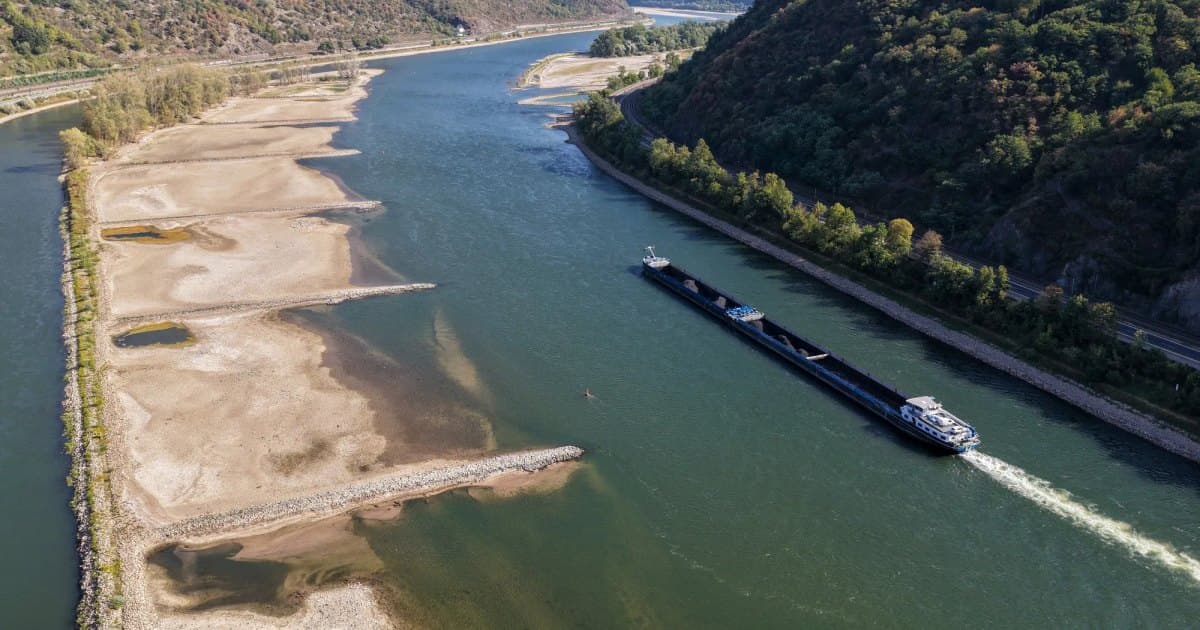
Germany's Rhine river, a key artery for moving grain, coal, and fuels, is seeing water levels drop again after another stretch of dry weather. While the river has not returned to the extreme shallows of August, the decline is already forcing cargo vessels to take on lighter loads, according to navigation authorities and commodity traders.
At the critical shallow point near Kaub, the navigable water gauge stood at about 34 cm on Monday, down from roughly 50 cm the previous week. That is still well above the record low of below 10 cm hit in mid-August, which had broken the previous minimum of 25 cm set in 2018. The actual river depth is about a metre more than the gauge reading.
Ships are sailing partially loaded, and traders say loads now have to be split across multiple vessels. That is pushing up freight costs — the price for a tanker barge from Rotterdam to Karlsruhe has climbed to around €120–€125 per tonne, compared with about €100 last week. Some cargo has also been shifted to trucks and trains.
Forecasts of rain in the river's catchment area this week could offer some relief, but traders caution it will not resolve the underlying problem. Germany and much of Europe have endured repeated heatwaves and scarce rainfall this summer, leaving waterways like the Rhine at levels that disrupt industrial supply chains and raise transport costs.