Lebanese Village Revives 1960s Donkey Race at Grape Festival
Roum's Grape Festival revives its traditional donkey race, drawing crowds and honoring the village's agricultural past.
The southern Lebanese village of Roum recently hosted its annual donkey race, a tradition dating back to 1964 that was revived as part of the village's Karmeh Tourism Festival, also known as the Grape Festival. The event drew dozens of residents and visitors who gathered to watch the competition and celebrate local heritage.
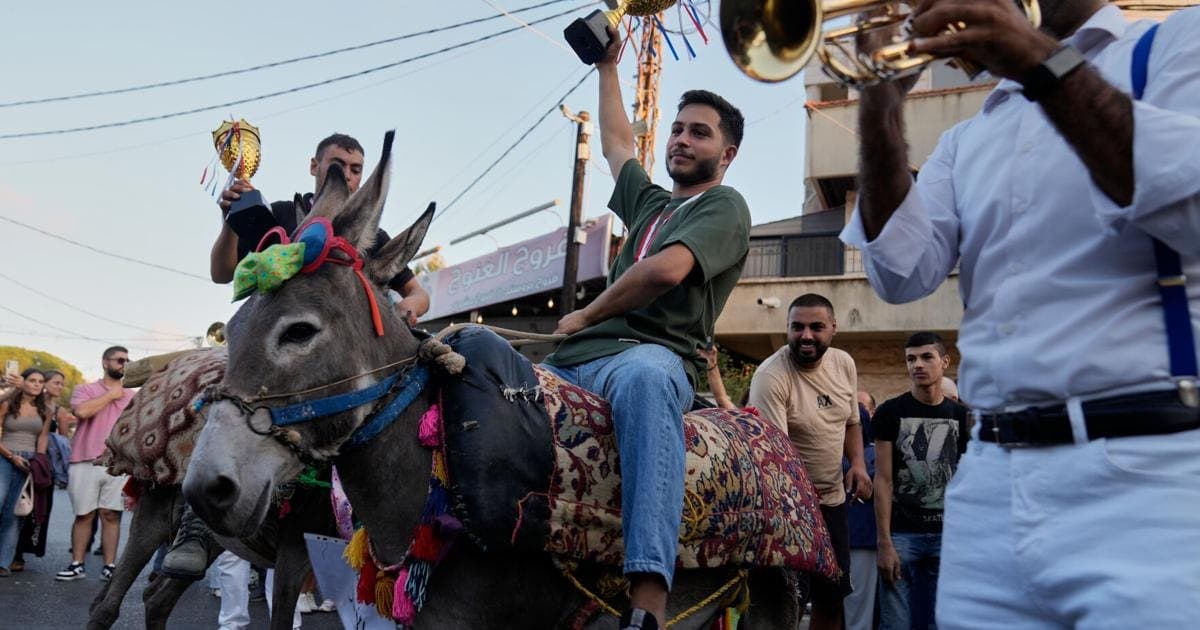
The race featured about 10 riders competing in heats along a roughly 300-meter course. The donkeys, decorated with colorful ribbons and sunglasses, were given humorous names such as Al-Aawar (the one-eyed), Farkouh (clumsy), and Mtaffi (wasted). Some riders wore costumes, including a clown outfit and traditional Lebanese attire, adding to the festive atmosphere.
Roum Municipal Mayor Johnny Haddad explained that the festival aims to bring local traditions back to life. He noted that donkeys were once essential for farmers, as the village's narrow agricultural roads could not accommodate cars. "The donkey used to carry grapes from the vineyards, as well as figs and olives, for the farmers," Haddad said. "Every farmer had a donkey at home and would raise it throughout the year to help transport his harvested crops. That is why this race was established to honor the donkey."
The event attracted visitors from nearby towns including Jezzine, Saida, Nabatieh, and Beirut. For many, the race provided a moment of joy amid Lebanon's ongoing difficulties. Roum resident Aline Haddad, who traveled from abroad to attend, said, "Despite all these circumstances, Lebanon is still alive, and we are very happy to see these beautiful moments."
The race concluded with 21-year-old Kevin Nakhleh taking first place on his donkey, Al-Aawar. Nakhleh, participating for the second time, expressed his happiness with the result. The winners raised their trophies and performed a victory dance as their donkeys paraded to music, bringing the celebration to a close.