Allahabad HC Seeks UP Reply on Saharanpur Mosque Demolition, Stays ₹6.41 Crore Recovery
Allahabad High Court asks UP government to reply in three weeks on a petition against the Saharanpur mosque eviction and demolition, and stays recovery of ₹6.41 crore in damages.
The Allahabad High Court has directed the Uttar Pradesh government to file its response within three weeks to a writ petition challenging the eviction and demolition of a mosque located on the collectorate premises in Saharanpur.
Hearing the matter, Justice Rohit Ranjan Agarwal also stayed the recovery of ₹6.41 crore in damages that the Saharanpur city magistrate had imposed on the mosque's management. The court fixed October 12 as the next date of hearing.
"Till the next date of listing, the realisation of damages imposed by the City Magistrate, Saharanpur vide order dated 16.7.2026 shall remain stayed," the court ordered.
The chain of orders
The petition, filed by advocate Mohammad Tanveer Ahmad, challenges the city magistrate's direction of July 16 as well as a district judge's order of September 2. It also assails proceedings initiated under Section 5 of the Public Premises (Eviction of Unauthorized Occupants) Act, 1971, in connection with the mosque.
The Uttar Pradesh government, through the Saharanpur district magistrate, and Abdul Hamid, the mosque's manager and maulavi, have been named as respondents.
On July 16, the city magistrate ordered the demolition of the 315-square-metre mosque on the collectorate premises and imposed a fine of ₹6.41 crore on its management under the Uttar Pradesh Public Premises (Eviction and Unauthorised Occupants) Act, 1972. An appeal against that order was dismissed by the district judge on September 2, and the mosque was demolished on September 5.
Arguments before the court
Appearing for the petitioner, senior advocate Ashish Kumar Singh contended that the eviction order was passed without determining title, even though the names of Wahid Khan and Yaqub Khan were recorded on the property. He submitted that the state acted hastily, demolishing the structure within three days of the eviction order, and that the land's original owners were Yaqub Khan and Wahid Khan, with the site being used as waqf by the mosque's worshippers. The courts below, he argued, had not considered these aspects.
Additional Advocate General Manish Goel opposed the petition, pointing out that the petitioner himself had pleaded that the mosque is waqf property while the Sunni Central Board had not been made a party. He argued that the petitioner's position was contradictory — claiming on one hand that the property belonged to a zamindar and on the other that it was waqf, without any material on dedication to waqf.
Goel said the property stands recorded in the name of the collectorate katchery. The petition alleges that while documents recorded the disputed property in the name of Wahid Khan, a 1956 entry listed Wahid Khan, the collectorate katchery and Yaqub Khan together. The petitioner also submitted that the appellate court wrongly held that the land was under the ownership of the federal government during the British period and later vested in the state, and that the mosque's registration in the waqf register was not considered.
Well found during debris removal
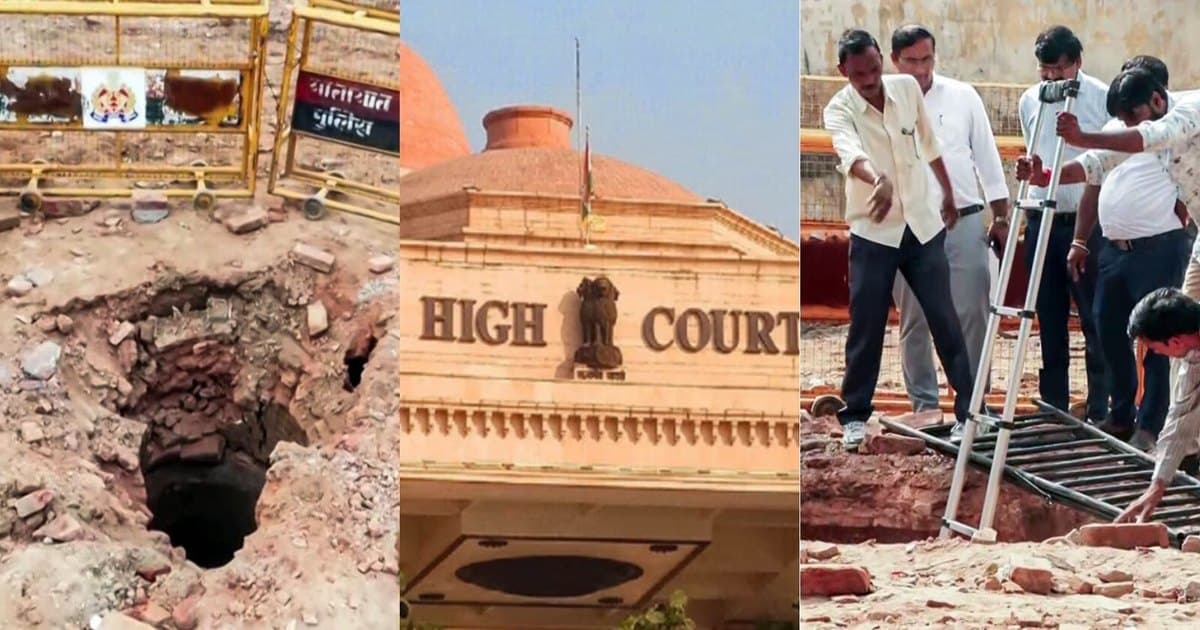
A well, roughly 20 feet deep and 1.5 metres wide and lined with iron sheets, was discovered while clearing debris after the demolition. Sadar Sub-Divisional Magistrate Subodh Kumar said an ASI team would examine it to determine its age and historical background.
According to Kumar, ASI officials measured the well's depth by placing a ladder inside and examined its interior, carrying out photography and videography and collecting samples of soil and brick remnants.
The demolition sparked a political row, with opposition parties including the Samajwadi Party and the Congress criticising the BJP-led state government. Vikas Tyagi, a former Bajrang Dal convenor and the complainant in the matter, claimed a temple may have stood at the site before the mosque was built. Congress MP Imran Masood said the well belonged to the mosque and was once used to supply water for wuzu, the ablution performed before prayers.