Samastha editorial hits back at Kerala CM over remarks on Sunni leader
Samastha's mouthpiece Suprabhatham criticises Kerala CM Satheesan for his attack on Kanthapuram's views on women in public spaces.
The Samastha Kerala Jamiyyathul Ulama has pushed back against Chief Minister V.D. Satheesan through an editorial in its mouthpiece, Suprabhatham, published on Sunday. The piece, titled 'Speak respectfully', took issue with the CM's criticism of Sunni leader Kanthapuram A.P. Aboobacker Musliar over his recent remarks on women's participation in public platforms.
The editorial compared Mr. Satheesan's comments to a blind man describing an elephant, suggesting he lacks a full understanding of the issue. It also pointed to an apparent inconsistency, noting that the CM had previously opposed the entry of young women into Sabarimala, yet now speaks on women's freedom.
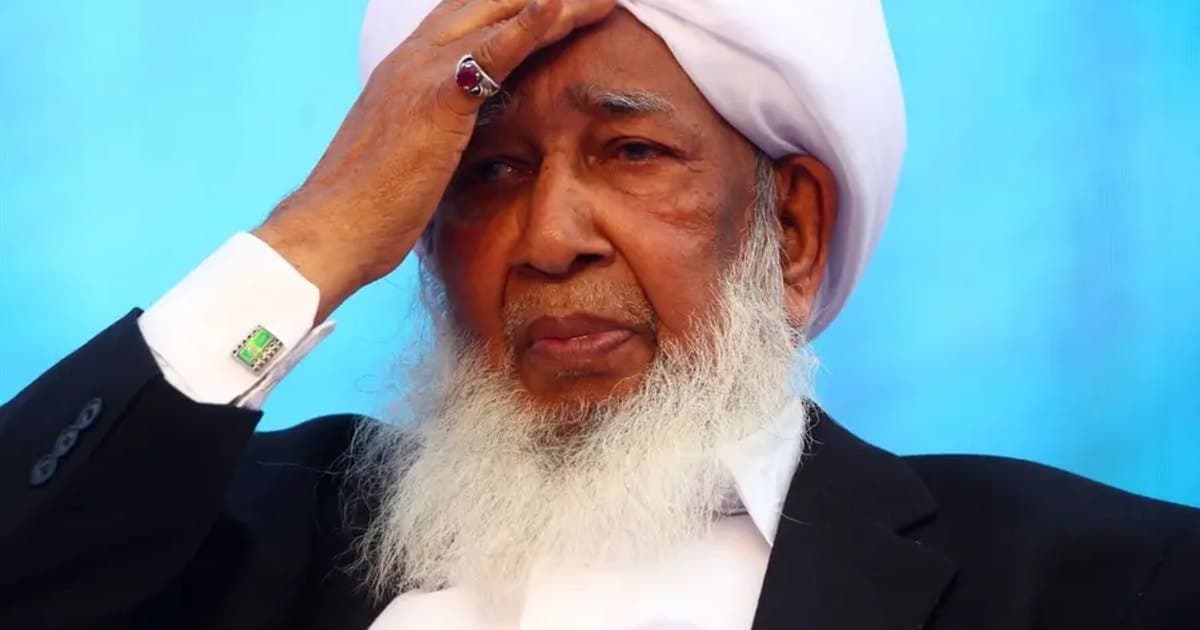
Defending Kanthapuram, the editorial said his statement — that women put on display could cause major destruction — was made at his centre before a congregation of believers. It framed the remarks as a reminder about the immorality that indecent behaviour by women could cause, asserting that such views are within his rights. The criticism, it argued, arises from a misunderstanding of the concept of womanhood in Islam.
The editorial further alleged that some elements within the Muslim community have been feeding wrong information to the CM. It also accused Mr. Satheesan of issuing a "good conduct certificate" to Jamaath-e-Islami ahead of elections, and suggested his opponents have placed the burden of securing his electoral and chief ministerial ambitions on the Muslim community. It questioned whether his current stance is a "lotus" war aimed at shedding that political branding.
Kanthapuram, who serves as general secretary of Samastha and Grand Mufti of India, had earlier issued a circular to mahals and madrasas under the organisation, directing that religious programmes follow Islamic norms. The circular specifically sought to prevent women from sharing stages or public spaces with unrelated men during religious celebrations. Mr. Satheesan had responded by calling the views unsuitable for a modern, progressive Kerala and likening them to 19th-century thinking.