Supreme Court seeks swift police action over threats to 14-year-old CJP protester
The Supreme Court ordered immediate action on a 14-year-old CJP protester's complaint of threats and harassment, and directed police protection for her family.
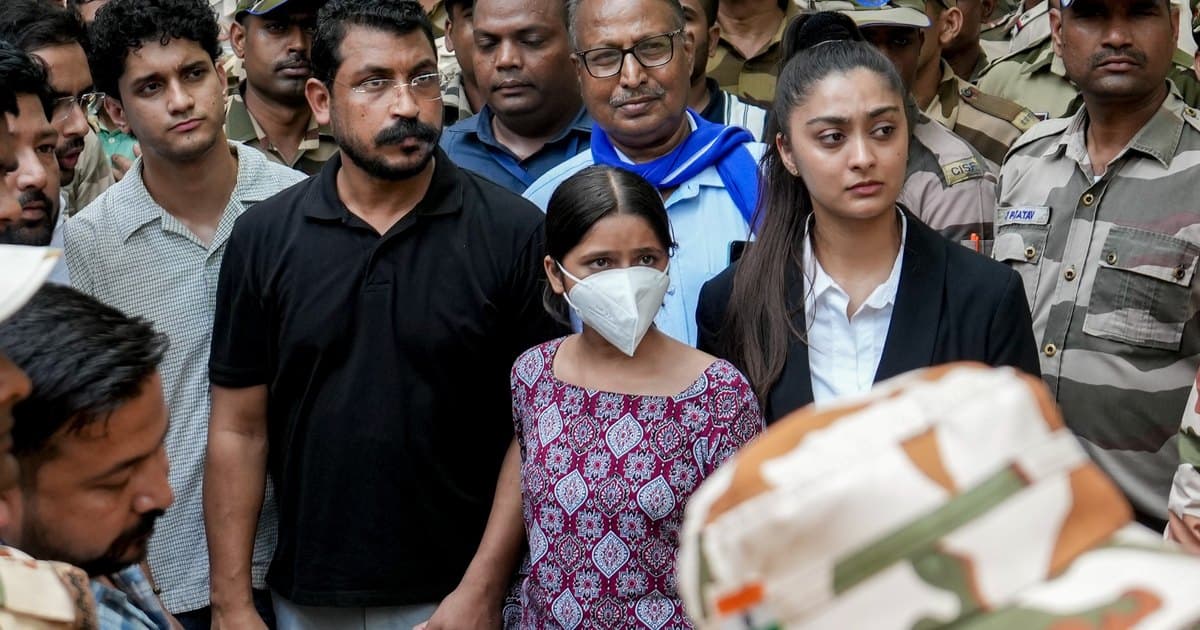
The Supreme Court on Thursday directed the Solicitor General of India, Tushar Mehta, to ensure that the Delhi Police act without delay on a complaint filed by a 14-year-old student who took part in the Cockroach Janta Party (CJP) protests against the NEET-UG question paper leaks. The teenager has alleged that vigilantes and miscreants openly threatened and harassed her for her role in the demonstrations.
A three-judge Bench headed by Chief Justice of India Surya Kant described the alleged conduct as the work of anti-social elements who commit violence against a child and then remain free. The court observed that the same people were now attempting to browbeat and intimidate the girl and her family to deter them from pursuing legal action, calling the matter very serious and her cause entirely justified.
To protect the teenager's privacy and safety, the Bench did not name her and instructed her lawyer not to identify her in open court while proceedings were being livestreamed.
Her counsel told the court that a vigilante had bragged on social media about the distress caused to the student and her family. The lawyer described her as a bona fide and vulnerable victim and urged that no irreversible harm be allowed to befall her or her relatives.
Justice Joymalya Bagchi, sitting with Justice V. Mohana, said the Uttar Pradesh Police should take responsibility for the safety of the student and her family. He noted that the FIR registered at the Parliament Street police station concerned allegations that miscreants had threatened, harassed and intimidated her and committed acts of violence against her. If those allegations are true, the court said, immediate action should be taken on the FIR and a report filed before it. The Bench also directed that police protection be provided to the victim and her family in Uttar Pradesh, where she currently claims to reside.
The Delhi Police had recently arrested Hindutva influencer Swatantra Bhardwaj in connection with an alleged assault on the father of a student during the NEET-UG protests. Bhardwaj was detained in Bulandshahr after the CJP staged a protest outside the Parliament Street police station.
Counsel argued that vulnerable victims like the teenager should be able to safeguard their privacy by approaching the Supreme Court directly or by accessing the court-appointed High-Powered Enquiry Committee (HPEC), set up on July 20 to investigate police and anti-social excesses against protesting students. The Chief Justice said the committee was the court's extended hand and that whatever it does and finds would be placed before the court alone. Protection for vulnerable witnesses should be no less than that available in judicial proceedings, he observed, adding that there should be no obstacle to access for such victims.
Senior advocate N. Hariharan, appearing for petitioners including students, asked who would register FIRs if the HPEC found police officers liable for excesses against protesters. He questioned whether the Supreme Court or the HPEC would order registration and whether the police would investigate their own case. The Bench asked him to wait until the enquiry concludes and the allegations are clarified, assuring that it would iron out these creases and pass clarification orders at that stage.
Senior advocates Menaka Guruswamy, Gopal Sankaranarayanan and advocate Vrinda Grover flagged the need for a separate Supreme Court hearing on constitutional questions, including the use of facial recognition at the Jantar Mantar protest site and the alleged storage of surveillance data with private entities. Grover pointed to a separate petition challenging the alleged use of metal projectiles against unarmed students. Guruswamy asked how a fact-finding committee could examine constitutional questions.
Advocates Prashant Bhushan and Neha Rathi raised grievances about an HPEC member, alleging a conflict of interest. Justice Bagchi said the court would look into grievances brought on record regarding that particular member but would not tolerate any presumption of bias against the entire committee. Sankaranarayanan responded that the concern was not an apprehension of bias but that the committee should inspire confidence.
The Supreme Court constituted the HPEC in August, headed by former apex court judge Justice R. Subhash Reddy, to probe all issues and allegations, including police excesses on students during nationwide protests against the NEET-UG paper leaks. Besides Justice Reddy, the committee includes Justice Ravi Shankar Jha, former Chief Justice of the Punjab and Haryana High Court; Justice Shalinder Kaur, former judge of the Delhi High Court; Rishi Kumar Shukla, former Director of the Central Bureau of Investigation; and Dr. L.R. Bishnoi, retired Director-General of Police, Meghalaya. Mehta said the committee would hold its first meeting on September 15, 2026.