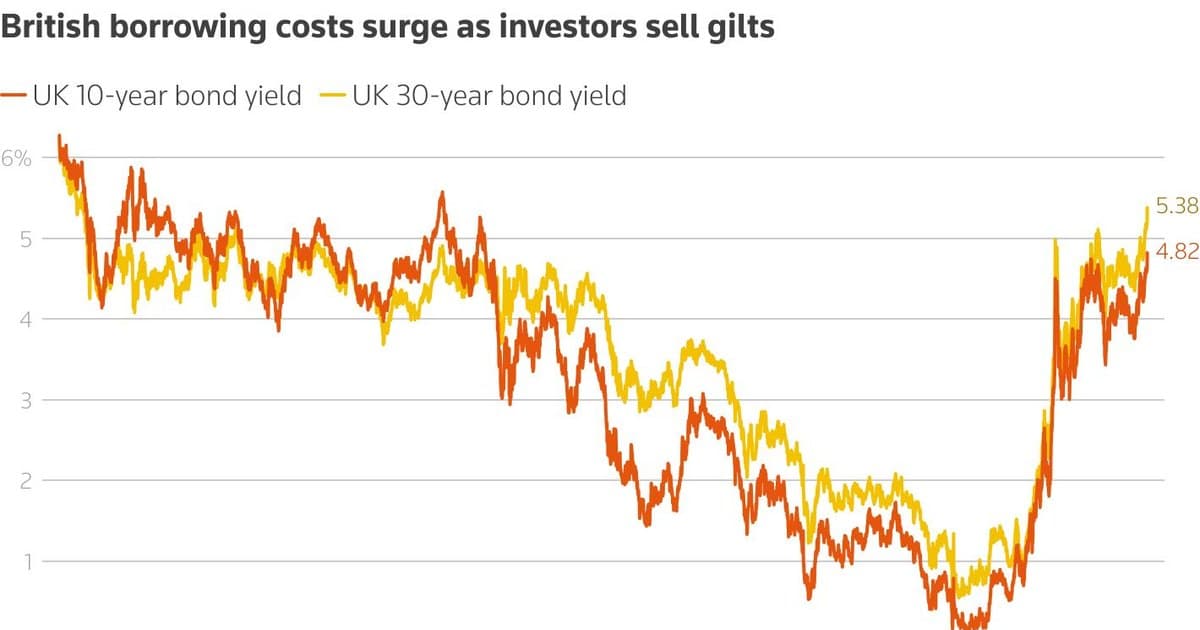
Pound Eases as Gilt Yields Touch 2008 Highs and Dollar Firms
Sterling dipped as UK 10-year gilt yields hit their highest since 2008, with dollar strength and fiscal worries weighing on the pound.
Sterling slipped against the dollar on Tuesday, as investors returned from a long weekend to a global bond selloff that pushed UK borrowing costs to levels not seen in over a decade and lent support to the US currency.
The pound was trading marginally lower, around 0.07% down, against a broadly stronger dollar. The move comes after a flare-up in US-Iran tensions revived inflation concerns, while hawkish comments from Federal Reserve Chair Jerome Powell last week also boosted expectations of higher US interest rates.
UK 10-year gilt yields rose to their highest since June 2008, touching 5.2554%, as oil prices climbed above $92 a barrel. The rise in yields reflects market anxiety over Britain's strained public finances, with investors sensitive to any shifts in the fiscal outlook as the new government prepares its budget.
Sterling is now about 1% below the six-month high of $1.36745 it reached late last month. Attention is turning to parliament's return this week, with investors looking for clues on how the new Prime Minister will fund his spending plans.
The Bank of England is widely expected to keep interest rates unchanged at 3.75% this month, though markets still price in a quarter-point increase by the end of the year. Governor Andrew Bailey said on Friday he saw little evidence that the recent jump in energy prices was creating lasting inflation pressures.
Data on Monday showed British retailers raised prices by the most in over two years last month, driven by higher energy costs and the AI boom pushing up consumer electronics prices. Meanwhile, Tuesday's economic data painted a mixed picture, with manufacturing activity expanding at its slowest pace since March and mortgage approvals falling to their lowest since January 2024. However, the economy remains resilient, with GDP rising 0.3% in the latest month and 0.4% over the three-month period.