Supreme Court rejects Aravalli panel extension, sets November 30 deadline
SC refuses six-month extension to Aravalli panel, orders final report by Nov 30, 2026.
The Supreme Court on Monday (September 7, 2026) refused to grant a six-month extension to the high-powered committee tasked with defining the Aravalli hills and range, and directed it to submit its final report by November 30, 2026.
Chief Justice of India Surya Kant, heading a Bench also comprising Justices Joymalya Bagchi and V. Mohana, expressed displeasure over the panel's request for time until February 28, 2027. "They should have clearly asked for a date after my retirement... It appears they are waiting for my retirement. We are not going to allow this," he told Additional Solicitor General Aishwarya Bhati, who appeared for the Centre. CJI Kant is due to demit office on February 9, 2027.
The Bench recorded that the committee's extension plea was rejected and directed it to "work day and night" to finalise its recommendations. The panel, headed by Indian Council of Forestry Research and Education Director General Kanchan Devi, has been tasked with evolving a uniform definition of the ecologically fragile Aravalli hills and range, and recommending measures to regulate future mining.
The court also asked the committee to submit interim reports on issues requiring immediate attention, without waiting for the entire exercise to be completed. It directed the panel to hear all stakeholders, including tribal communities in Rajasthan and Gujarat, before finalising its recommendations. The matter will be heard next on December 2.
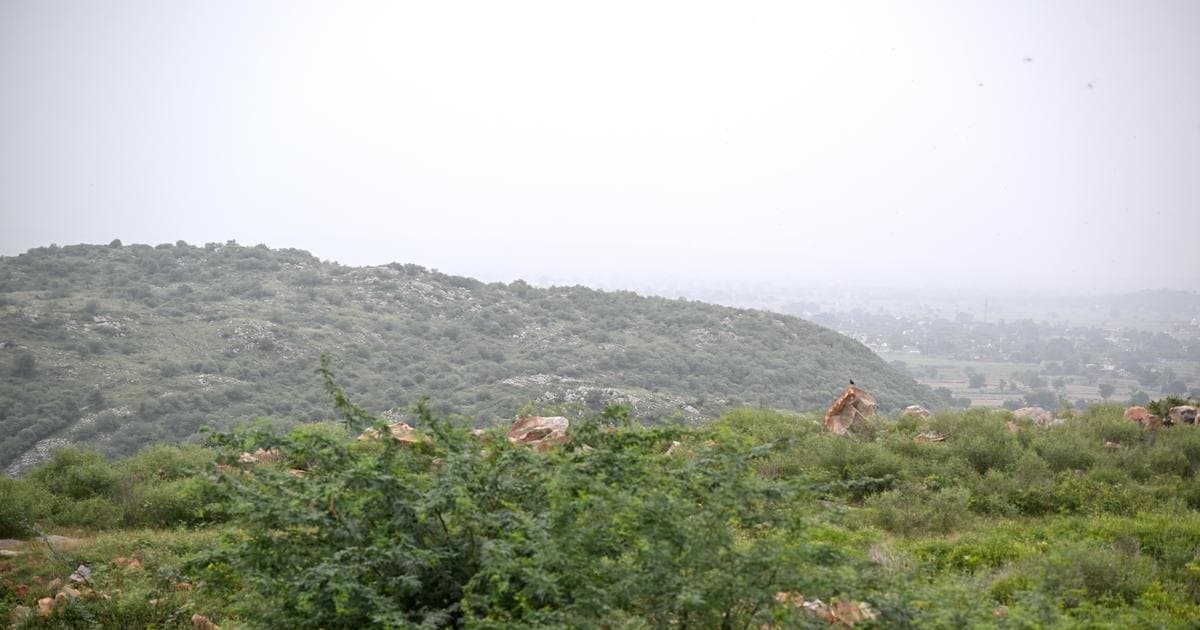
The Aravalli range acts as a natural barrier between the arid desert regions in the northwest and the fertile northern plains. The Supreme Court has been regulating mining in the region since 2002. In 2018, a Forest Survey of India report highlighted the scale of illegal mining, recording the disappearance of 31 hillocks across nearly 3,000 sites in Rajasthan and Haryana.
In November 2025, the top court accepted a common definition of the Aravalli hills and range proposed by an eight-member committee headed by the Union Environment Secretary. Under that definition, a landform rising 100 metres or more above the local relief in an Aravalli district would qualify as a hill, while two or more such hills within 500 metres of each other would constitute the range.
However, concerns arose that large parts of the Aravalli landscape could fall outside this definition, potentially opening them up to mining. On December 29, 2025, the Supreme Court took suo motu cognisance of these concerns, kept its November order in abeyance, and barred new mining leases and renewals of existing ones.
In May, the court constituted the current high-powered committee with a broader mandate to undertake a scientific assessment of the landscape, recommend a uniform definition, and examine the ecological consequences of mining and development.
In its interim report submitted on August 31, 2026, the committee said its work so far indicated that the Aravallis could not be adequately defined on the basis of a single criterion relating to terrain or elevation. It said it was undertaking assessments covering spatial, ecological, geological, hydrological, and socio-economic factors, along with stakeholder inputs. Seeking time until February 28, 2027, it cited the need for additional datasets, field verification, and expert inputs.
The five-member committee includes former Environment Ministry Joint Secretary Brij Mohan Singh Rathore, former Delhi University Botany Professor Ashok K. Bhatnagar, former Forest Survey of India Director General Subhash Ashutosh, and former Geological Survey of India Director Rajendra Kumar Sharma. Professors Jagdish Krishnaswamy and Laxmikant Sharma are special invitees.