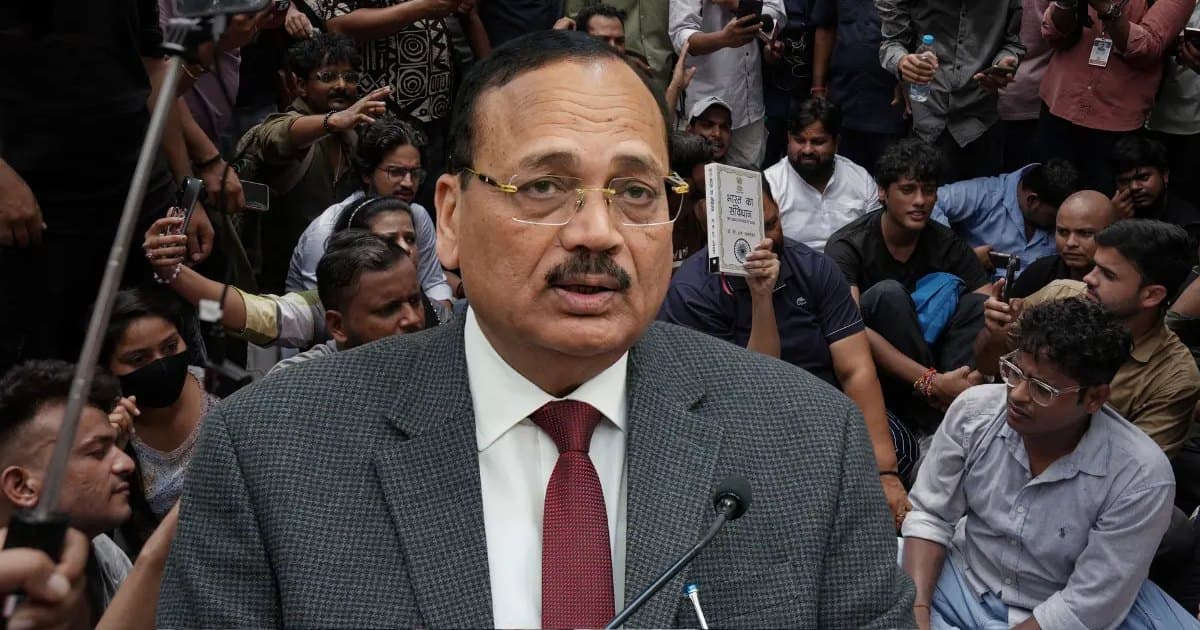
SC Slams Magistrate Over Notice to Student in CJP Protest Case
Supreme Court rebukes Greater Noida magistrate for issuing notice to a student over CJP protest participation, citing its earlier order quashing all such cases.
The Supreme Court on Wednesday expressed strong displeasure over a notice issued by an Executive Magistrate in Greater Noida to a university student in connection with the July protests linked to the Cockroach Janata Party (CJP).
The court questioned how the magistrate could have acted when it had earlier quashed all FIRs against students related to the protests and explicitly barred any coercive action against them.
"How could the magistrate issue the notice? Our order was clear that no coercive action can be taken against any student across the country. How dare a magistrate do that?" the bench observed.
The matter came to light when senior advocate Bishwajit Bhattacharyya brought the case of Akshat Tripathi, a second-year student at Gautam Buddh University, to the court's attention. The notice, issued on September 4, accused Tripathi of spreading anti-government information and encouraging students to join the CJP protest at Jantar Mantar.
The court was informed that the notice was withdrawn the following day. Chief Justice of India Surya Kant said the court would seek an explanation from the district and executive magistrates of Gautam Buddh Nagar regarding the issuance of the notice.
On September 1, the Supreme Court had invoked its extraordinary powers under Article 142 of the Constitution to quash all cases against students arising from the CJP protests. It ordered that FIRs registered between July 20 and 25 across states and Union territories would not be pursued or investigated and would be treated as closed for all purposes. The court had also directed that no fresh action be taken against any student in relation to the protests.
Describing the incident as an "experiment with students of India," Bhattacharya urged the court to intervene to prevent such incidents from recurring. The Chief Justice agreed and expressed surprise over the magistrate's action, reiterating that the September 1 order was clear that no action could be taken against youth for participating in the protest.