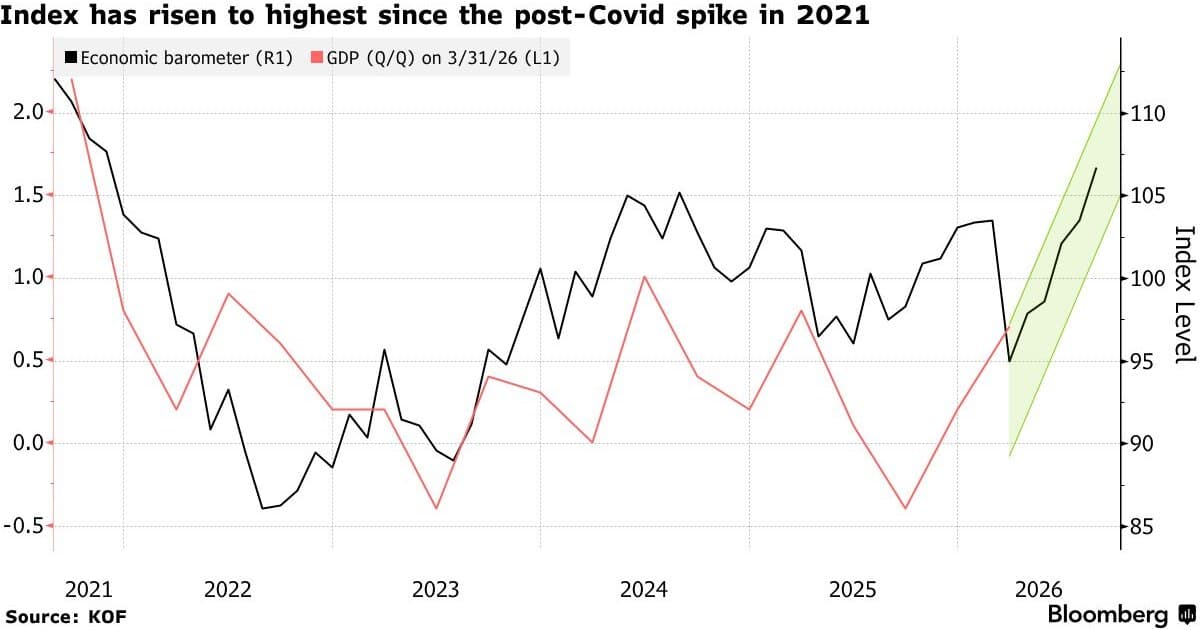
Swiss GDP posts strongest quarterly rise since 2021
Switzerland's economy grew 1.5% in Q2 2026, the fastest since 2021, led by a 10.5% surge in chemicals and pharmaceuticals.
Switzerland's economy expanded by 1.5% in the second quarter of 2026, marking its strongest quarterly performance in nearly five years, according to official data released on Thursday.
The acceleration was driven primarily by a sharp upturn in the chemical and pharmaceutical sector, which grew 10.5% on the back of higher exports and sales. This offset a sluggish start to the year, when GDP rose by just 0.5% in the first three months.
The State Secretariat for Economic Affairs (SECO) noted that the latest figure matched its preliminary estimate and represented the fastest growth since the third quarter of 2021, when the economy was rebounding from the COVID-19 pandemic.
While the chemicals and pharmaceuticals industry led the charge, other manufacturing segments recorded only moderate gains. The services sector, however, showed modest but broad-based growth across the board.
The data adds to a run of encouraging signals for the Alpine economy. Earlier this week, the Swiss Purchasing Managers' Index climbed to 57.1 points in August, pointing to continued expansion in the private sector.
Economists have expressed surprise at the resilience of the Swiss economy, particularly given headwinds such as sharply rising oil prices and geopolitical uncertainty. Much of the optimism stems from Europe's improving industrial outlook, with Germany — Switzerland's largest export market — performing better than initially anticipated.
"If the European single market gains momentum, the Swiss economy will also benefit from it this year," said Thomas Gitzel, an analyst at VP Bank. He cautioned, however, that replicating the second quarter's pace would be difficult, even as growth is expected to remain robust in the near term.
Separate data released on Thursday showed Swiss inflation doubling in August, driven by higher fuel prices linked to the conflict in the Middle East. The development raises the possibility of an earlier interest rate hike by the Swiss National Bank, which has been monitoring price pressures closely.