Damascus exhibition confronts legacy of Assad-era prisons
Syria's 'When Walls Speak' exhibition displays prison artifacts, drawing visitors seeking traces of missing relatives.
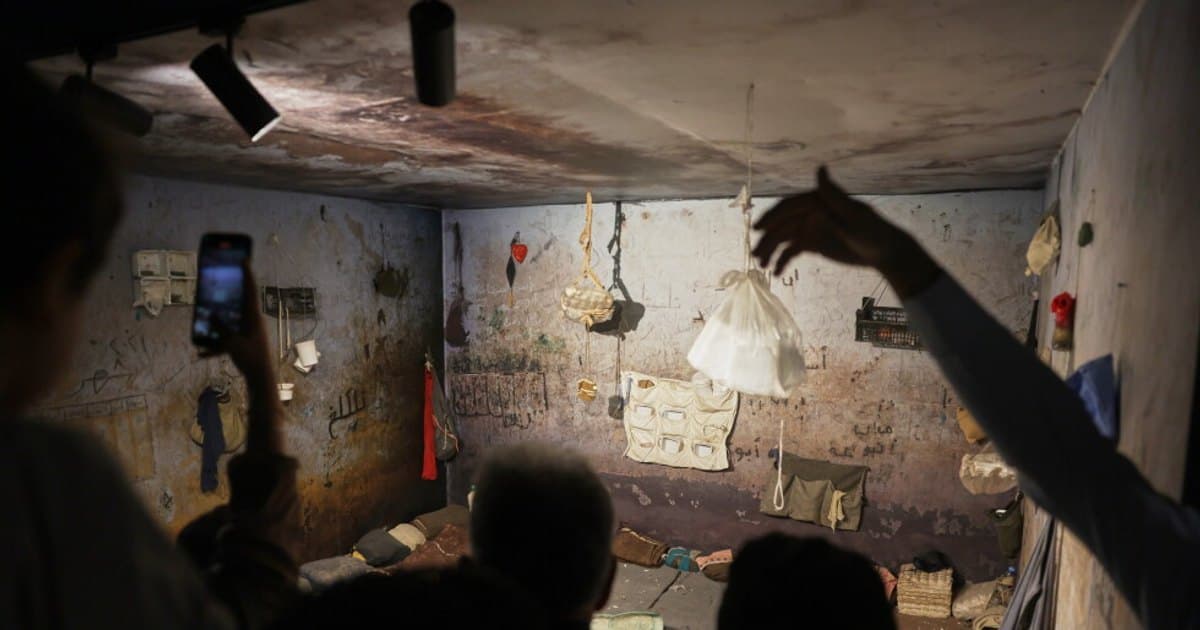
At the Damascus International Fair, Syria's Interior Ministry has opened an exhibition titled "When Walls Speak," featuring objects recovered from prisons and security branches operated under the ousted government of Bashar Assad. The display includes reconstructed cells, clothing, keys, handcuffs, prosthetic limbs, and items described as torture devices, all presented under the slogan "transferred as it was."
Walid al-Hussein, from the ministry's General Directorate of Prisons and Correctional Facilities, said the artifacts came from Saydnaya prison and other detention centers run by the former regime. He said the ministry aims to shift from a punitive philosophy of killing and torture toward a system that safeguards inmates' dignity through healthcare, adequate food, and a clean environment.
For many visitors, the exhibition is a painful search for traces of relatives who disappeared under Assad's rule. Abdul Wahab Yasser, whose cousin died at the Kfar Sousse security branch, said he hoped to find his cousin's name on the walls but did not. "I wanted to find any part of him, even if it is writings on the wall," he said.
The exhibition comes less than two years after Assad's fall in December 2024, when rebel forces opened the country's notorious prisons. Syria is still recovering from a 14-year civil war that killed an estimated half a million people and displaced millions. A national commission has been working with international organizations to determine the fate of tens of thousands of missing persons.
Recent court rulings have convicted several figures accused of abuses under Assad, including a death sentence in absentia for Assad himself. However, rights groups warn that abuses persist in detention centers under the new authorities. A UN inquiry documented torture and ill-treatment in 18 official and 12 makeshift facilities between January and October 2025. The death of a young man with hemophilia after an alleged beating by security forces last month prompted an investigation and prosecution of the officer involved.
For Yasser, the exhibition was devastating. "No words can describe the pain that we are living," he said. "Those who want to come here must have the ability and will to stomach such an exhibition."