Tamil Nadu begins third underwater survey off ancient port Poompuhar
TNSDA launches third phase of underwater exploration off Poompuhar coast to study ancient Tamil port structures.
The Tamil Nadu State Department of Archaeology (TNSDA) has commenced the third phase of underwater archaeological exploration off the coast of Poompuhar, the ancient port city historically known as Kaveripoompattinam. The exercise began on Sunday in Mayiladuthurai district, marking the latest effort to trace the maritime trade networks of the ancient Tamils.
School Education Minister Rajmohan, who also holds the Archaeology portfolio, formally launched the exploration alongside Director of Archaeology V.P. Jayaseelan, archaeologist K. Rajan, former Joint Director R. Sivanantham, and Joint Director (in-charge) V.P. Yathees Kumar.
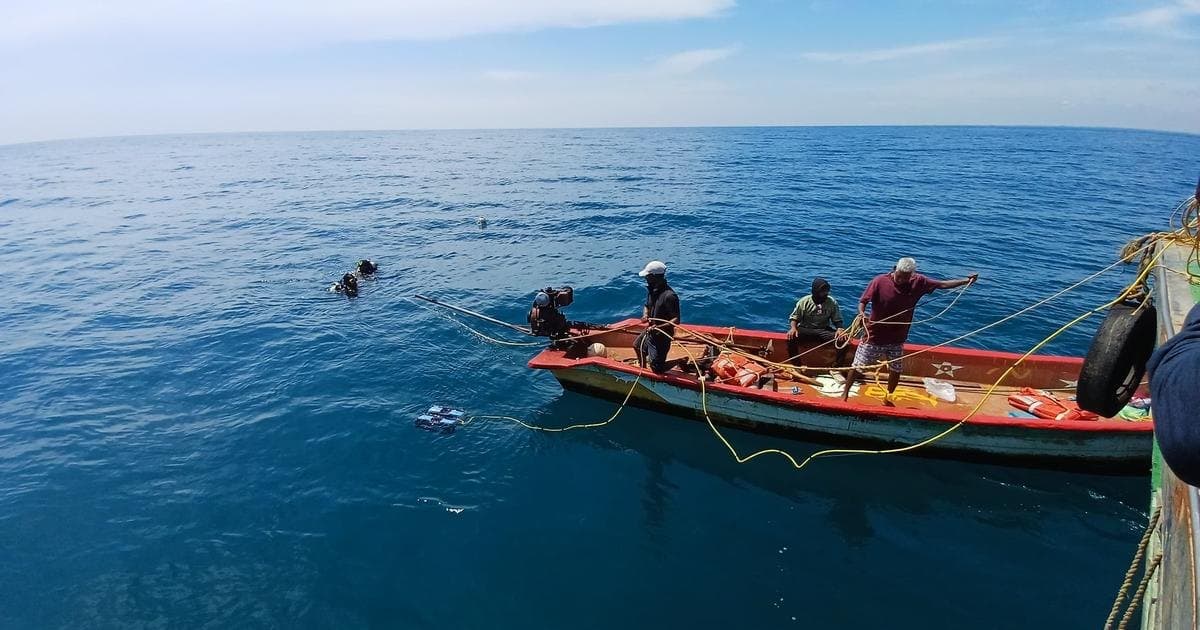
Minister Rajmohan and Mr. Jayaseelan joined a team of trained divers and archaeologists on the expedition. The group travelled on a mechanised boat from a village between Thirumullaivasal and Poompuhar, venturing nearly two kilometres into the sea before diving to a depth of ten metres to inspect underwater structures. Mr. Jayaseelan noted that underwater visibility was relatively limited during the dive.
Experts have scheduled the exploration to run for approximately 20 days, taking into account ocean current patterns and the approaching northeast monsoon. This is the first such underwater survey off Poompuhar since the new state government led by Chief Minister C. Joseph Vijay assumed office.
During the previous administration, the TNSDA had conducted underwater exploration in the same area in September 2025, in collaboration with the Indian Maritime University. That exercise employed advanced marine instruments, including a remotely operated vehicle, side-scan sonar, sub-bottom profiler, and multibeam scanner, to map the ocean floor.
Sangam-era literary works such as Pattinappaalai, Silappadikaram, and Manimekalai, along with post-Sangam texts, reference Poompuhar's settlements and its flourishing trade with Sri Lanka, Southeast Asia, and the West. The current exploration aims to further uncover physical evidence of these historical connections.