India Hosts Global Workshop on Tiger Landscapes, IBCA-ADB Sign Pact
India inaugurated a global workshop on tiger landscapes, where IBCA and ADB signed an MoU to boost conservation financing and cooperation.
Union Environment Minister Bhupender Yadav inaugurated a two-day international workshop in New Delhi focused on tiger landscapes as engines of conservation, bioeconomy, and ecotourism. The event, running from September 2-3, is jointly organized by the International Big Cat Alliance (IBCA), the Asian Development Bank (ADB), and the National Tiger Conservation Authority (NTCA).
Speaking at the inaugural session, Yadav underscored that tiger survival is tied to the health of forests, grasslands, rivers, prey species, and local communities. He described tiger landscapes as natural capital that provides essential services like water security, carbon sequestration, and climate regulation. The Minister called for a shift from species-centric approaches to integrated landscape management that balances ecological security with socio-economic development.
"Conservation with harmony and human-nature coexistence should be the foundation of ecological conservation," Yadav said, linking land protection to food quality and human survival. He pointed to global challenges like desertification and soil degradation, arguing that tiger landscape conservation can leverage native community wisdom for sustainable development.
Yadav urged participants to codify traditional knowledge and incorporate it into policy-making on conservation, bioeconomy, and ecotourism. He added that IBCA should lead efforts to bring native wisdom from the Global South into ecological policy design.
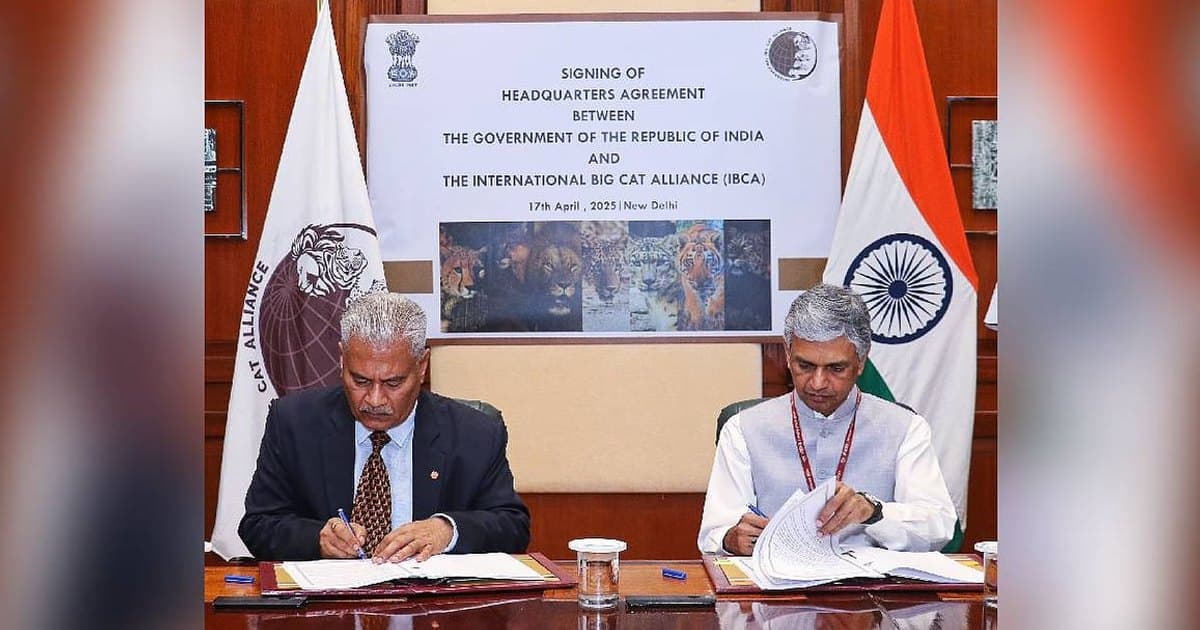
During the event, IBCA and ADB formalized a Memorandum of Understanding to strengthen collaboration in landscape conservation, sustainable development, capacity building, knowledge exchange, and nature-positive financing. ADB Country Director Mia Oka noted that 2026 marks 40 years of ADB's partnership with India, and highlighted India's experience in sharing conservation practices with big cat range countries.
The workshop brought together delegates from Bangladesh, Bhutan, Cambodia, Malaysia, Nepal, and Vietnam, along with Indian state forest officials, tiger reserve representatives, researchers, and development partners. Discussions will focus on innovative financing, community-based ecotourism, and regional cooperation to advance conservation goals alongside livelihood generation.